
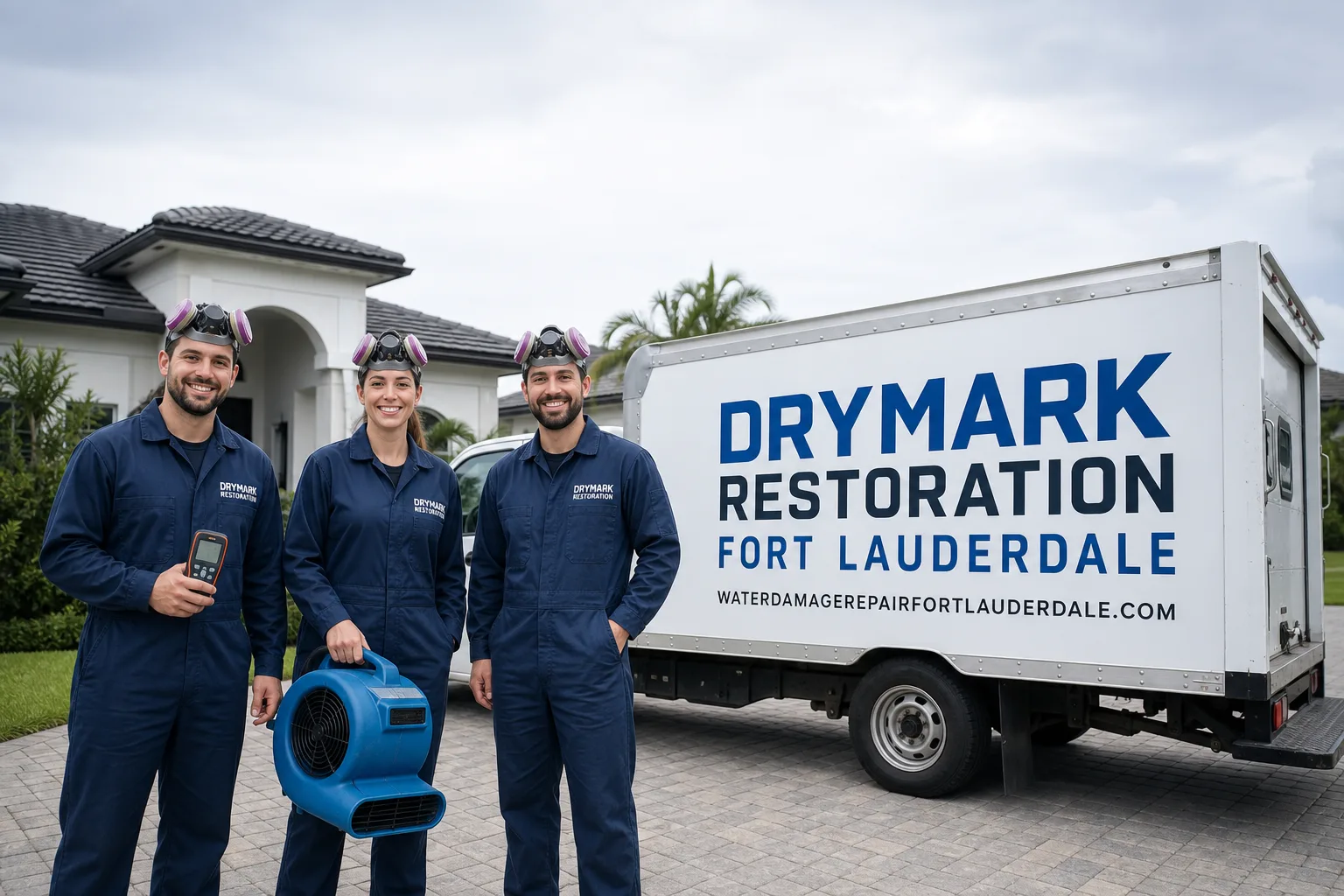
Free visual inspection and a written scope of work before any mitigation begins - photos, moisture readings, and drying logs go in your claim file
The scope we write is the scope we bill. Anything new gets shown to you, in writing, before we touch it.
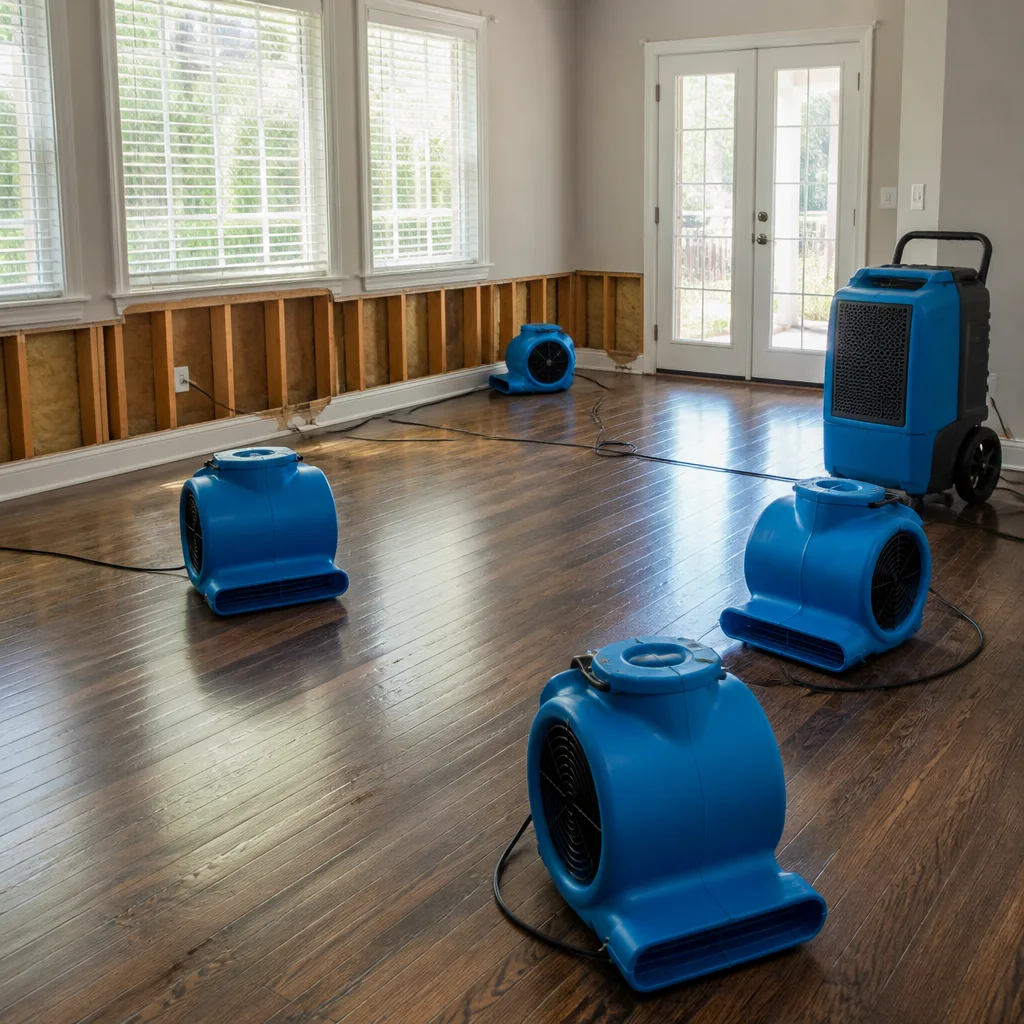
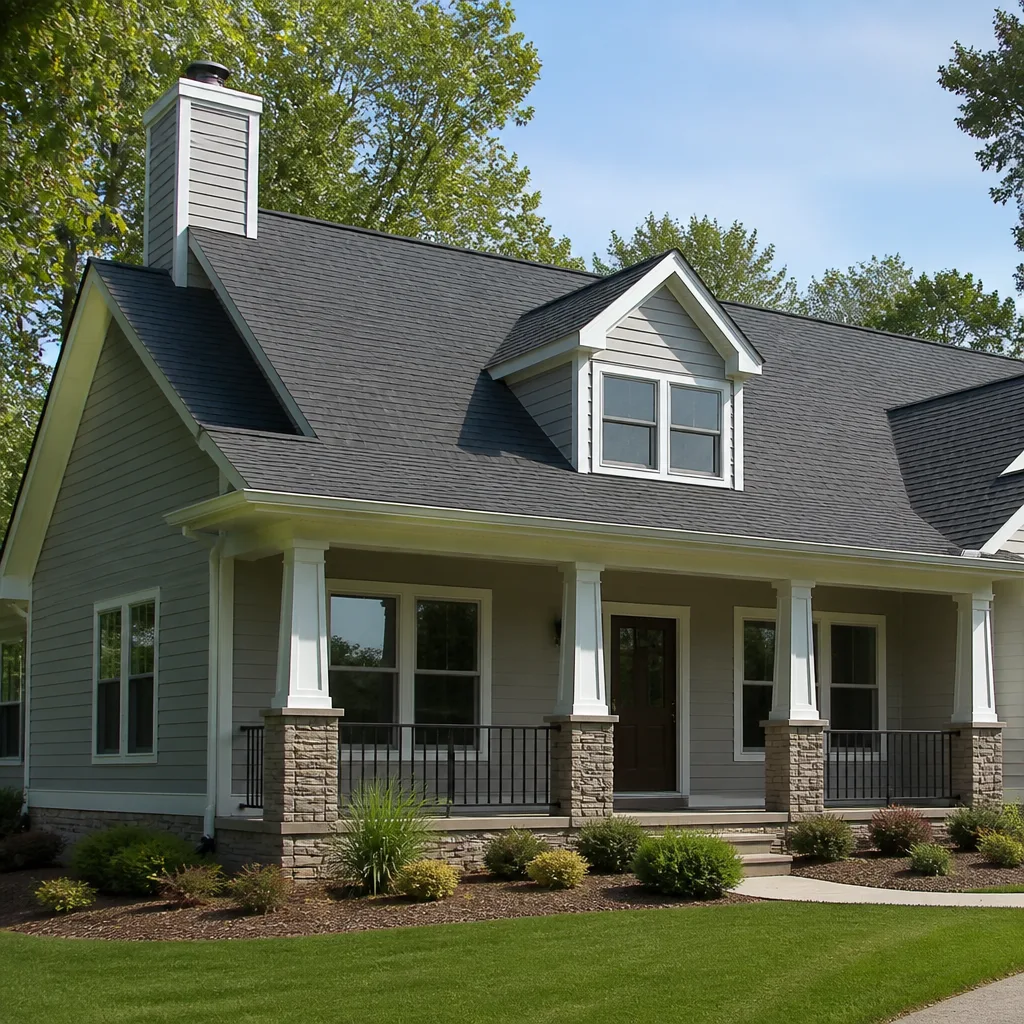
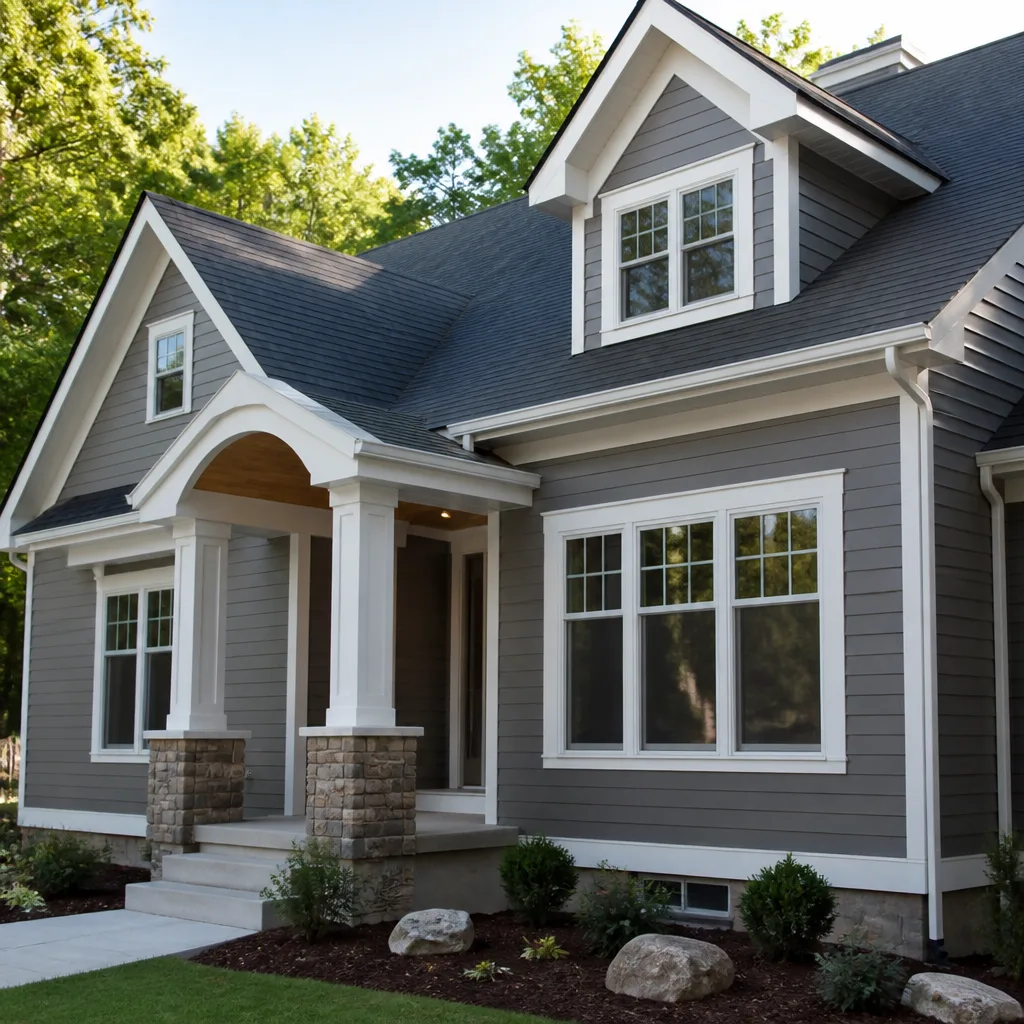
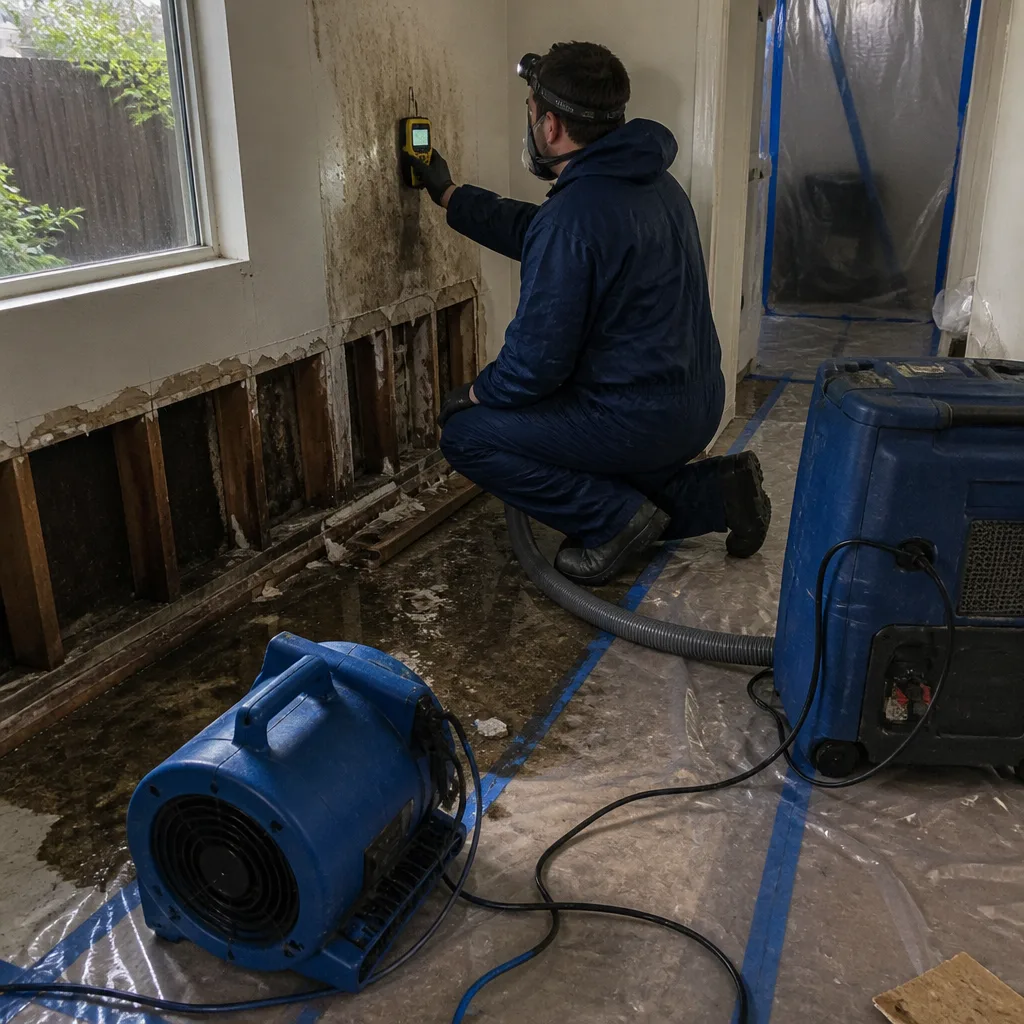 Before
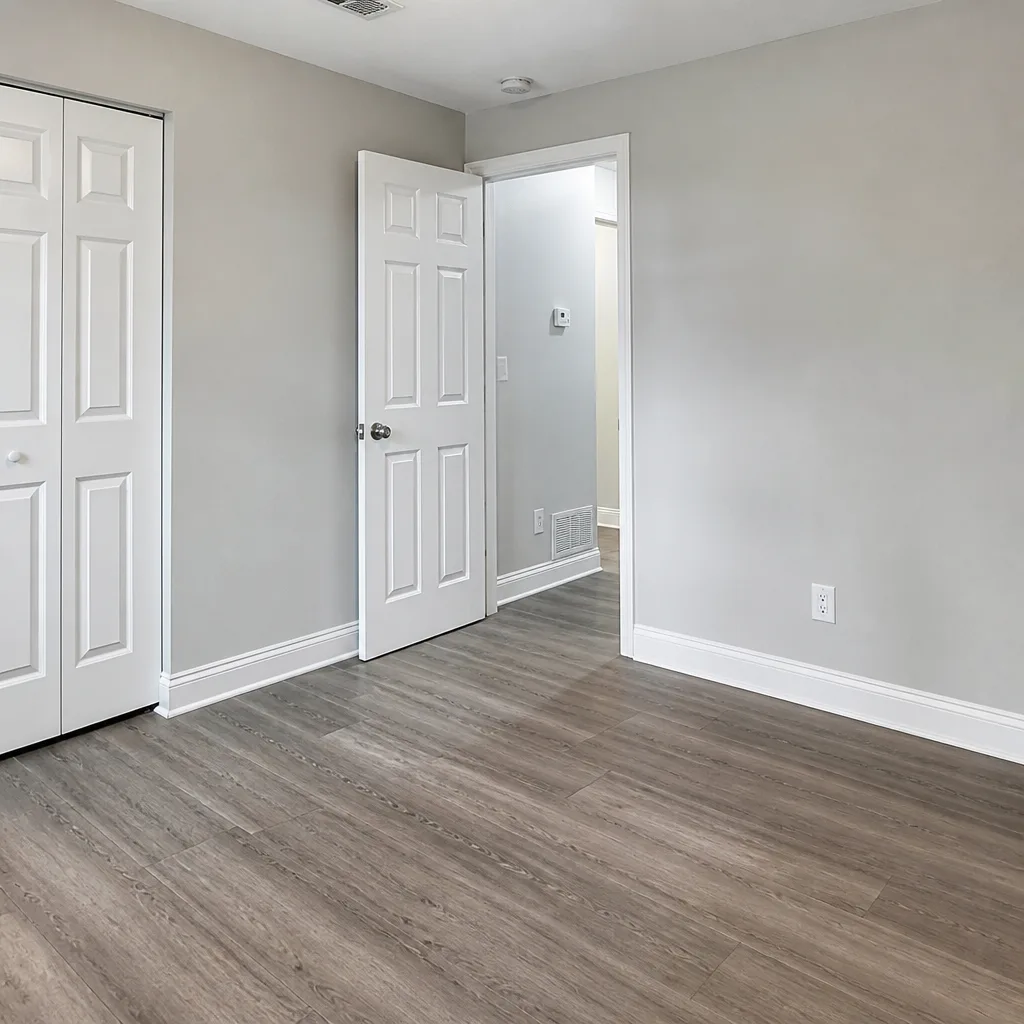 After
After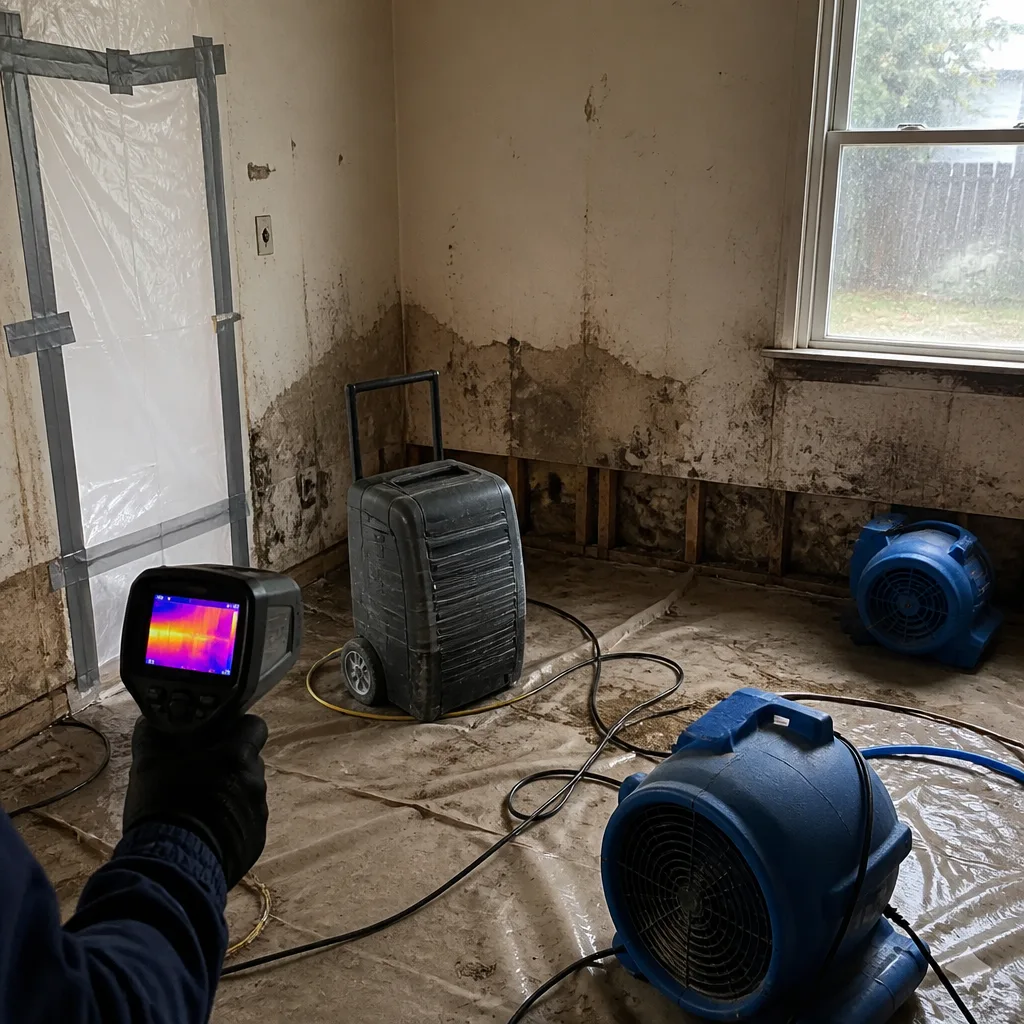 Before
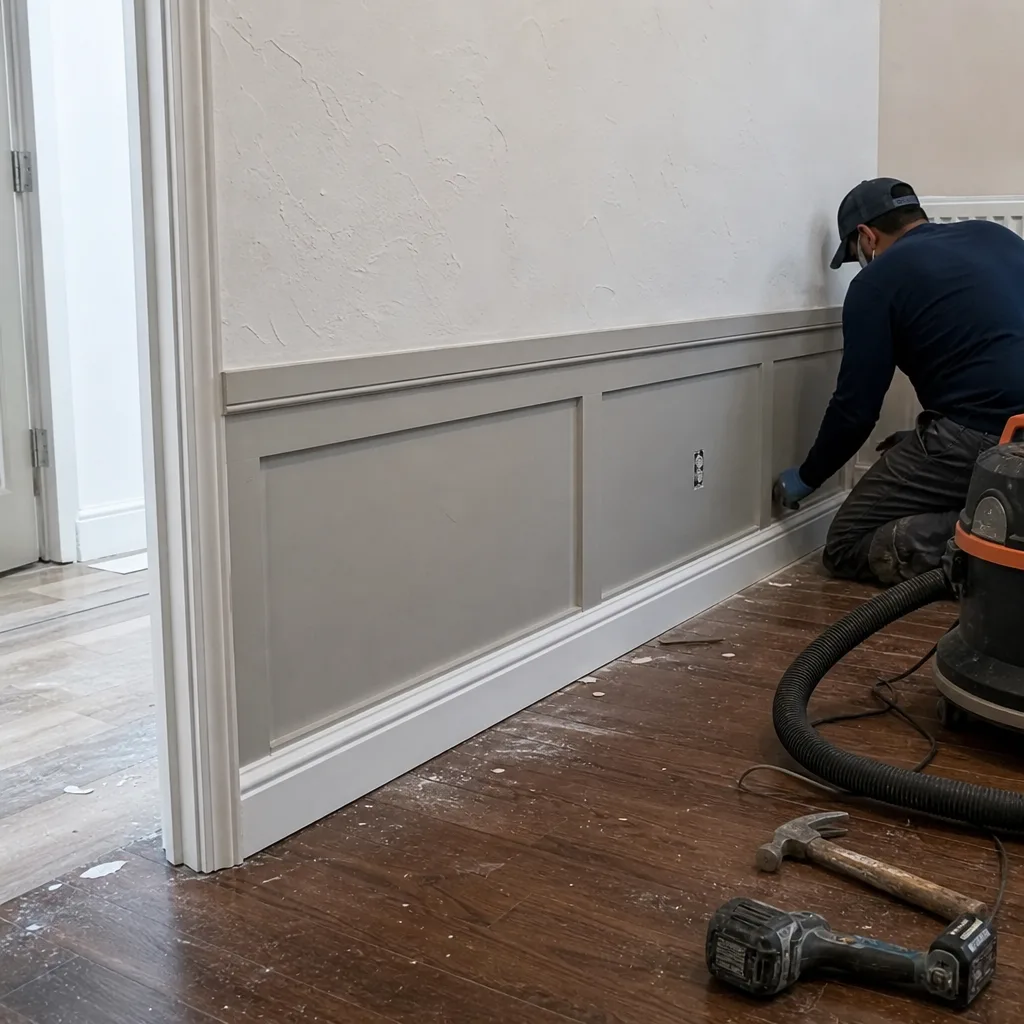 After
After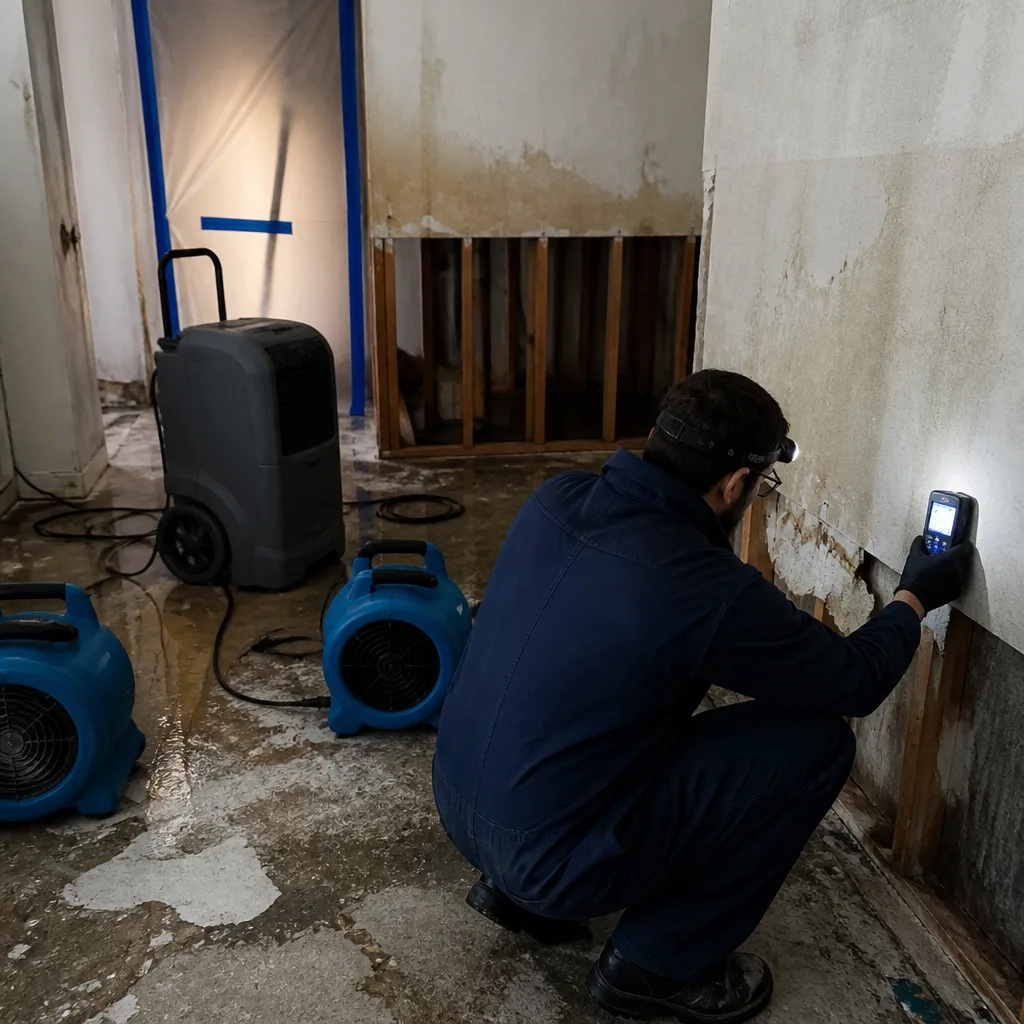 Before
 After
AfterFast, Reliable Mold Remediation Across Fort Lauderdale
Mold remediation in Fort Lauderdale typically runs $1,800-$6,500 depending on affected square footage, contamination level, and whether the source is a single roof leak or the multi-vector water entry this city’s canal geography produces. Most Fort Lauderdale inspections are scheduled within 4 hours, with containment and air-scrubbing started same-day once our written scope is signed.
We know Fort Lauderdale’s damage signature because we’ve documented it in over 12,000 homes since 2011: the 1950s-1970s CBS ranch construction in Lauderdale Isles, Edgewood, and central Fort Lauderdale; the flat modified-bitumen roofs that trap seasonal rain; and the 2-5 foot water table that pushes groundwater up through slabs even when everything above looks dry. Our crews are dispatched from our South Florida office and carry the multi-source moisture mapping equipment that single-source contractors skip. Call (754) 254-1257 for a written inspection price before anyone enters your home.
Why DryMark Restoration Fort Lauderdale Is Fort Lauderdale’s Preferred Mold Remediation Company
Back to Dry Restoration, led by Alicia Brennan, was built by a former claims adjuster who watched homeowners lose coverage fights because their restoration company couldn’t produce documentation. We’ve operated under The Haven Standard since 2011, and every Fort Lauderdale job starts with a written price, includes a photo record on every visit, and ends with a 365-Day Done Right Promise stamped and signed, not spoken over a handshake.
Our Fort Lauderdale customers measure us by what we leave behind: room-by-room moisture logs, psychrometric data (temperature, relative humidity, and vapor pressure differential - the measurable force that drives moisture through building materials), and drying logs formatted to IICRC, RIA, and IFA standards that turn restoration invoices into payable claims. We don’t ask you to trust our reputation. We document it on every visit.
Live person answers every call, 24 hours a day, 7 days a week. No voicemail trees while water is still moving through your walls. Our background-checked, uniformed technicians arrive with license verification on request, and our equipment roster includes Phoenix and XPOWER air movers, B-Air dehumidifiers, and Injectidry cavity-drying systems - the tools that reach inside Fort Lauderdale’s block cavities where surface drying fails.
Our Mold Remediation Services in Fort Lauderdale
Mold Inspection & Testing
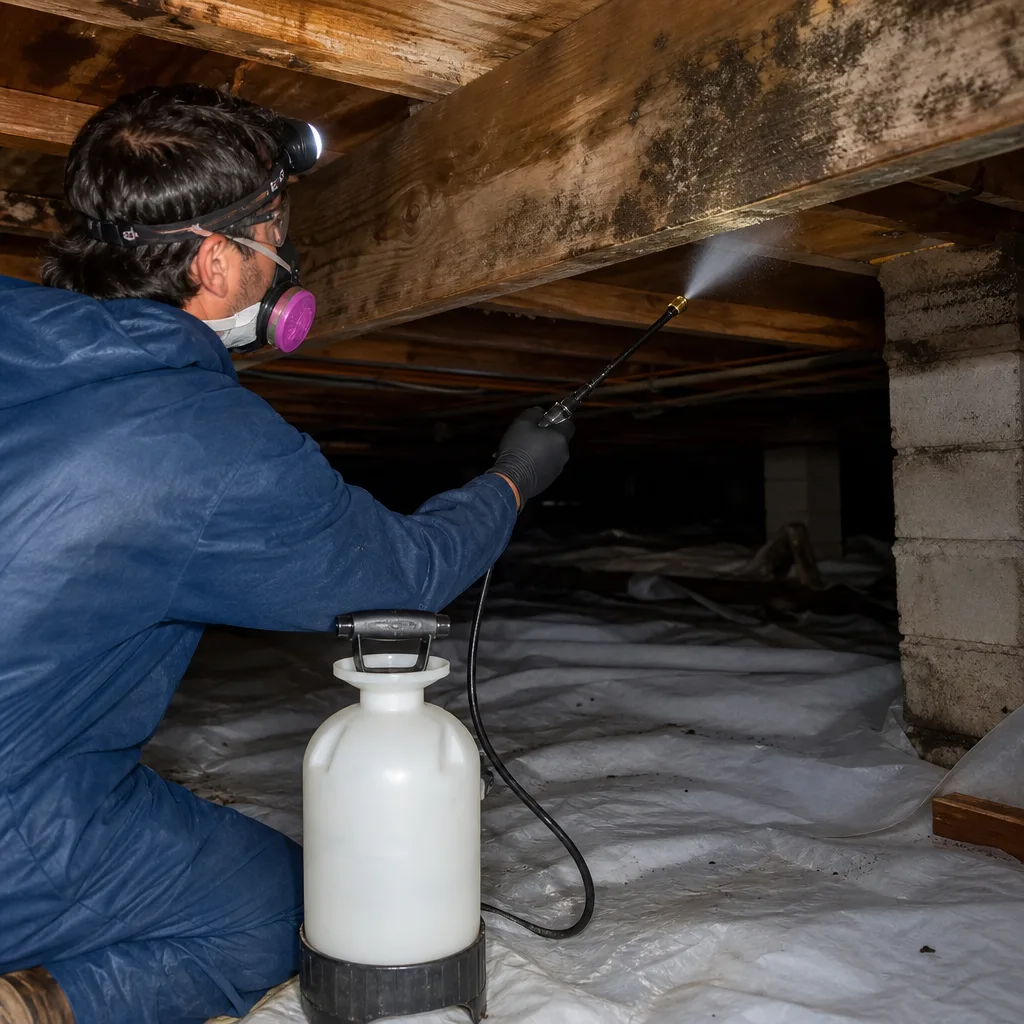
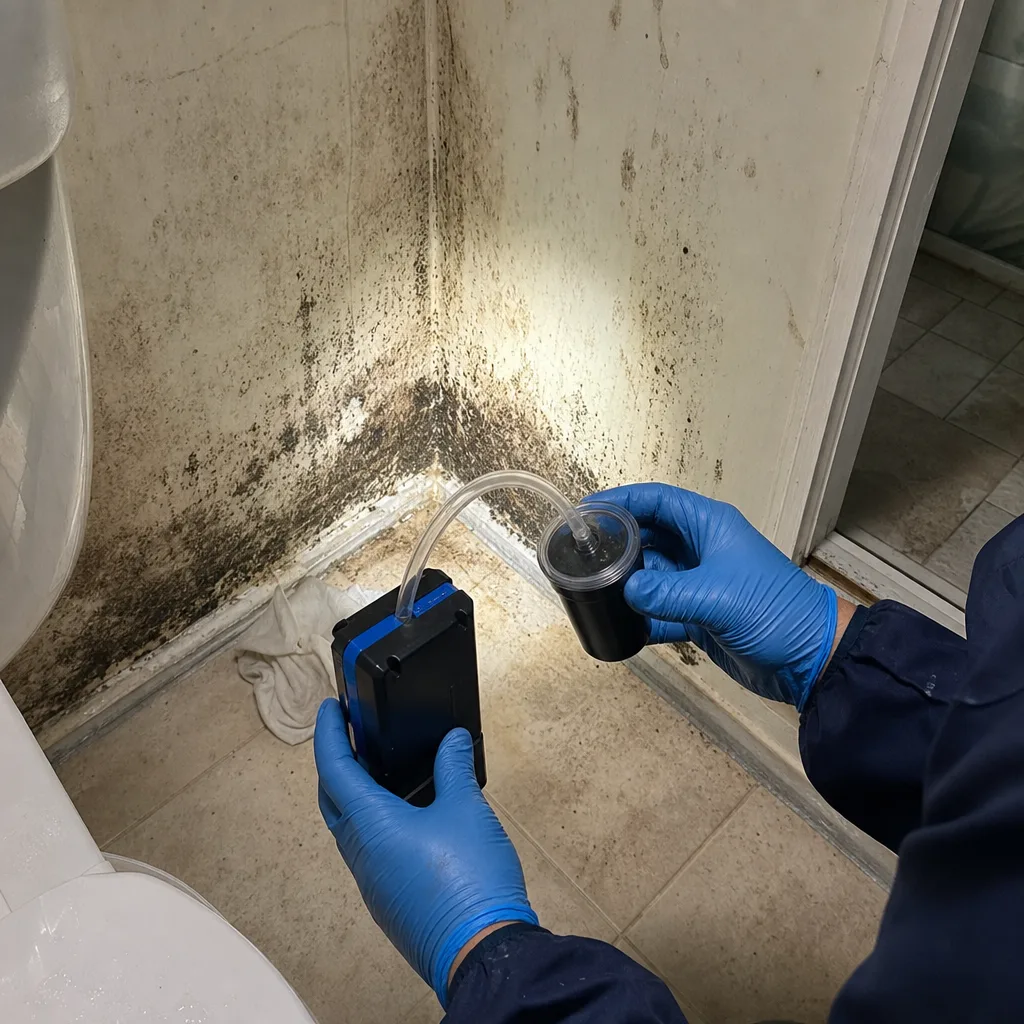
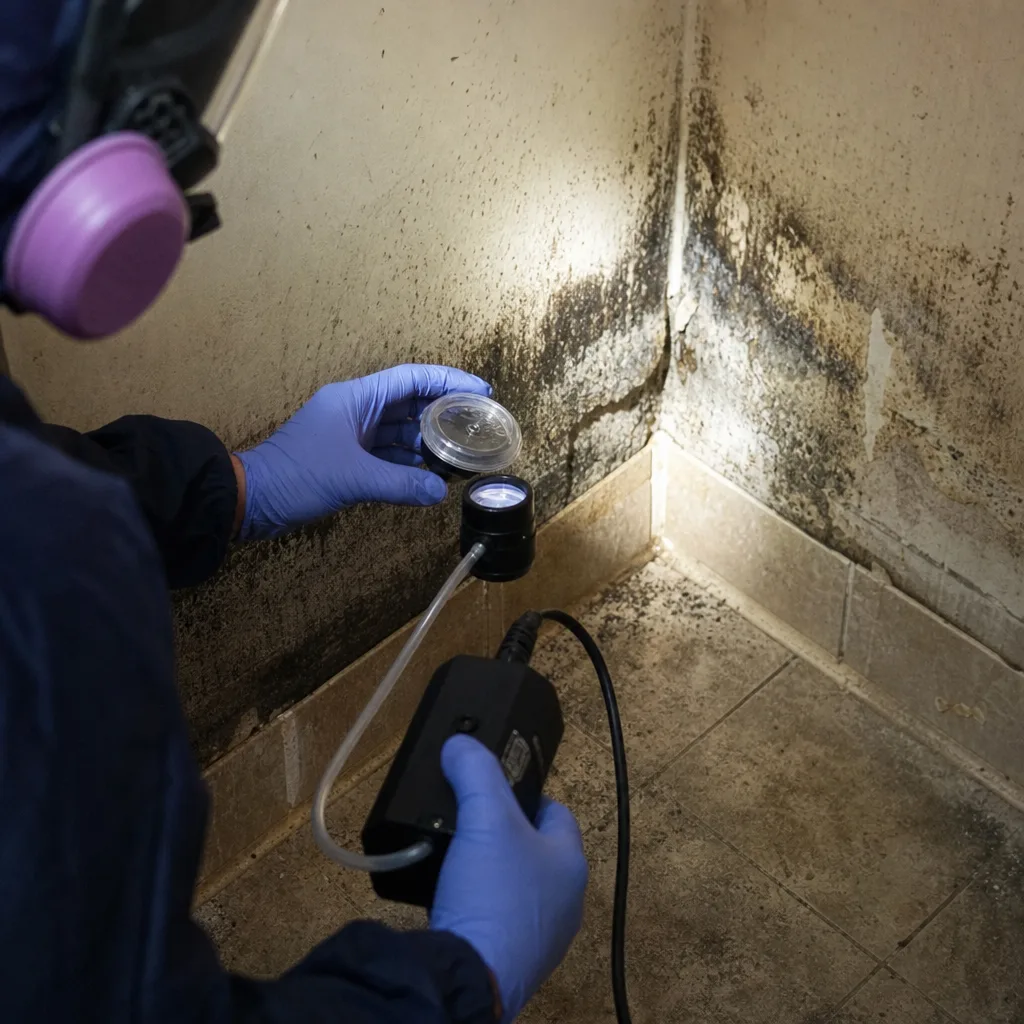
Every Fort Lauderdale inspection begins with a multi-vector moisture assessment, not a visual walkthrough. We map three potential entry points from the first reading: roof breach, rear seawall or canal surge, and tidal street flooding at the front curb. In finger-island communities like Las Olas Isles, Harbor Beach, and Rio Vista, these three sources routinely feed the same wall assembly simultaneously. Our technicians use thermal imaging and penetrating moisture meters to read inside CBS block cavities, where Fort Lauderdale’s 2-5 foot water table creates hidden saturation that surface readings miss. Air and surface samples are sent to a third-party lab; results are included in your written scope with photo documentation before any work is authorized.
Mold Removal
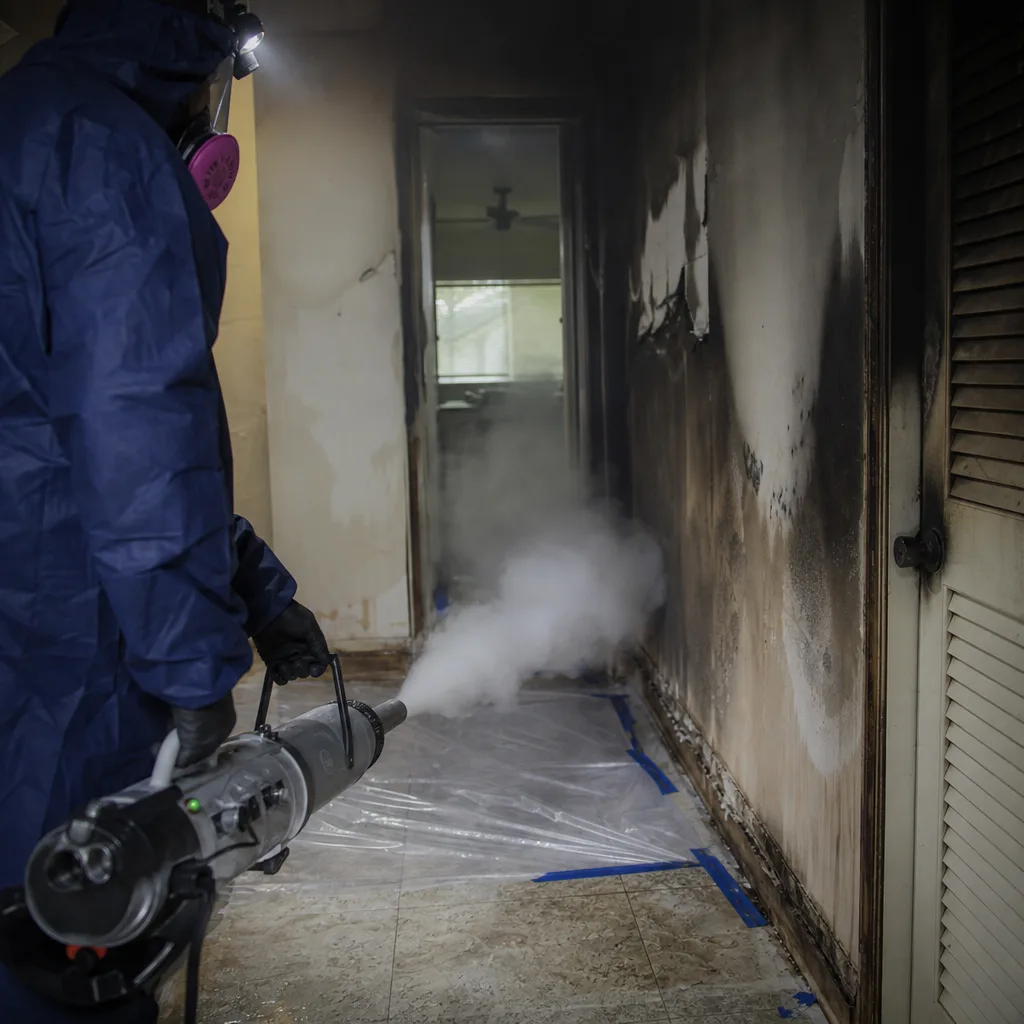
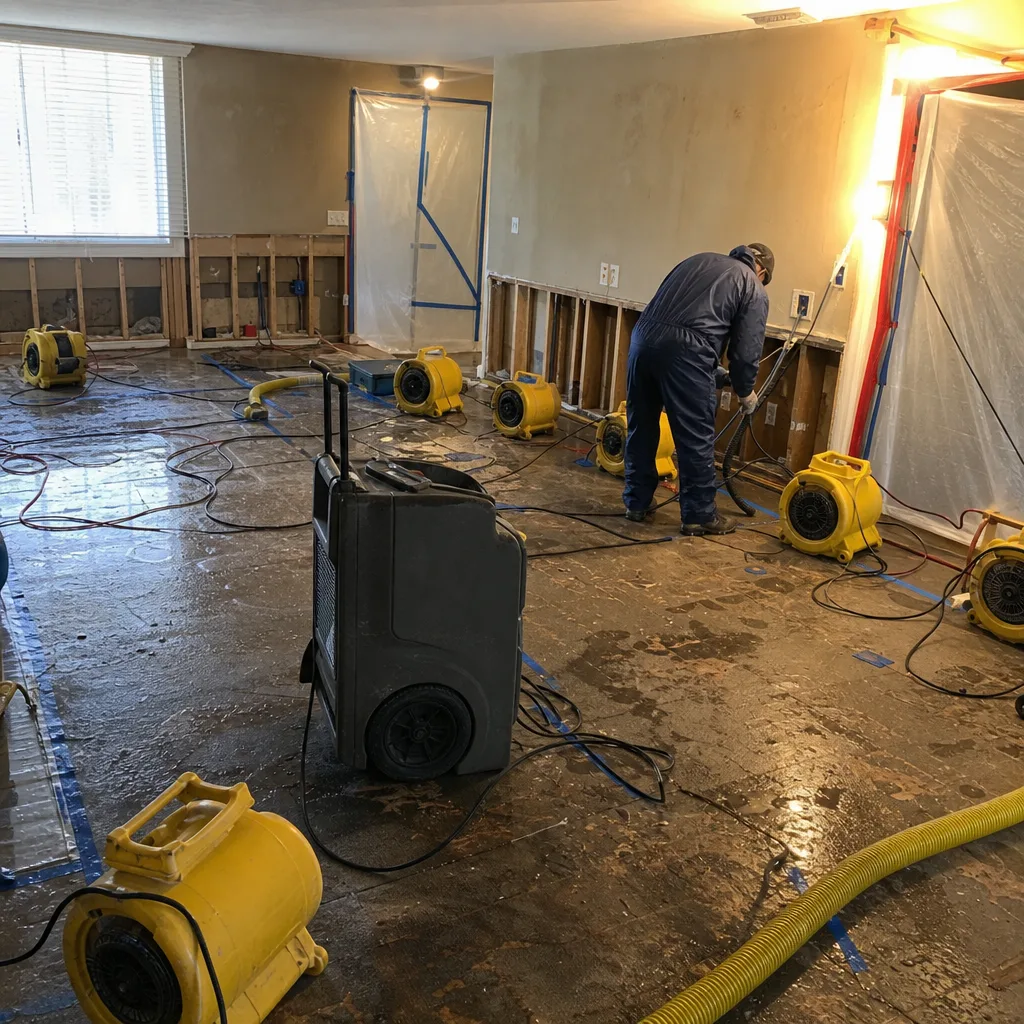
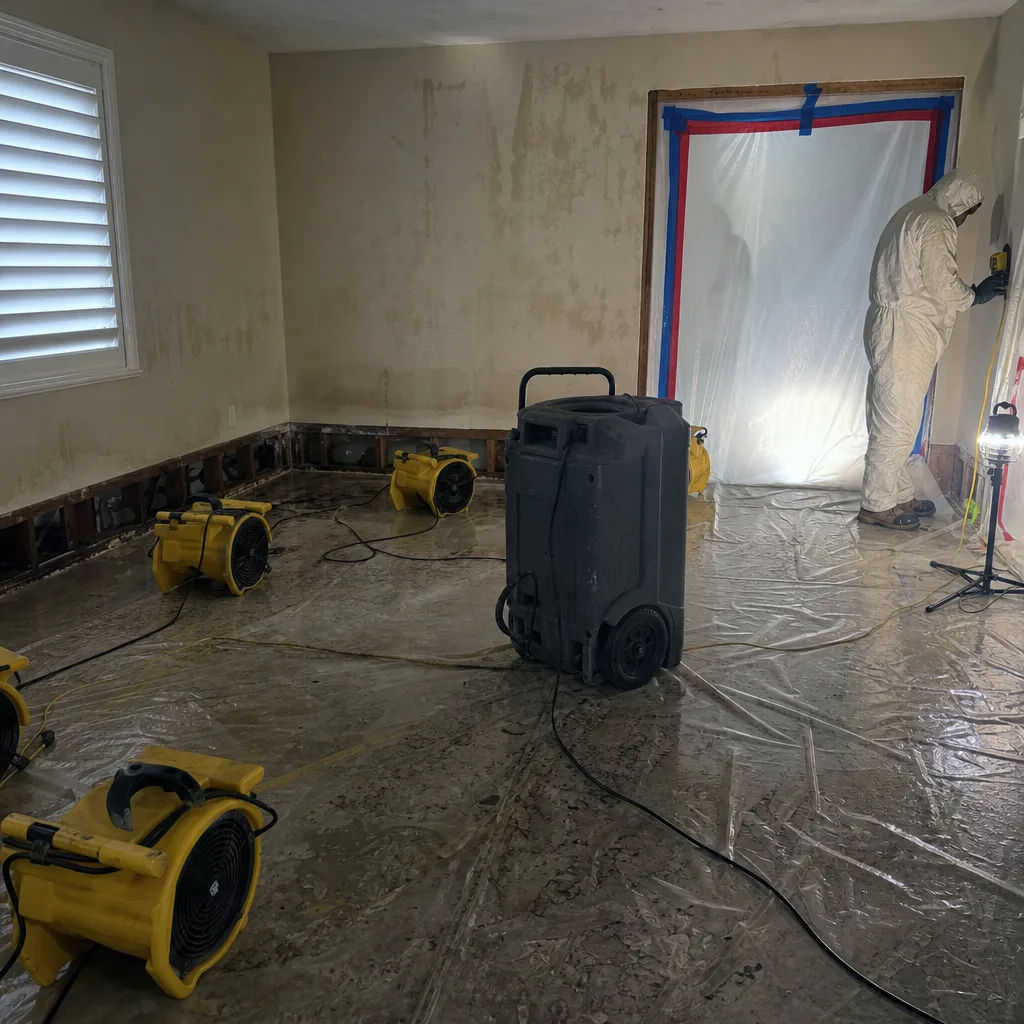
Removal in Fort Lauderdale means accounting for the marine-grade ambient moisture that never really leaves the air. We establish containment barriers with negative air pressure, run HEPA filtration during all disturbance, and remove contaminated drywall, insulation, and framing to the depth our moisture mapping dictates - not to the visible stain line. In 1960s-era Lauderdale Isles ranches, we’ve learned that mold in the block cavity often extends 18-24 inches beyond where the ceiling shows discoloration, because the flat roof’s slow leak and the slab’s groundwater wick meet in the same wall. Our Mold Remediation team documents every square foot removed with before-and-after photography.
Black Mold Remediation
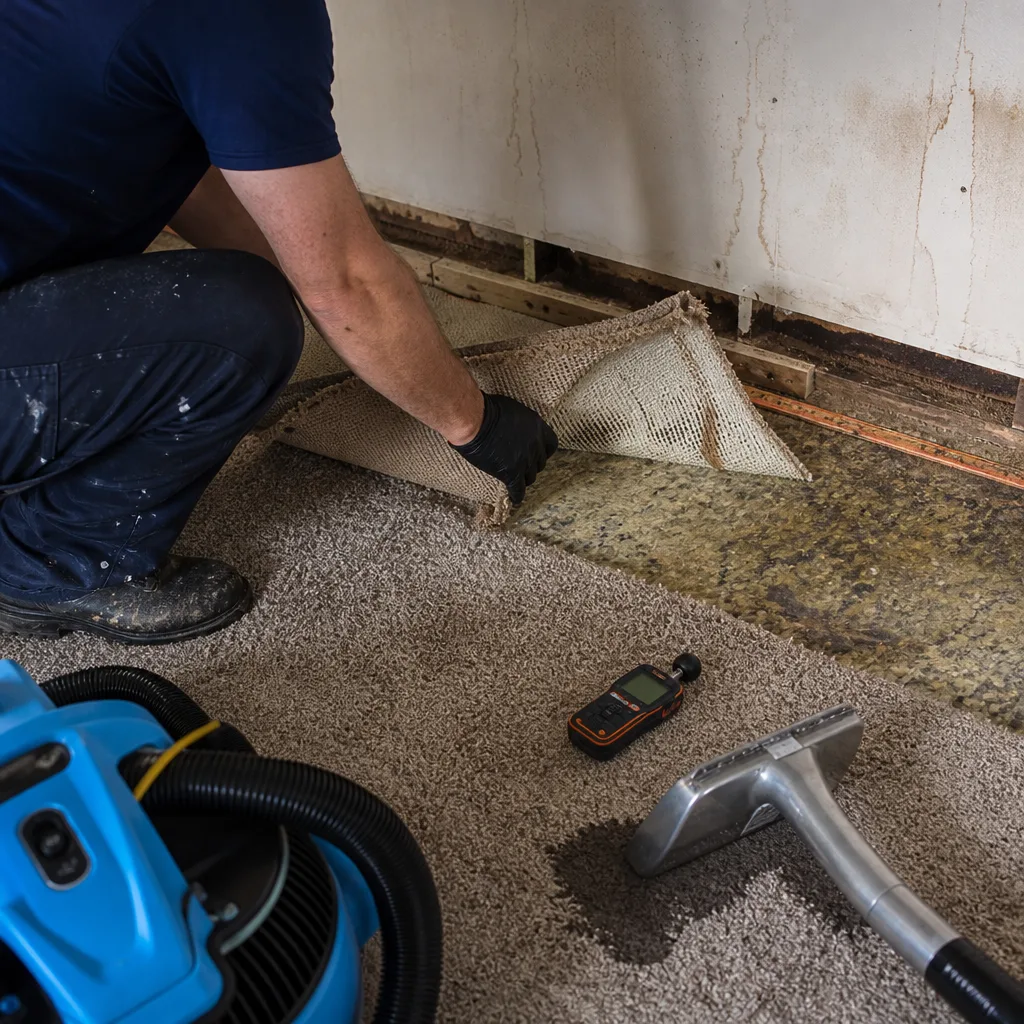
Stachybotrys chartarum and other toxigenic species require the same containment rigor anywhere, but Fort Lauderdale’s humidity changes the timeline. In our climate, a water intrusion event reaches active mold growth in 48-72 hours, not the 5-7 days typical of drier markets. Black mold remediation here demands faster containment setup and longer dehumidification holds, because the ambient vapor pressure differential works against drying even after the source is stopped. We use Dri-Eaz and Phoenix dehumidification systems sized to the cubic footage of the affected space, with daily moisture logs that prove the drying curve to your adjuster.
Air Quality Restoration
Post-remediation air quality in Fort Lauderdale isn’t just about passing a spore count. Our air scrubbers run HEPA filtration and activated carbon stages to address the musty volatile organic compounds that linger after visible mold is gone. We don’t declare a space clear until third-party post-verification sampling confirms airborne spore levels at or below outdoor baseline for the Fort Lauderdale metro area, documented in your closing packet with the photo record and signed warranty.
Moisture & Humidity Control
This is where Fort Lauderdale jobs succeed or fail long-term. We install permanent dehumidification solutions, seal slab penetrations, and specify vapor barriers for crawl spaces and block cavities based on your property’s specific water table exposure. Without this step, groundwater wicking continues, and mold returns within one wet season. Haven Standard, Clause 1: written price before work begins, including the moisture control phase.
Crawl Space Treatment
Fort Lauderdale’s older stock has limited crawl space construction, but where they exist - particularly in elevated homes near the Intracoastal - they sit directly above the 2-5 foot water table. We treat these with sealed vapor barriers, conditioned air supply, and sump pump specification where hydrostatic pressure demands it. Every crawl space scope includes a written moisture control plan with equipment specifications and expected readings.
What happens when you call
- 1
A real person answersNo phone trees - you reach a local pro.
- 2
You get an upfront price rangeHonest numbers before anyone is dispatched.
- 3
A background-checked tech heads outLicensed & insured, dispatched right away.
- 4
You approve before work beginsNothing starts until you say go.
 Before
 After
AfterTrusted Brands We Service in Fort Lauderdale
Our Fort Lauderdale crews deploy professional-grade drying systems from Phoenix, XPOWER, and B-Air, with Injectidry systems for cavity drying inside CBS block walls. We stock HEPA filtration media, antimicrobial formulations rated for Florida’s high-humidity application windows, and moisture detection equipment calibrated for the marine ambient conditions that throw off standard sensors. Parts and consumables are carried on every truck, so we’re not waiting on a Miami warehouse run while your containment sits open. Equipment is documented by serial number in your job file, with runtime logs attached to every invoice.
Common Mold Remediation Problems We See in Fort Lauderdale Homes
- Drying only the visible stain while groundwater wicks through the slab. The 2-5 foot water table across Fort Lauderdale means block-cavity saturation continues for weeks after surface moisture readings look acceptable. We see this most in 1960s CBS ranches in Edgewood and central Fort Lauderdale, where contractors ran fans on the carpet while the block behind it stayed wet.
- Treating canal-front properties as single-source losses. A Las Olas Isles home can have roof breach from above, seawall failure at the rear lot line, and king-tide street flooding at the front curb, all feeding the same wall. Standard single-source drying protocols fail without a three-vector moisture map from the first inspection.
- Assuming the modified-bitumen roof “looks fine.” These flat roofs on Fort Lauderdale’s legacy housing stock trap South Florida’s intense seasonal rain load and slowly saturate the block below. We’ve remediating mold that returned three weeks after a “successful” job because the roof contribution was never identified.
- Missing the king-tide cycle entirely. Recurring sunny-day flooding along SE 17th Street and low-lying east-side streets generates repetitive water damage claims outside named-storm events. Insurance causation fights are common here; our documentation - photo record, moisture logs, written scope - is built to win them.
Pricing for Mold Remediation in Fort Lauderdale, FL
Here’s what Fort Lauderdale homeowners actually pay, based on jobs we’ve scoped and documented since 2011:
| Service | Typical Range in Fort Lauderdale |
|---|---|
| Mold inspection & moisture mapping | $350-$650 |
| Contained mold removal (single room, <150 sq ft) | $1,800-$3,200 |
| Multi-room remediation with cavity drying | $3,500-$6,500 |
| Whole-house remediation with air quality restoration | $7,000-$15,000+ |
| Crawl space vapor barrier & dehumidification | $2,200-$4,800 |
| Post-remediation verification testing | $400-$750 |
Three factors push Fort Lauderdale jobs toward the higher end: multi-source water entry requiring three-vector assessment, block-cavity saturation demanding Injectidry or equivalent cavity drying, and the extended dehumidification holds our humidity demands. Every price is delivered in writing before work begins, with no scope-creep additions once the crew is inside - Haven Standard, Clause 1. Bring a competitor’s written estimate; we’ll review it at no charge with our Free Second Opinion.
We Also Serve Cities Near Fort Lauderdale
Our crews respond throughout Broward County, including Mold Remediation in Fort Lauderdale proper, Plantation, Pompano Beach, Hollywood, and Coconut Creek. Dispatch and scheduling are coordinated from our South Florida office; technicians serving Fort Lauderdale are locally routed, not driving down from Palm Beach or up from Miami-Dade.
Serving Fort Lauderdale, FL - Our Local Coverage Area
We’re based in the Fort Lauderdale area and know this community well. Use the map below to see our service coverage - if you’re nearby, we can almost certainly help.
FAQs - Mold Remediation in Fort Lauderdale
Because the water source was never fully identified or stopped. In Fort Lauderdale, that usually means groundwater wicking up through the slab from our 2-5 foot water table, or a low-slope modified-bitumen roof that continues slow-leaking into the block cavity while surface readings look dry. We see this repeatedly in 1950s-1970s CBS construction where the prior contractor dried the visible stain but missed the multi-vector entry. Our remediation includes a written moisture control plan with specified equipment and expected readings, not just removal and paint. Call (754) 254-1257 for a written inspection price.
It’s both, and treating it as only one is the error that costs homeowners their health and their claim. King-tide flooding introduces Category 2 or 3 water (depending on street debris and sewage intrusion), which requires antimicrobial treatment and often removal of porous materials. Within 48-72 hours in Fort Lauderdale humidity, that water becomes a mold job. Our protocol: categorize the water, extract, establish containment, and begin air-scrubbing same day, with mold assessment built into the drying log rather than delayed until visible growth appears. Photo documentation starts on arrival for your adjuster.
Yes - the growth timeline compresses and the spore release threshold drops. Stachybotrys and other toxigenic species reach active colonization in 48-72 hours here versus 5-7 days in drier climates, and the persistent high vapor pressure differential means disturbed colonies release more spores during remediation. Our containment and negative air pressure standards are calibrated for this; we don’t use inland Florida drying timelines or equipment sizing. Post-remediation verification testing confirms airborne levels at or below Fort Lauderdale outdoor baseline before we sign off.
We test and document, not guess. Category 1 is clean water from a supply line; Category 2 contains significant contamination and requires antimicrobial treatment; Category 3 is grossly contaminated and demands removal of porous materials and specialized cleaning of non-porous surfaces. In Fort Lauderdale, king-tide street flooding is almost always Category 2 or 3 due to storm-drain backflow and street debris. Canal surge can be Category 2 if the seawall is intact, Category 3 if sewage systems were compromised. We document the categorization with photo evidence and water sample results, because insurance causation fights in this city are common and winnable only with evidence.
Often yes, if containment can be established without cross-contaminating common HVAC or corridor spaces. Post-2000 luxury condos along the Intracoastal present specific challenges: salt-air fastener corrosion in building envelope assemblies, Class-A fire suppression systems that complicate dehumidification equipment placement, and association rules on contractor access. We scope these jobs with the property manager present, document the containment plan in writing, and perform localized remediation with HEPA air scrubbing in the affected unit. A full pack-out becomes necessary only when the contamination has entered the building’s common wall or HVAC riser. Call (754) 254-1257; we’ll inspect and give you a written scope with both options priced.
We were called to a 1962 CBS ranch on a canal lot in Lauderdale Isles after a king-tide cycle soaked the front curb while a low-slope modified-bitumen roof breach dripped into the same wall cavity. Our techs ran moisture mapping across three entry vectors - roof, rear seawall, and tidal street flooding - logged elevated moisture readings in the block, performed category 2 water extraction, set containment with air movers and Dri-Eaz dehumidification, and applied antimicrobial treatment before any structural drying could hold. The homeowner had been chasing a “musty smell” for months because the standard single-source drying protocol their prior contractor used never accounted for the groundwater wicking up through the slab.
Written by Alicia Brennan, Owner at Back to Dry Restoration, serving Fort Lauderdale since 2011.