
Last updated September 23, 2026
Free visual inspection and a written scope of work before any mitigation begins - photos, moisture readings, and drying logs go in your claim file
The scope we write is the scope we bill. Anything new gets shown to you, in writing, before we touch it.
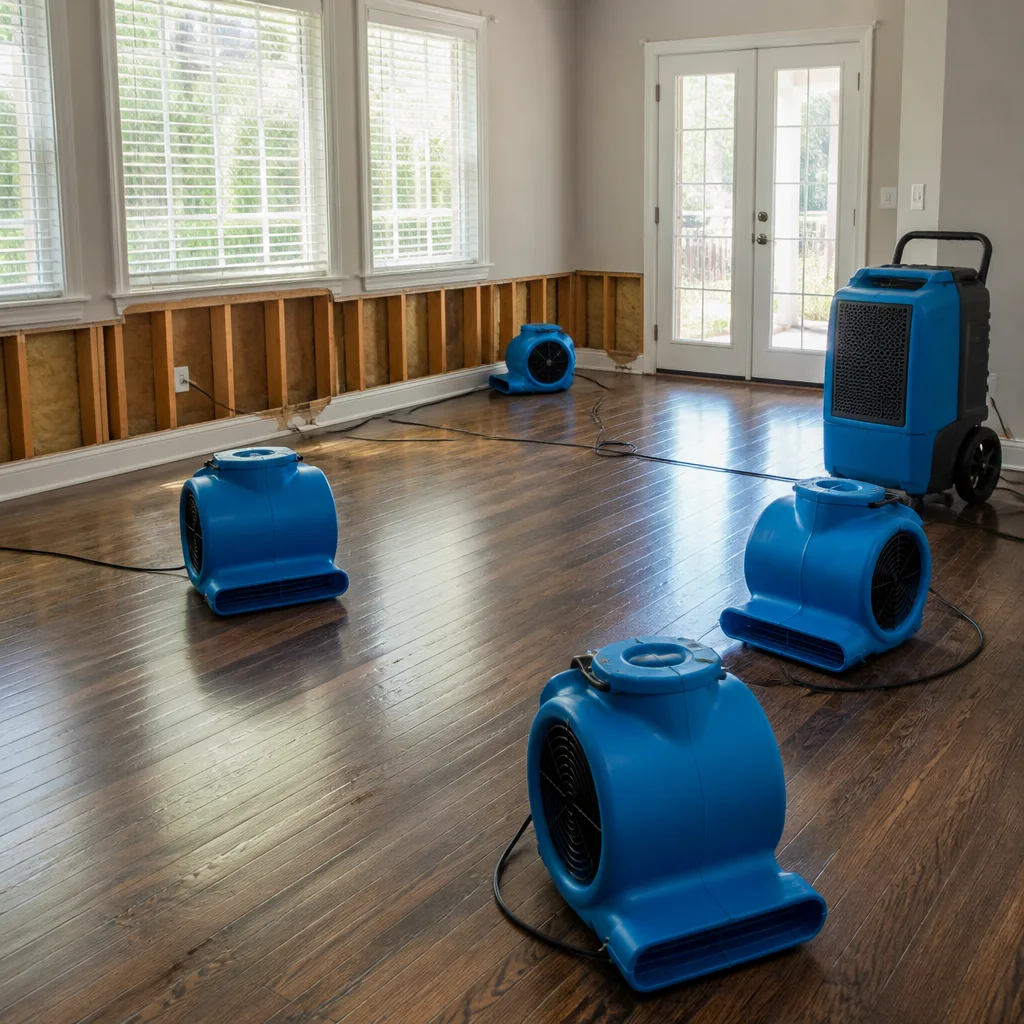
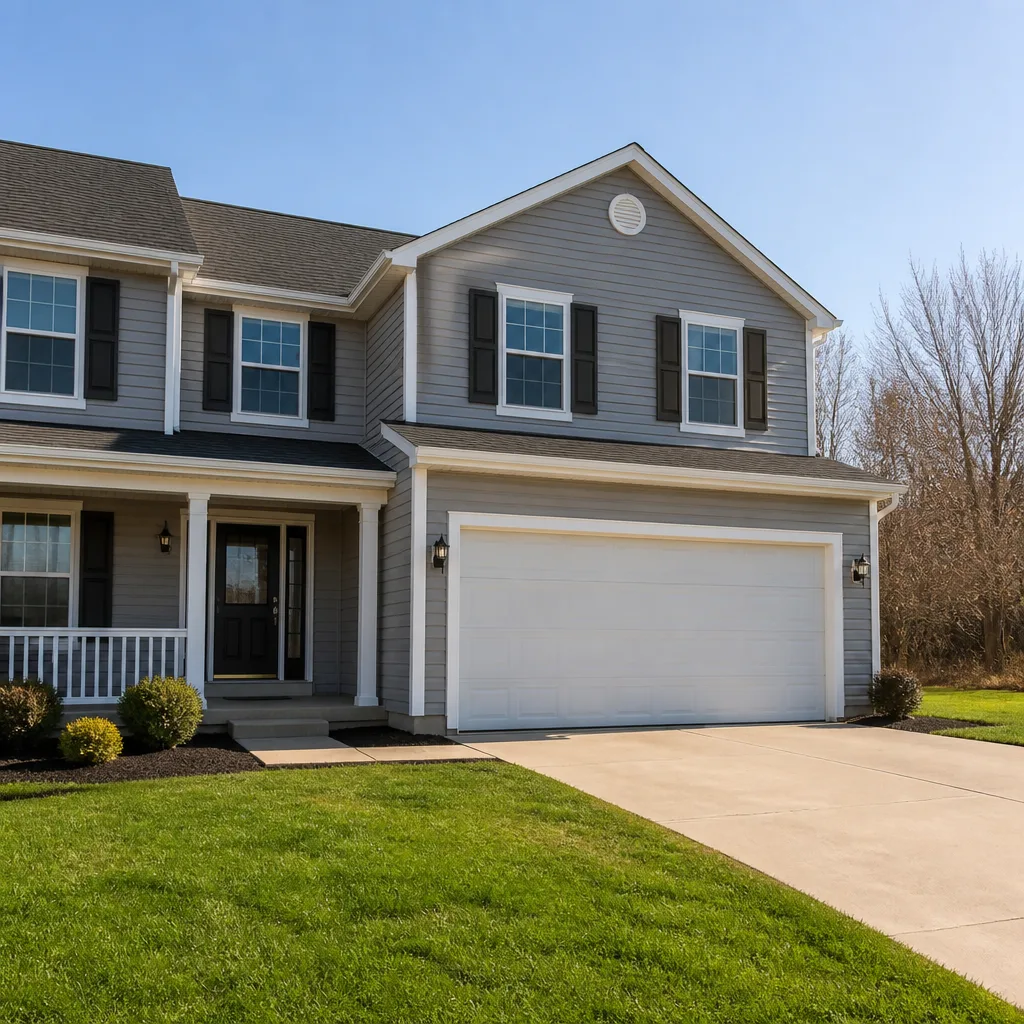
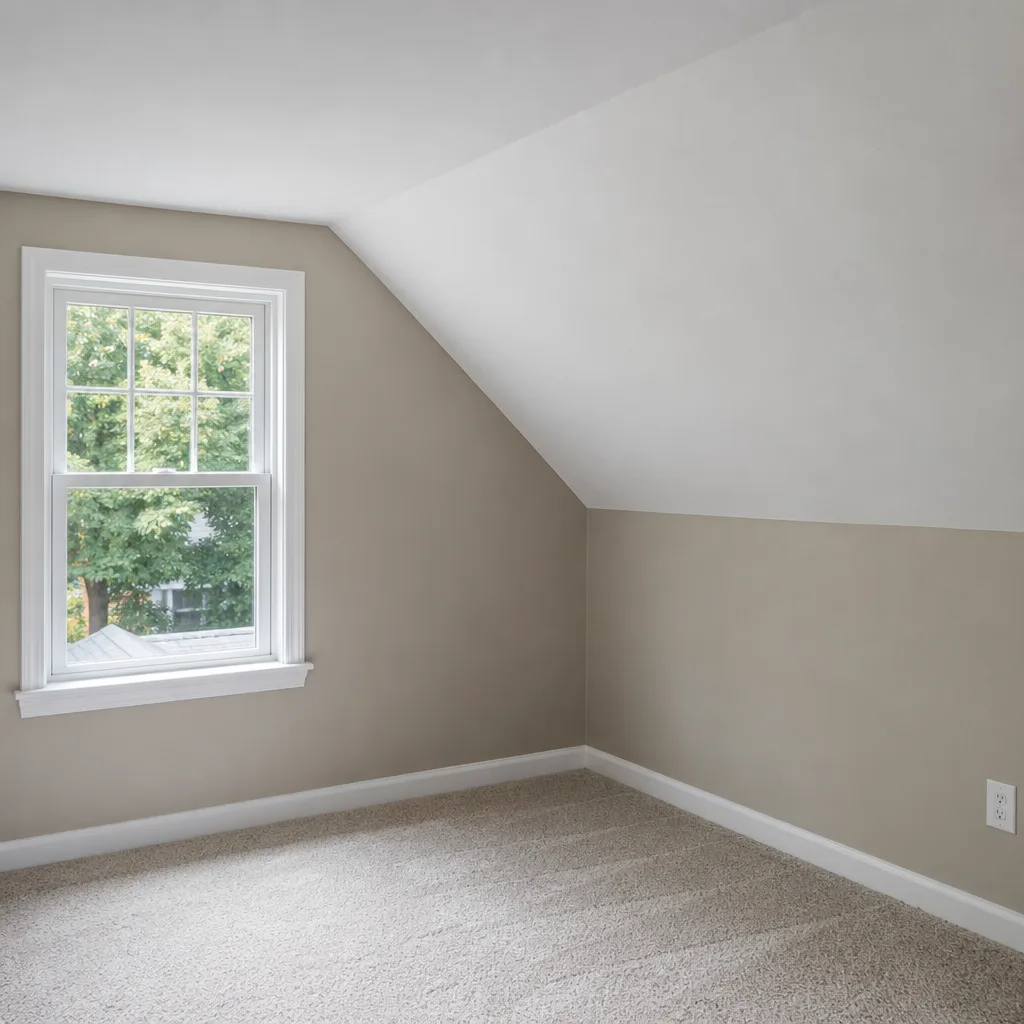
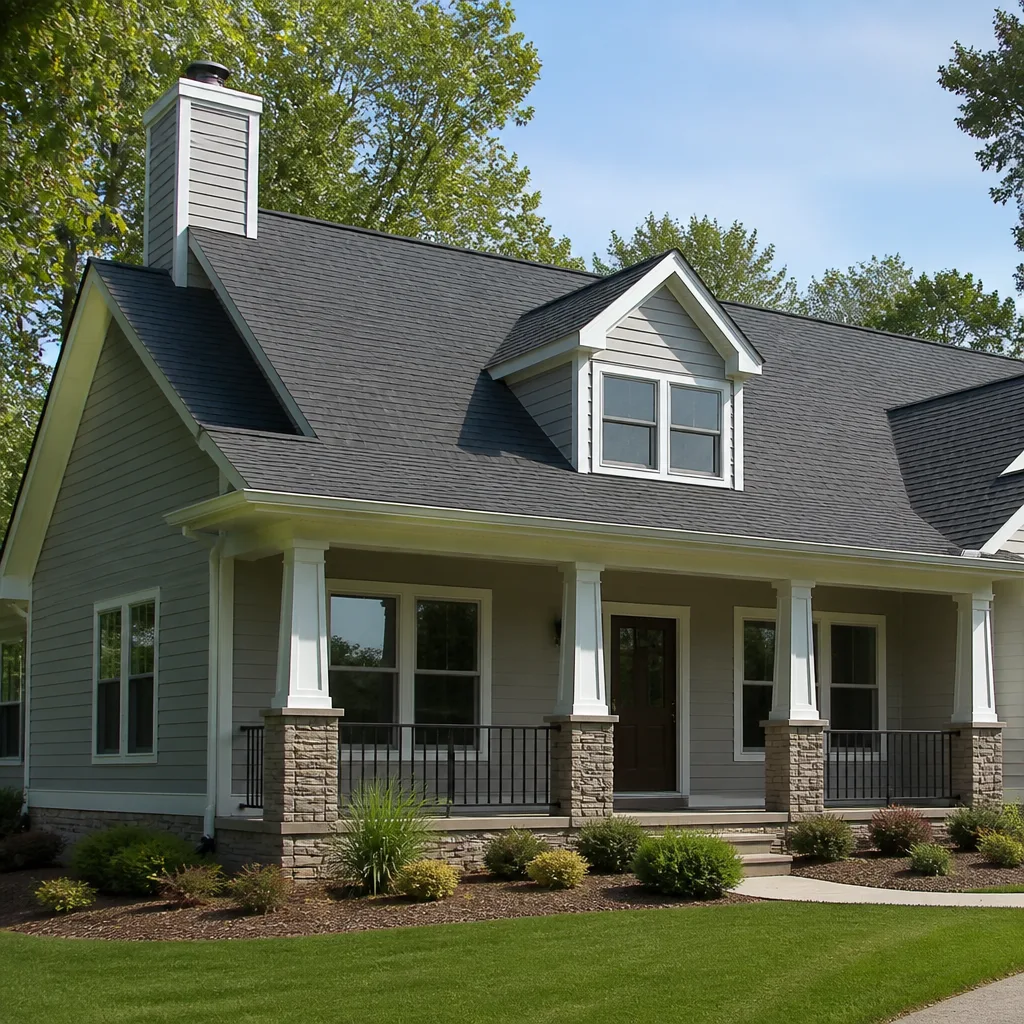
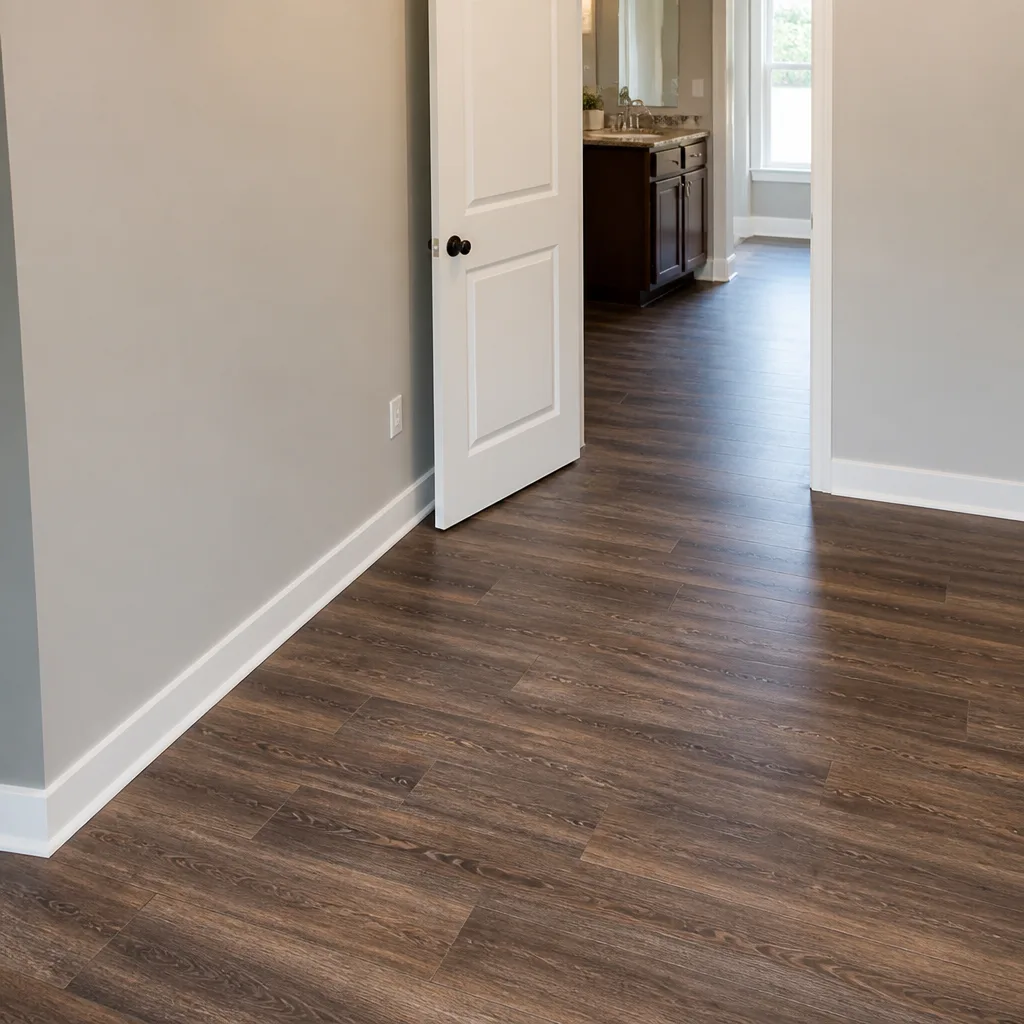
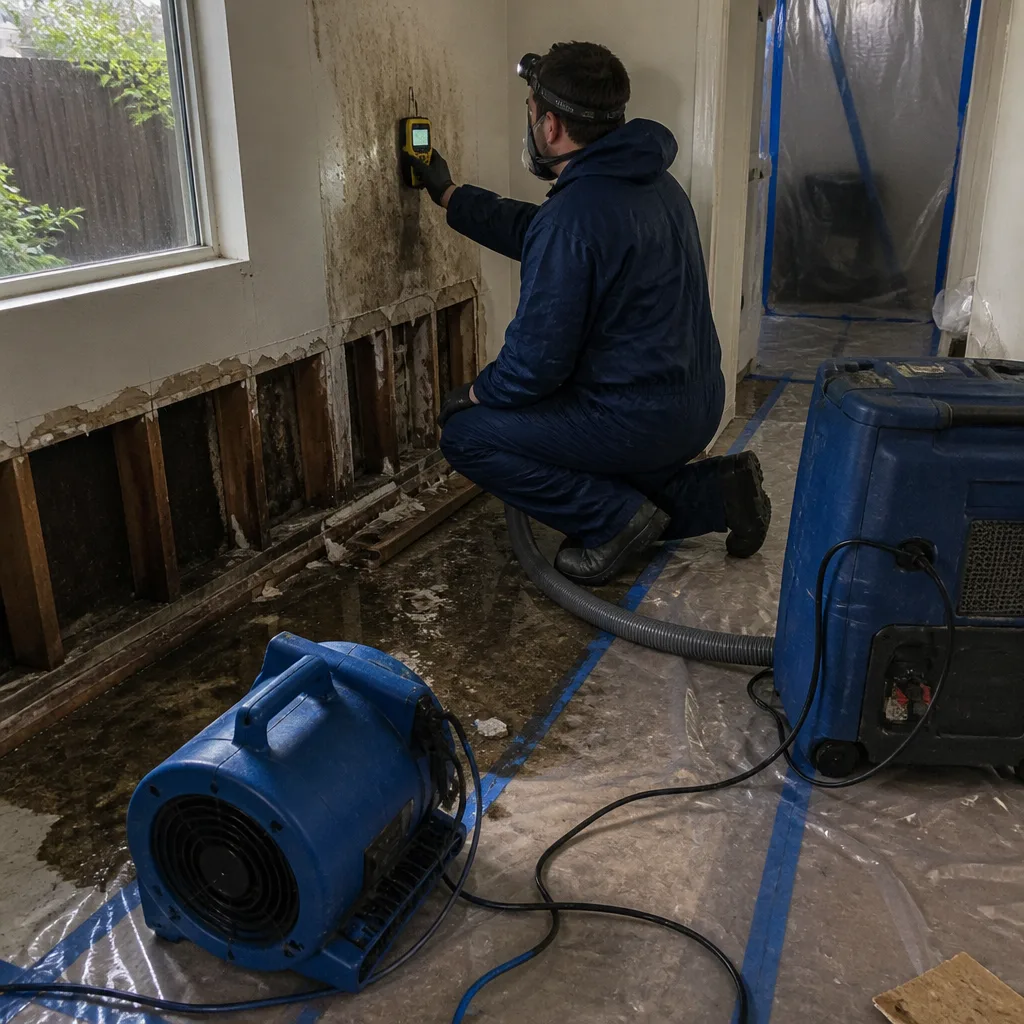 Before
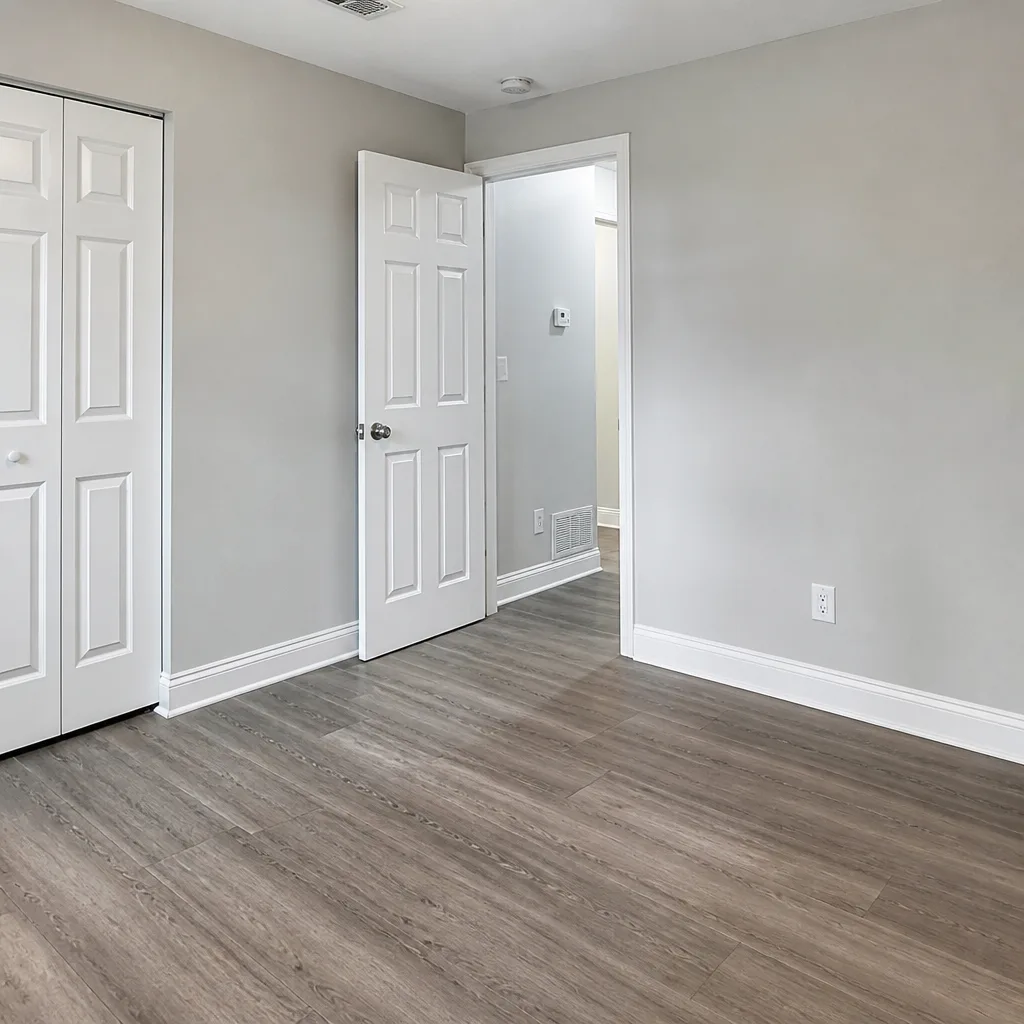 After
After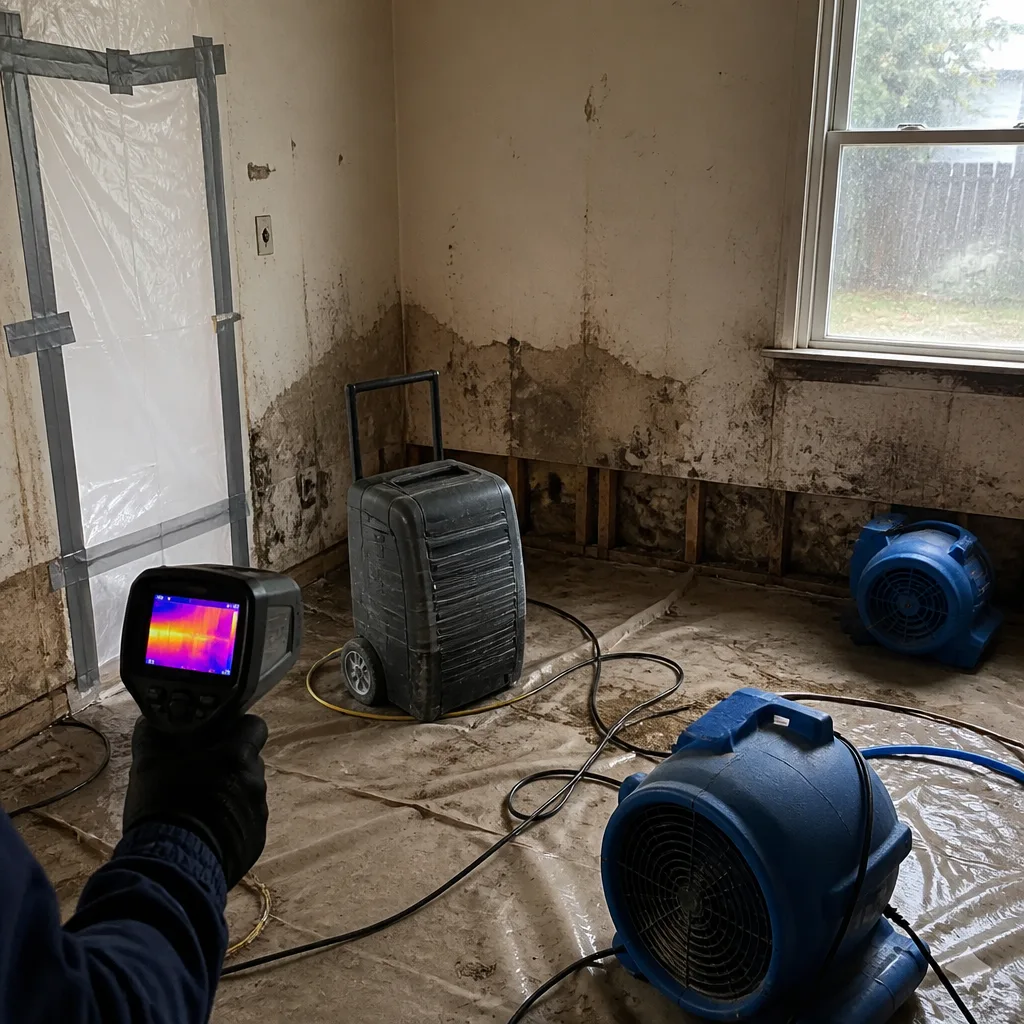 Before
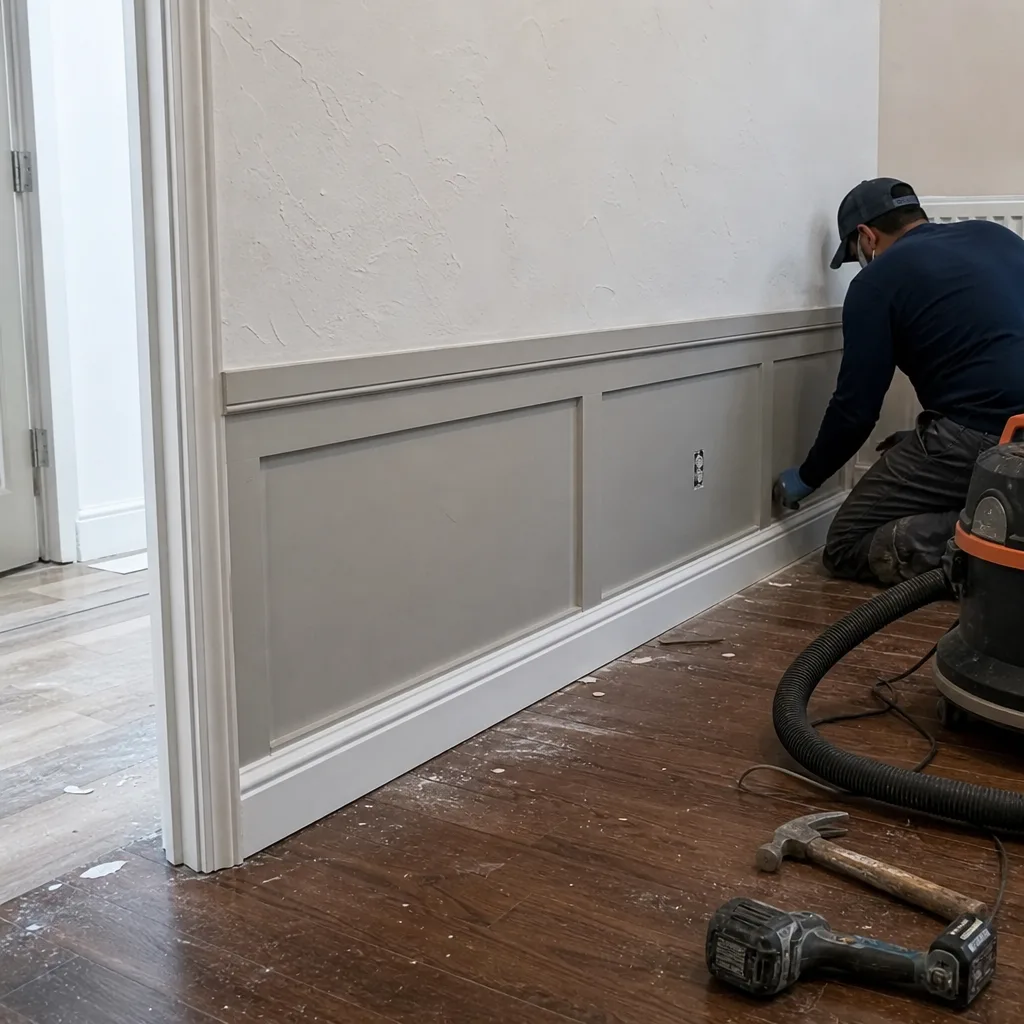 After
After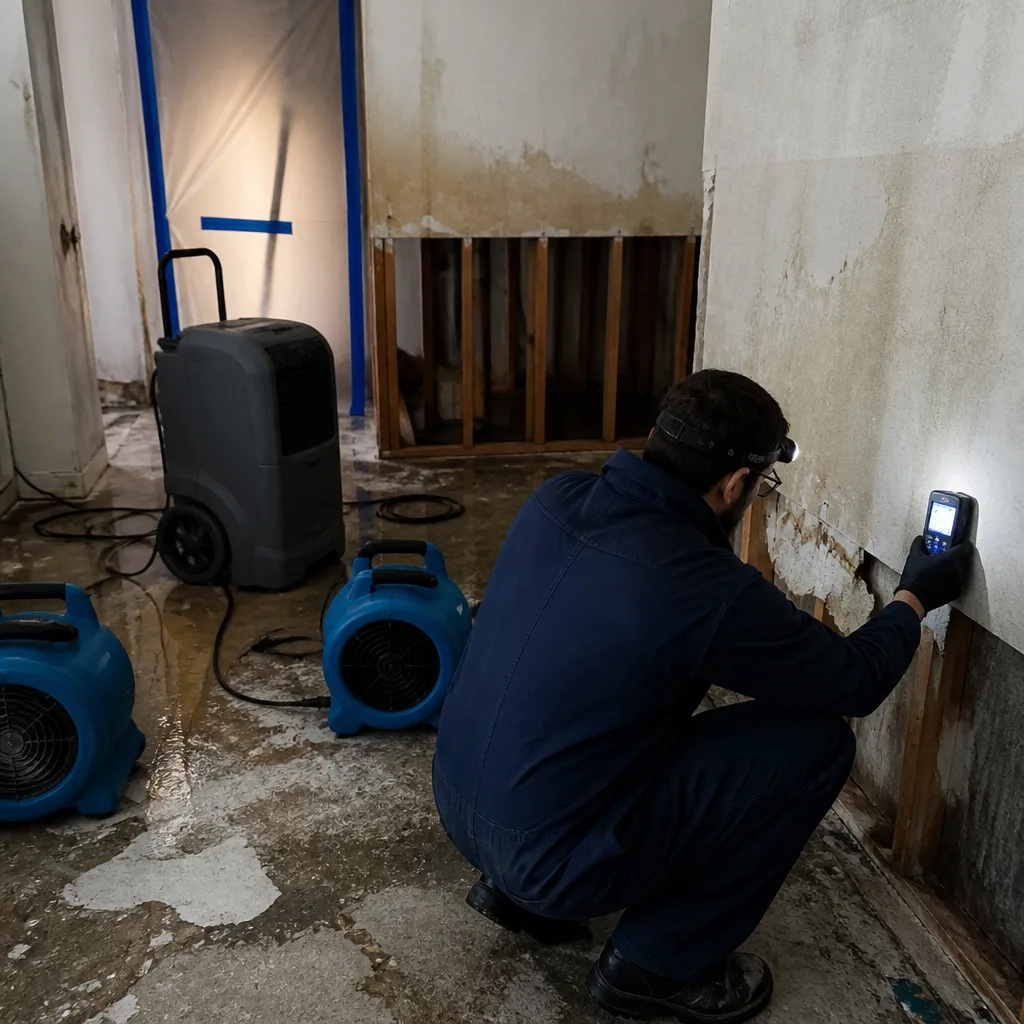 Before
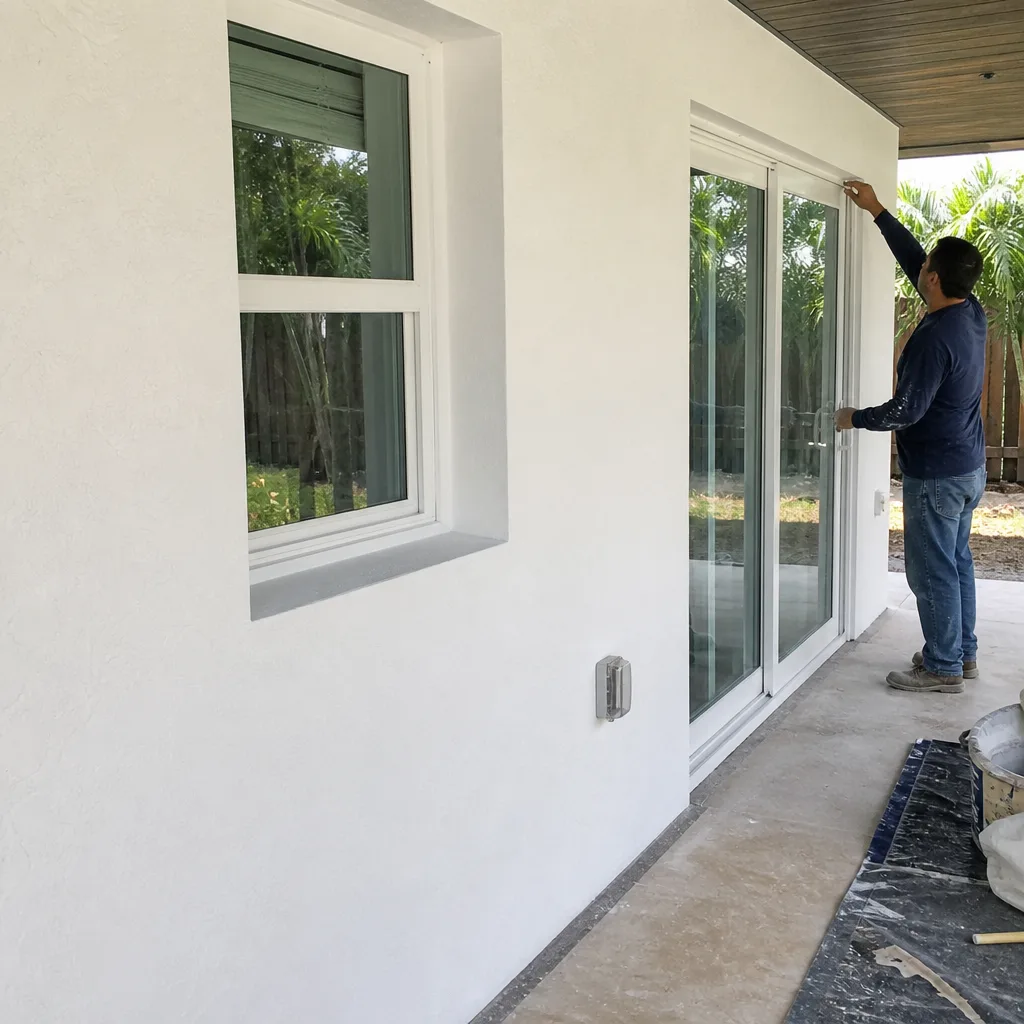 After
AfterThe Complete Guide to Damage Restoration in Fort Lauderdale
The average disputed water damage claim in Florida takes 14 months to resolve - not because the damage was unclear, but because the restoration company never produced a daily drying log the adjuster could read. In Fort Lauderdale, where humidity rarely dips below 75% even in January, that documentation gap is even more costly. Moisture that reads “dry” in Denver reads “saturated” here unless your technician calibrates to local baseline conditions. This guide - and our more guides & resources - maps every link in the restoration chain, from the first phone call to the final rebuild invoice, so nothing gets handed to an insurer undocumented. You’ll learn how Fort Lauderdale’s climate affects drying protocols, why Florida’s Assignment of Benefits reform changed who controls your claim file, and exactly what deliverables should sit in your hands before any crew leaves your property.
Quick Answer
Damage restoration in Fort Lauderdale is the documented process of returning a property to pre-loss condition after water, fire, mold, storm, or biohazard damage, with each phase - mitigation, documentation, scope writing, and rebuild - producing records that an insurance adjuster can verify. In this market, proper restoration requires equipment calibrated to South Florida’s high ambient humidity and a written scope delivered before work begins. DryMark Restoration Fort Lauderdale operates under The Haven Standard, which requires a written price before any work starts, a photo record on every visit, and a 365-Day Done Right Promise on every job.
Table of Contents
- How Fort Lauderdale’s Climate Changes the Math
- The Mitigation Phase: Stopping Damage Before It Spreads
- The Documentation Chain: Building a Claim That Gets Paid
- Scope Writing: The Written Price Before Work Starts
- The Rebuild Phase: Why Mitigation and Reconstruction Shouldn’t Merge
- Florida’s Assignment of Benefits Reform: What Homeowners Lose
- How to Read a Moisture Map and Psychrometric Report
- The Complete Deliverable Checklist
 Before
 After
AfterHow Fort Lauderdale’s Climate Changes the Math
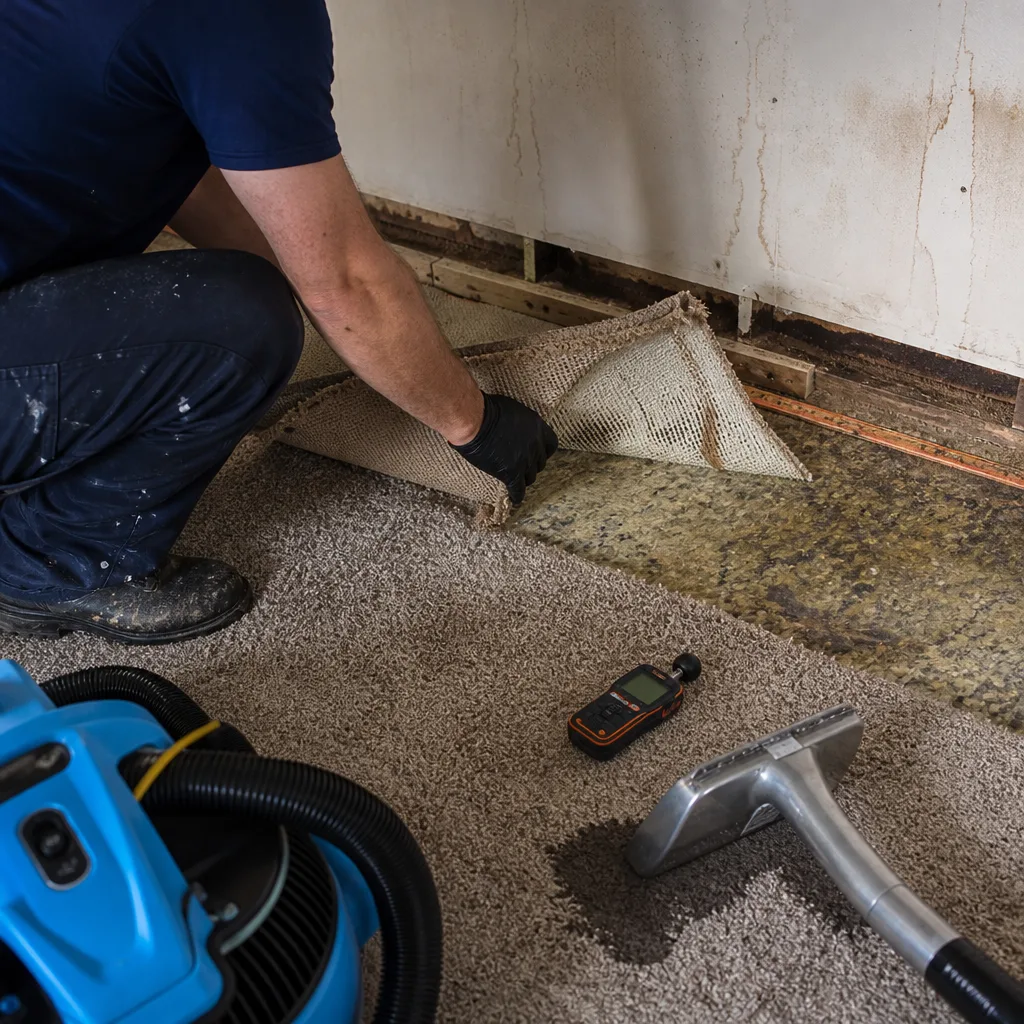
Fort Lauderdale’s average relative humidity hovers between 75% and 85% year-round, with summer afternoons regularly pushing past 90%. That matters because every moisture meter and every dehumidifier in the industry is designed around standard psychrometric conditions - roughly 68°F and 50% relative humidity. When ambient humidity runs 25 to 40 points above that baseline, readings distort and drying timelines stretch.
We’ve seen this in Victoria Park homes where a technician declared a subfloor “dry” at 16% moisture content, not realizing the meter was calibrated for arid-climate baselines. In Fort Lauderdale’s ambient conditions, that same reading indicated active wicking up the drywall. The homeowner paid for a cosmetic repaint that failed within eight weeks because the structure was still wet.
Professional-grade drying systems from Dri-Eaz and Phoenix include regional calibration protocols, but only if the operator applies them. The difference shows up in vapor pressure differential - the engine that actually pulls moisture out of materials. In high-humidity environments, the differential between wet materials and the surrounding air shrinks, so equipment must run longer, air must move faster, and containment becomes more critical. A drying chamber sealed with 6-mil poly in Fort Lauderdale isn’t overcautious; it’s the difference between a three-day dry and a seven-day mold incubation.
Our crews document baseline conditions on every job: outdoor temperature and humidity, indoor readings at three heights per room, and equipment settings adjusted to those numbers. That record becomes part of the daily drying log, and it’s why insurers pay our invoices without the back-and-forth that stalls other companies’ claims for months.
Neighborhoods near the Intracoastal - Rio Vista, Las Olas Isles, Coral Ridge - face additional salt-air corrosion on equipment and faster organic growth on damp materials. We adjust our protocols there: shorter inspection intervals, stainless-steel equipment where possible, and earlier antimicrobial application on cellulose materials.
The Mitigation Phase: Stopping Damage Before It Spreads
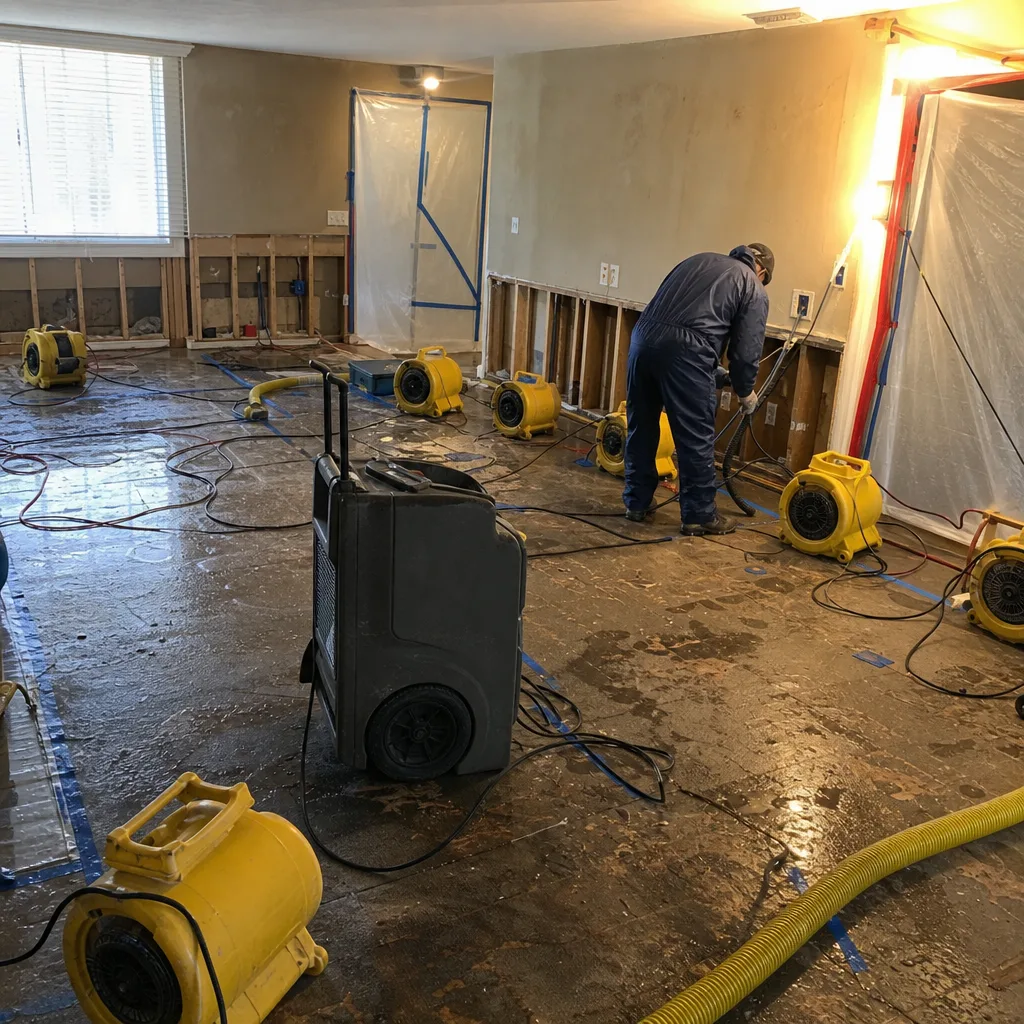
Mitigation is emergency work: extraction, containment, stabilization. In Fort Lauderdale, speed matters differently depending on the damage type.
Water damage moves horizontally through slab-on-grade construction faster than in basement markets because there’s no below-grade buffer. A burst supply line in a Galt Mile condo can saturate three units in under four hours through the concrete slab’s capillary action. We deploy truck-mounted extraction, portable units from B-Air, and sub-surface drying with Injectidry systems to pull water from under finished flooring without demolition.
Fire and smoke damage requires immediate corrosion control on electronics and metal fixtures. Florida’s salt air accelerates acid formation from smoke residue. Within 24 hours, unprotected brass fixtures in a Harbor Beach home can pit beyond restoration.
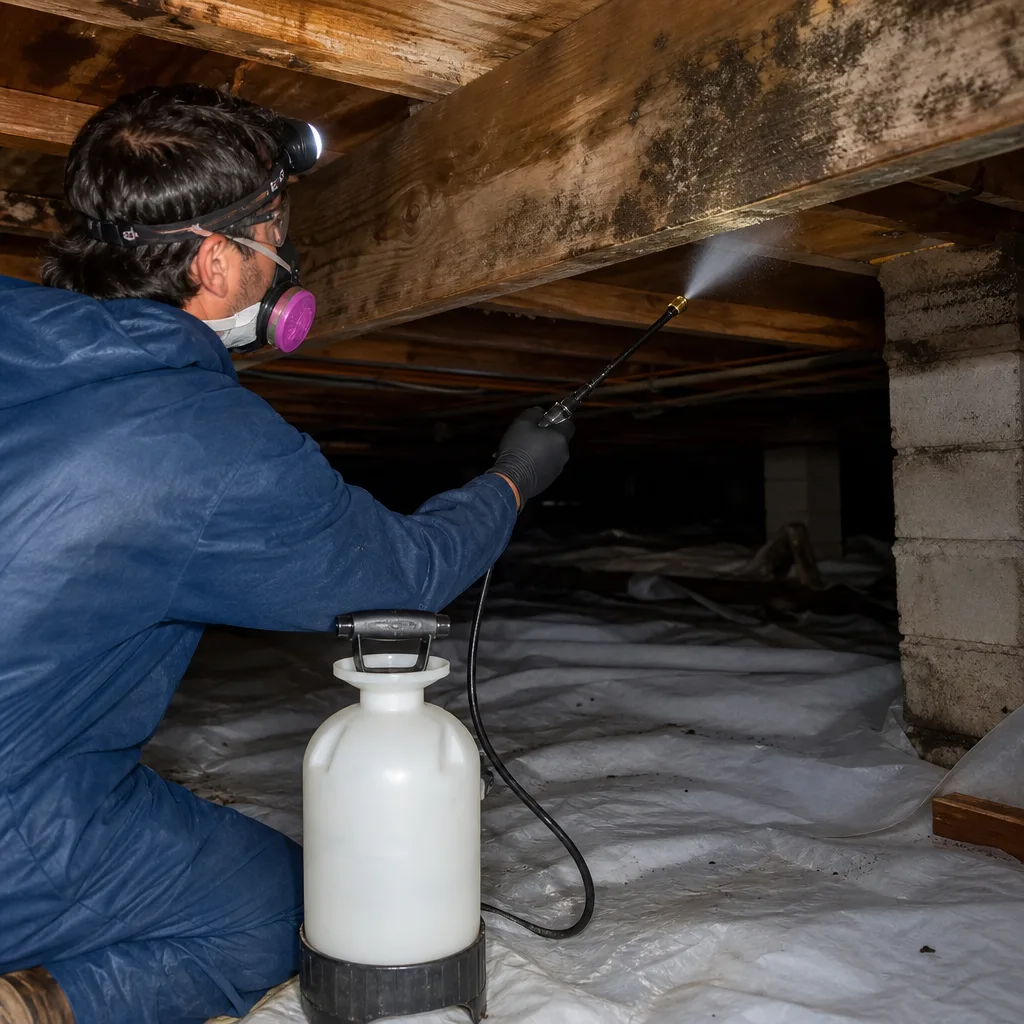
Mold in Fort Lauderdale’s climate can colonize wet drywall in 48 to 72 hours. Not “might” - will. We’ve documented Aspergillus and Penicillium growth on water-damaged sheetrock in Edgewater homes within 60 hours of the initial loss.
Biohazard and sewage carries Category 3 contamination requiring full PPE, negative air containment, and EPA-registered disinfectants. No exceptions. The health risk isn’t theoretical; we’ve handled secondary contamination in Wilton Manors properties where untrained cleaners missed porous material saturation.
The mitigation phase ends when the structure is stable and dry enough for assessment - not when it’s fully restored. Confusing these stages is how homeowners end up with rebuild crews tearing out walls that should have been dried in place, or mitigation crews doing structural work they’re not licensed to warranty.
The Documentation Chain: Building a Claim That Gets Paid
Every restoration invoice an insurer disputes has the same flaw: a gap in the documentation chain. The chain has four links, and each must connect to the next without interruption.
- Initial assessment with photo record. Every affected surface, every moisture reading, every piece of equipment placed - photographed, timestamped, and geotagged. Not “before and after.” Every visit. Haven Standard, Clause 4 requires this as a standard deliverable, never an upsell.
- Daily drying log with psychrometric data. Temperature, relative humidity, and specific humidity recorded at the same three points per room, every 24 hours, until materials reach dry standard. This log proves the equipment ran long enough and conditions were controlled. Without it, an adjuster can claim “excessive drying time” and cut the invoice by 30%.
- Equipment placement records. Serial numbers, placement diagrams, runtime hours. Proves the dehumidifier rated for 1,200 square feet wasn’t parked in a 400-square-foot closet while the rest of the house dried on its own.
- Final moisture map with clearance readings. A room-by-room record showing every material at or below the dry standard for its type: 12% for hardwood, 15% for softwood framing, 5% or less for gypsum drywall. Signed by the technician and the homeowner.
We’ve restored over 12,000 homes since 2011, and every one had this chain intact before we submitted to insurance. The claims that drag on for 14 months? They’re missing one or more links, usually the daily drying log or the equipment placement record. Adjusters aren’t being difficult; they’re doing their job, and their job requires evidence.
In Fort Lauderdale, where humidity can make a “dry” house read borderline by northern standards, this documentation isn’t bureaucratic overhead. It’s the difference between full recovery and a partial denial that leaves you paying for someone else’s shortcut.
Scope Writing: The Written Price Before Work Starts
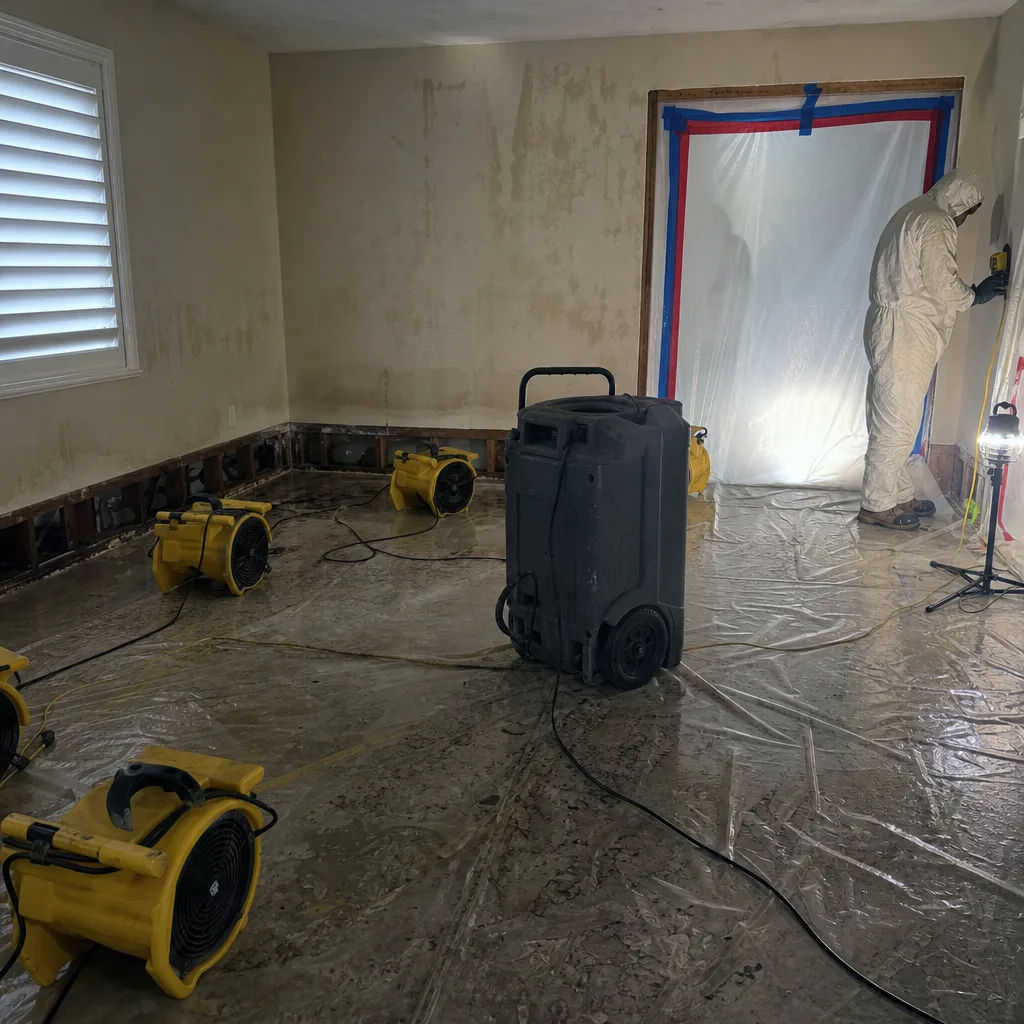
Haven Standard, Clause 1 is non-negotiable: a written price is delivered before anyone starts work, every time, with no exceptions. This isn’t a marketing position. It’s a documentation protocol that protects the homeowner, the insurer, and the restoration company from the scope creep that poisons this industry.
The written scope includes:
- Line-item costs for each phase of work, with quantities calculated from measured square footage, not estimates
- Material specifications by manufacturer and product number where applicable
- Labor hours calculated from industry-standard estimating platforms, not gut feeling
- Equipment rental rates with daily, weekly, and monthly breakpoints
- A clear statement of what’s NOT included, so there’s no ambiguity about downstream work
We deliver this in writing - physical or digital, signed by both parties - before the first dehumidifier hums or the first wall comes down. If conditions change during work (hidden mold behind a cabinet, for instance), the change order is also written, priced, and signed before proceeding.
This matters in Fort Lauderdale’s insurance market more than most. Florida’s litigation environment has made carriers hypersensitive to invoice inflation. A scope that grows 40% between day one and day five triggers automatic special investigation. A written scope with documented change orders doesn’t.
Our Water Damage Restoration in Fort Lauderdale page details how this applies specifically to water losses, but the principle holds across every service line.
We also offer a Free Second Opinion on any competitor’s written estimate. Bring us their scope and we’ll review it for coverage gaps, pricing accuracy, and documentation completeness - no charge. We’ve found missing moisture barrier specifications in crawl space jobs, unaccounted-for asbestos testing in pre-1985 homes, and equipment undersizing that would have extended dry times by days. These aren’t trivial errors. They become the homeowner’s problem when the insurer denies the supplemental claim.
The Rebuild Phase: Why Mitigation and Reconstruction Shouldn’t Merge
This is where most restoration chains break. A company that handles mitigation sees the rebuild revenue and wants both. A company that only rebuilds pressures the mitigation crew to leave walls stripped and ready. Either way, the homeowner gets a merged process with blurred documentation - and insurers have learned to reject these claims.
The rebuild phase is construction, not emergency response. It requires:
- Permit drawings and city inspection schedules
- Material lead times and subcontractor coordination
- Written change orders for any deviation from approved plans
- A final walkthrough with punch list and warranty documentation
None of this happens same-day. Promising otherwise is either ignorance or deception. In Fort Lauderdale, permitting through the city’s Building Services Division adds defined timelines that can’t be rushed - a process covered in our guide to Damage Restoration Permits, Codes & Inspections in FL: What You Need to Know. A proper rebuild for a water-damaged kitchen in Imperial Point - cabinets, flooring, drywall, paint - typically runs three to six weeks from scope approval to final inspection, depending on material availability and trade scheduling.
We separate these phases deliberately. Our mitigation crews document, dry, and stabilize. Our rebuild team scopes, permits, and constructs. The documentation chain continues - photo records on every visit, written updates at defined milestones - but the skill sets and the timelines differ. A technician who excels at psychrometric calculation isn’t necessarily qualified to read structural drawings, and a carpenter who can match 1970s Florida cypress paneling shouldn’t be calibrating a Phoenix 200HT dehumidifier.
The Haven Standard requires this separation because we’ve seen what happens when it’s ignored: moisture trapped behind new drywall because the dry standard wasn’t met, mold blooming inside six months, and the original restoration company long gone or claiming the rebuild contractor caused the problem. These are the kinds of issues we detail in our Damage Restoration Warning Signs: A Fort Lauderdale Homeowner’s Reference Guide.
Florida’s Assignment of Benefits Reform: What Homeowners Lose
In 2019, Florida reformed its Assignment of Benefits (AOB) laws, and the restoration industry in Fort Lauderdale changed permanently. Before reform, homeowners could sign their insurance benefits over to a restoration contractor, who then controlled the claim, negotiated with the insurer, and often litigated for higher payouts. Homeowners were largely uninvolved - which sounded convenient until they realized they’d lost visibility into their own documentation.
The reform restricted AOB use, capped attorney fee awards, and required more explicit homeowner consent. But it didn’t eliminate the practice entirely, and some contractors still push AOB agreements in emergency moments when homeowners aren’t reading carefully.
Here’s what signing an AOB actually means: the contractor owns your claim. They receive the insurance payment directly. They control what documentation goes to the adjuster. You no longer have standing to dispute their invoice, their methods, or their timeline. If they sue your insurer, you’re named as a plaintiff without necessarily knowing the litigation strategy.
We’ve reviewed AOB-driven claims where the homeowner never saw the daily drying log, never received the photo record, and only learned the scope had expanded when the insurer denied coverage and the contractor placed a lien. The documentation that should have protected the homeowner became the contractor’s leverage against the insurer, with the homeowner caught in the middle.
Haven Standard, Clause 1 exists partly in response to this practice. A written price before work starts, delivered to the homeowner directly, with no AOB required, preserves your control. You see what we document because you remain the policyholder. We coordinate with your adjuster, but we answer to you.
If a contractor in Fort Lauderdale hands you an AOB form at 2 a.m. while water is still spreading, that’s not a solution. It’s a transfer of your rights. Read it in daylight, with your agent on the phone, or call us instead. We handle emergency response without requiring you to sign over your claim.
How to Read a Moisture Map and Psychrometric Report
Insurance adjusters in Florida are increasingly requesting psychrometric data with claims. Understanding what you’re looking at protects you from both incomplete drying and invoice inflation.
A moisture map is a floor plan with readings marked at defined intervals. Each number is a percentage of moisture content for that material type, not a universal “wet/dry” scale. Hardwood at 14% is approaching concern; drywall at 14% is still wet. The map should show readings at multiple heights - baseboard, mid-wall, ceiling - because water doesn’t distribute evenly.
A psychrometric report tracks the air’s capacity to absorb moisture. Key terms:
- Relative humidity (RH): The percentage of moisture the air currently holds relative to what it could hold at that temperature. In Fort Lauderdale, 60% RH indoors during drying is actually excellent - outdoors it might be 85%. Context matters.
- Specific humidity: The actual mass of water vapor in the air, measured in grains per pound. More useful than RH for comparing day-to-day progress because it doesn’t shift with temperature.
- Vapor pressure differential: The pressure difference between moisture in wet materials and moisture in the surrounding air. This is what drives evaporation. A differential below 0.5 inches of mercury means drying has stalled and equipment needs adjustment.
- Tertiary drying: The final phase where bound moisture in dense materials (tile adhesive, hardwood cores) releases slowly. This is where most DIY and shortcut drying fails - the surface reads dry, the structure isn’t.
Ask your restoration company for these reports in plain language. If they can’t explain their own documentation, they didn’t produce it carefully. Our daily drying logs include a one-sentence interpretation for each data point so homeowners understand what they’re signing off on.
The Complete Deliverable Checklist
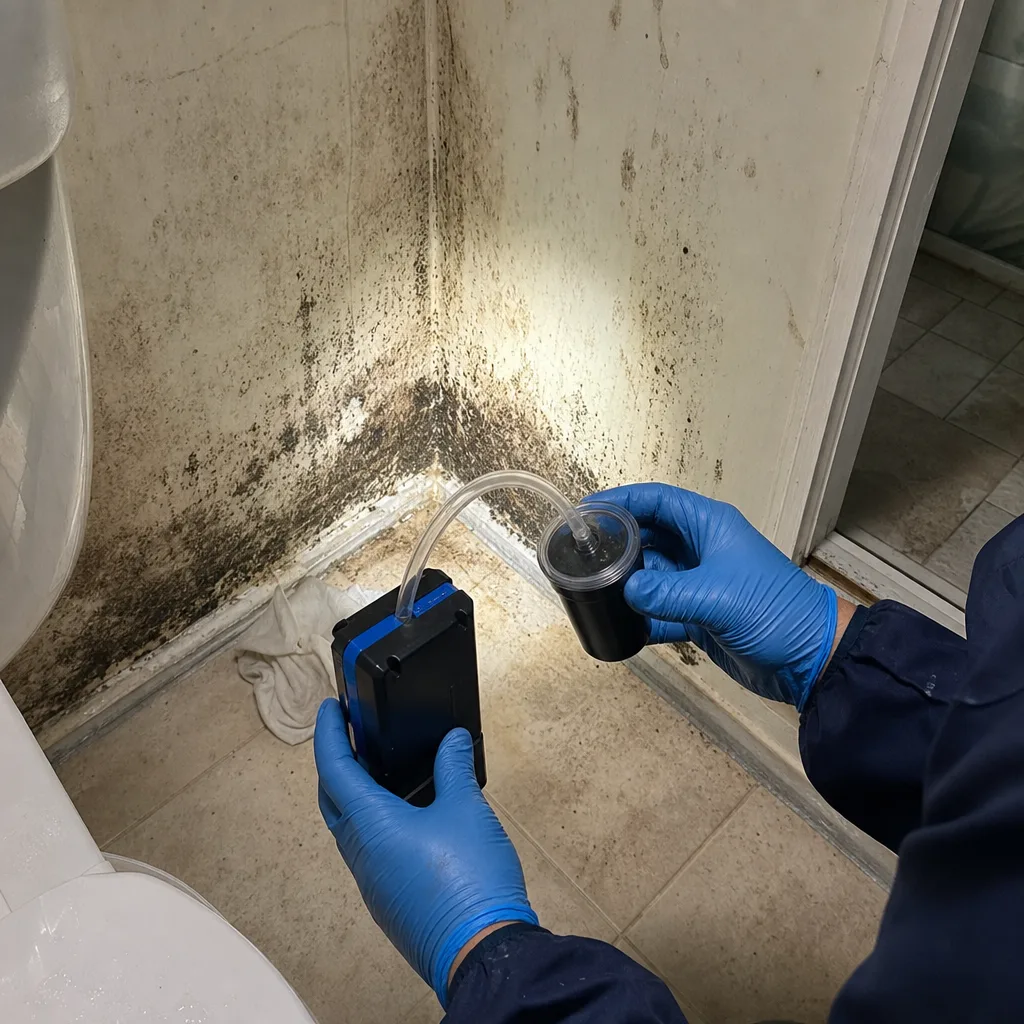
Before any restoration company leaves your Fort Lauderdale property, you should have every item on this list. Missing any one is a gap in your documentation chain.
- Written scope of work with line-item pricing - signed by both parties before work began (Haven Standard, Clause 1)
- Initial photo record - every affected area, every piece of damaged contents, wide shots and close-ups
- Equipment placement diagram - what went where, with serial numbers and runtime logs
- Daily drying log - dated, with baseline and readings for each monitored point
- Psychrometric report - regional baseline noted, equipment settings documented, vapor pressure differential calculated
- Final moisture map - clearance readings for every material, signed by technician
- Photo record of completed work - every repaired or replaced surface
- Written warranty or guarantee - ours is the 365-Day Done Right Promise, signed and stamped under The Haven Standard
- Certificate of satisfaction - your sign-off that work was completed as scoped
- Insurance submission packet - all of the above, organized for adjuster review
We’ve delivered this packet on every job since 2011. It’s not extra. It’s not an upsell. It’s the documentation that turns a restoration invoice into a payable claim, and it’s why our customers in Fort Lauderdale’s insurance-heavy market don’t spend 14 months in dispute.
Common Mistakes to Avoid
- Waiting for the insurance adjuster before calling restoration. In Fort Lauderdale’s humidity, 48 hours of waiting means mold colonization that turns a Category 1 water loss into a Category 3 remediation. Mitigate first, document everything, let the adjuster review the record.
- Accepting a verbal estimate. Florida doesn’t require written restoration contracts for emergency work, which is how scope creep happens. Haven Standard, Clause 1 exists because we watched homeowners absorb 40% invoice increases with no recourse.
- Signing an AOB under pressure. The reform made this harder, but not impossible. Any contractor who won’t work without an AOB is structuring the relationship for their benefit, not yours.
- Ignoring regional calibration on moisture readings. A meter reading “dry” in Fort Lauderdale’s ambient humidity may indicate active damage. Ask your technician what baseline they used.
- Letting mitigation and rebuild crews overlap without clear handoff documentation. The most common cause of trapped moisture is a rebuild crew sealing walls that the mitigation crew never certified dry.
- Discarding documentation after payment. Florida’s statute of limitations on construction defects is four years. Keep your packet until you’ve passed that window, plus any warranty period.
- Hiring based on speed promises alone. “Same-day rebuild” is a red flag, not a selling point. Proper permitting, material ordering, and trade scheduling take defined time. Anyone promising otherwise is cutting documentation corners.
When to Call a Professional
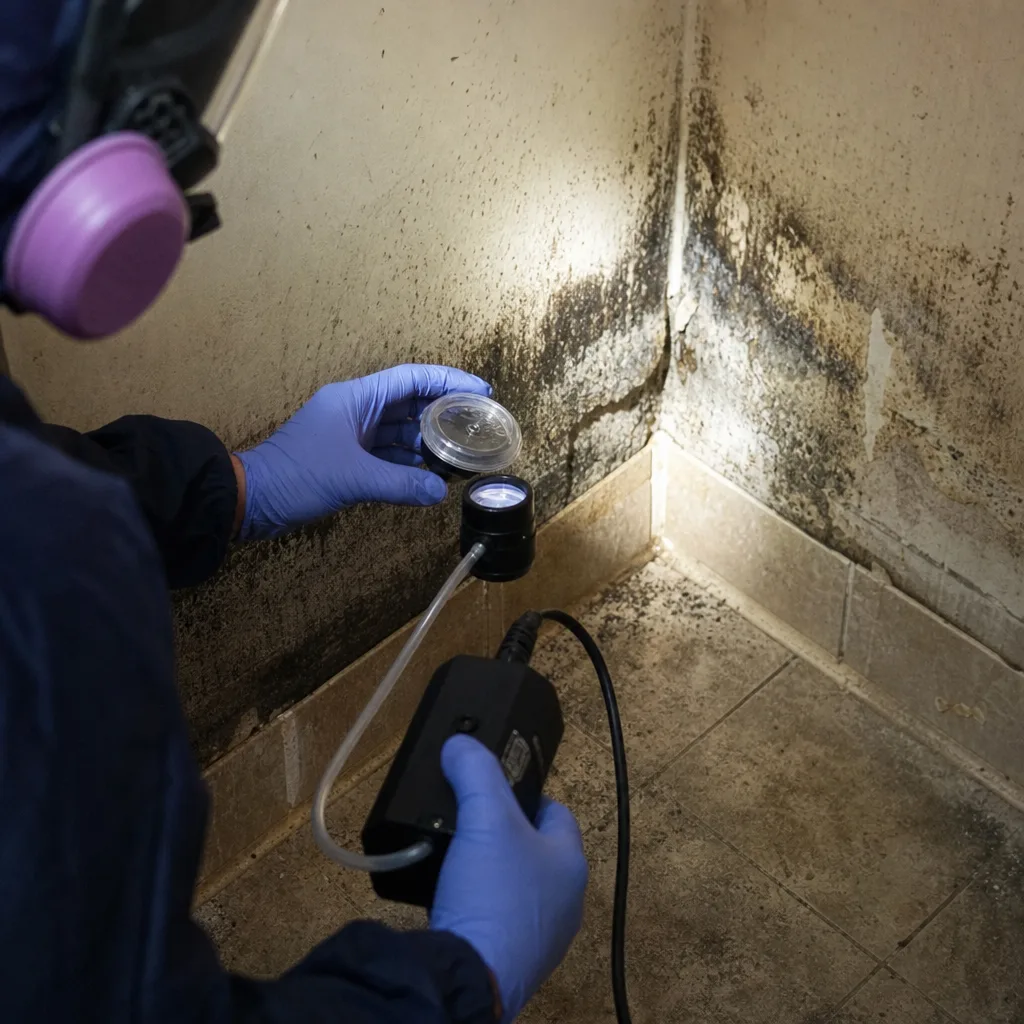
Call a restoration professional immediately when water is actively spreading, when you smell mold or see visible colonization beyond 10 square feet, when fire or smoke has affected multiple rooms, when sewage or biohazard contamination is present, or when storm damage has compromised your roof or envelope. These scenarios require containment, documented assessment, and equipment most homeowners don’t maintain.
For smaller, contained issues - a single leaky faucet, minor surface mold on bathroom grout, a small grease fire with no structural involvement - DIY may be appropriate with proper PPE and material knowledge. The line is documentation: if you might need to prove the extent of damage to an insurer, professional documentation protects your claim.
Mold Remediation in Fort Lauderdale requires particular caution because Florida’s climate makes colonization aggressive and recurrence likely if moisture sources aren’t fully eliminated. Our Fire & Smoke Damage Restoration in Fort Lauderdale page covers corrosion risks specific to salt-air environments.
DryMark Restoration Fort Lauderdale offers free estimates in Fort Lauderdale. Call (754) 254-1257. A live person answers every call, 24 hours a day, 7 days a week - no voicemail trees, no next-business-day callbacks while water is still moving. We’ll review your situation, explain what documentation you’ll receive, and provide a written scope before any work begins.
Frequently Asked Questions
Water damage mitigation in Fort Lauderdale typically runs $3,500 to $8,500 for a standard residential loss involving extraction, drying, and minor demolition, with rebuild costs adding $15 to $45 per square foot depending on finish level. For deeper cost analysis, see our Damage Restoration Cost Breakdown: The Fort Lauderdale Homeowner’s Reference for 2026. Mold remediation averages $2,000 to $6,000 for contained growth, while fire and smoke restoration starts around $4,500 for light residue and extends significantly for structural involvement. Every job we scope is priced in writing before work begins under Haven Standard, Clause 1. Call (754) 254-1257 for an exact quote - estimates are free.
Most Fort Lauderdale homeowners policies cover sudden and accidental water damage, fire, and storm damage, but coverage limits, deductibles, and exclusions vary by policy. The single biggest factor in full payment is documentation: insurers deny or reduce claims when the restoration company can’t produce daily drying logs, equipment records, and a written scope. Our documentation package is designed specifically for adjuster review. We also coordinate directly with your insurance company and can review your policy’s specific language during our estimate.
For active water damage, fire, storm, or biohazard emergencies, we dispatch immediately - our live answering service routes calls directly to on-call technicians, 24 hours a day, 7 days a week. Response time depends on your location within Fort Lauderdale: typically 45 to 90 minutes for addresses east of I-95, 60 to 120 minutes for western neighborhoods. Rebuild and non-emergency work is scheduled, not dispatched, with written start dates confirmed during scope approval.
Surface mold on non-porous materials (tile, glass, sealed metal) under 10 square feet can often be addressed with proper PPE and an EPA-registered disinfectant. However, Fort Lauderdale’s humidity means mold in porous materials - drywall, insulation, carpet backing, wood framing - has likely penetrated beyond visible growth, and DIY cleaning without moisture source elimination guarantees recurrence. We offer free second opinions on competitor remediation scopes if you’re unsure whether proposed work is necessary.
We document everything and submit directly to your adjuster, but you remain the policyholder throughout. Unlike AOB arrangements, we don’t take over your claim - we support it with evidence you can review. Every photo, every moisture reading, every line item is in your packet before submission. You see what the adjuster sees.
Mitigation is emergency stabilization: stopping damage, drying structures, preventing secondary harm. Reconstruction is the rebuild that follows: permits, materials, trades, inspections. They require different skills, different licensing, and different documentation. Merging them under one crew without clear phase separation is the leading cause of partial claim denials and warranty disputes. We separate these phases deliberately, with a written handoff documenting dry-standard achievement before rebuild begins.
The Bottom Line
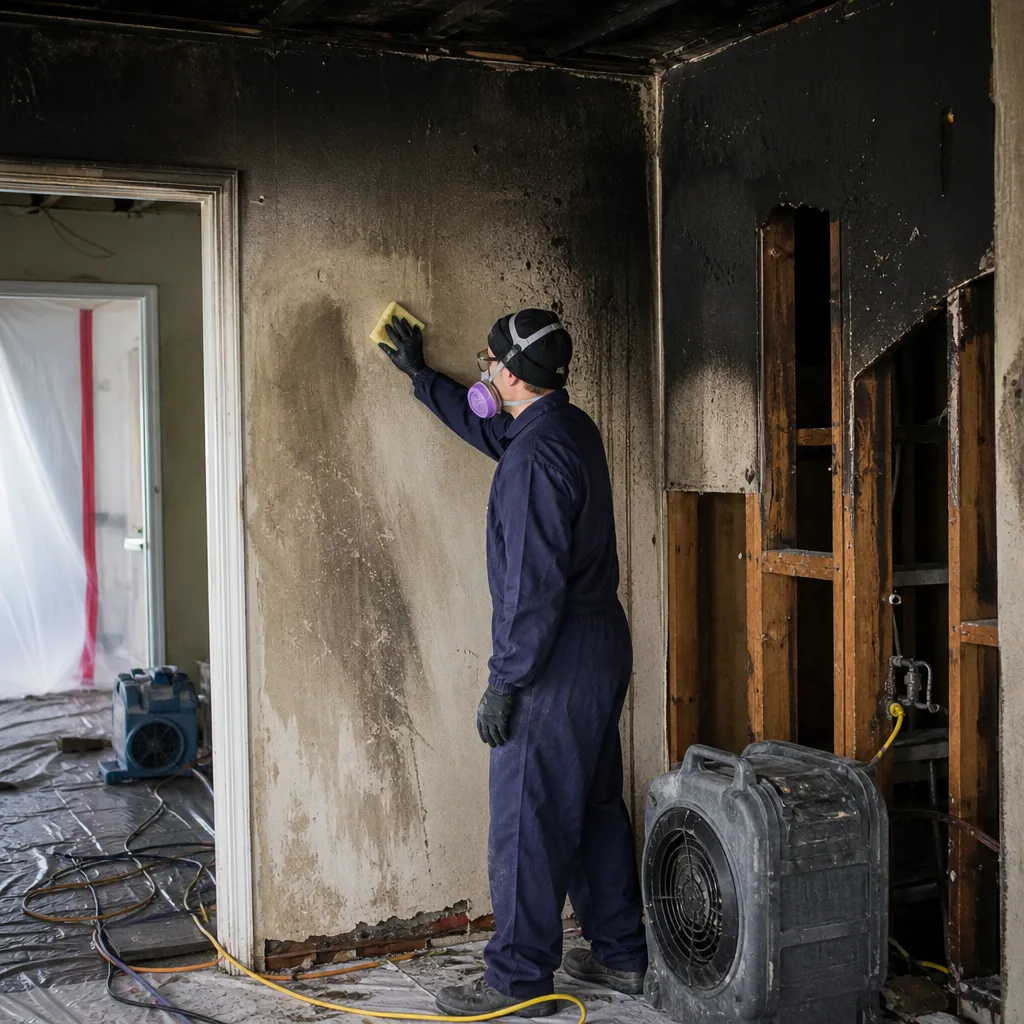
Damage restoration in Fort Lauderdale isn’t a single event - it’s a chain of documented decisions, each one either strengthening or undermining the insurance claim that follows. The city’s high humidity, salt-air corrosion, and insurance litigation environment make documentation gaps especially costly here. Every phase - mitigation, drying, scope writing, rebuild - must produce records that an adjuster can verify without ambiguity. The homeowners who recover fully are the ones who demand a written price before work starts, a photo record on every visit, and a complete documentation packet before any crew leaves. Those aren’t extras. They’re the standard we established under The Haven Standard in 2011, and they’re why 12,000 homes later, our claims don’t spend 14 months in dispute.
Call (754) 254-1257 for a free estimate. A live person will answer, 24 hours a day, 7 days a week. We’ll provide a written scope before any work begins, document every visit with a photo record, and stand behind our work with the 365-Day Done Right Promise.
Written by Alicia Brennan, Owner at DryMark Restoration Fort Lauderdale, serving Fort Lauderdale since 2011.