
Last updated September 23, 2026
Free visual inspection and a written scope of work before any mitigation begins - photos, moisture readings, and drying logs go in your claim file
The scope we write is the scope we bill. Anything new gets shown to you, in writing, before we touch it.
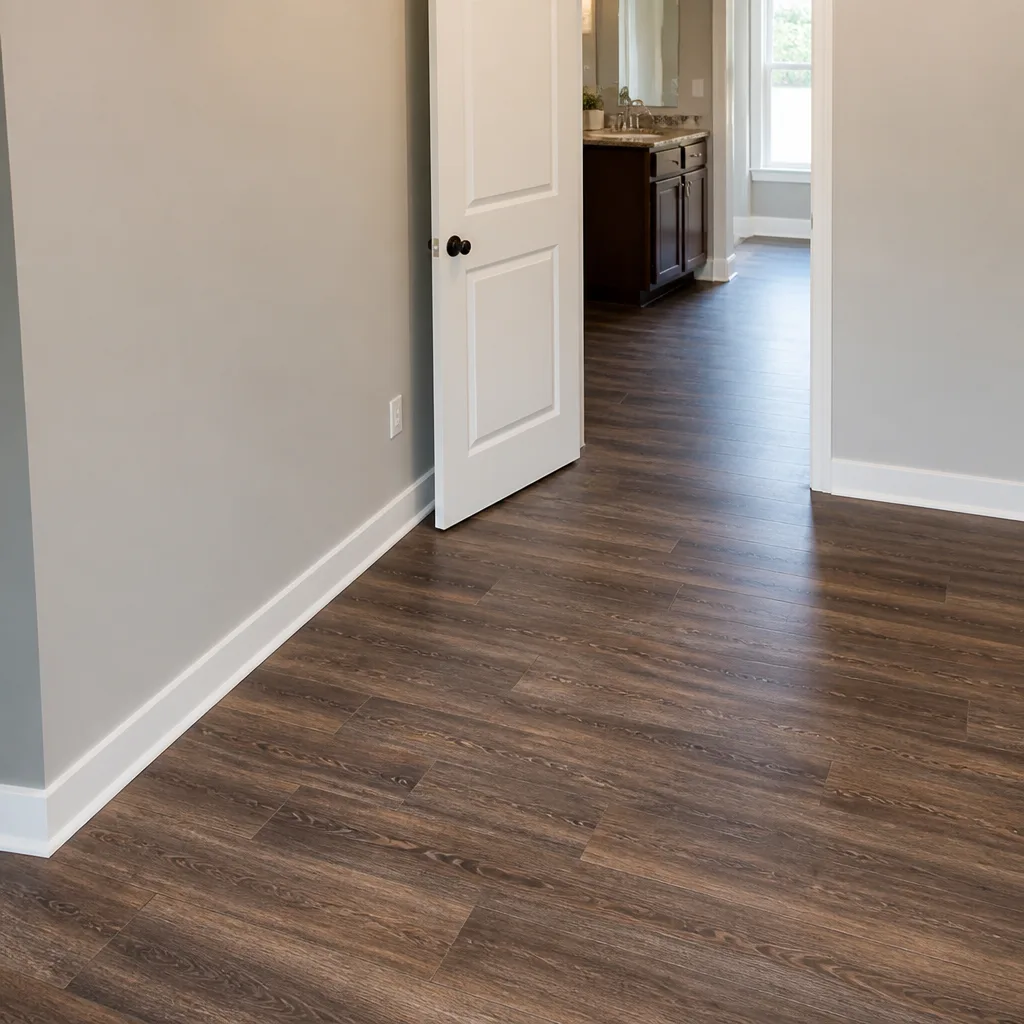
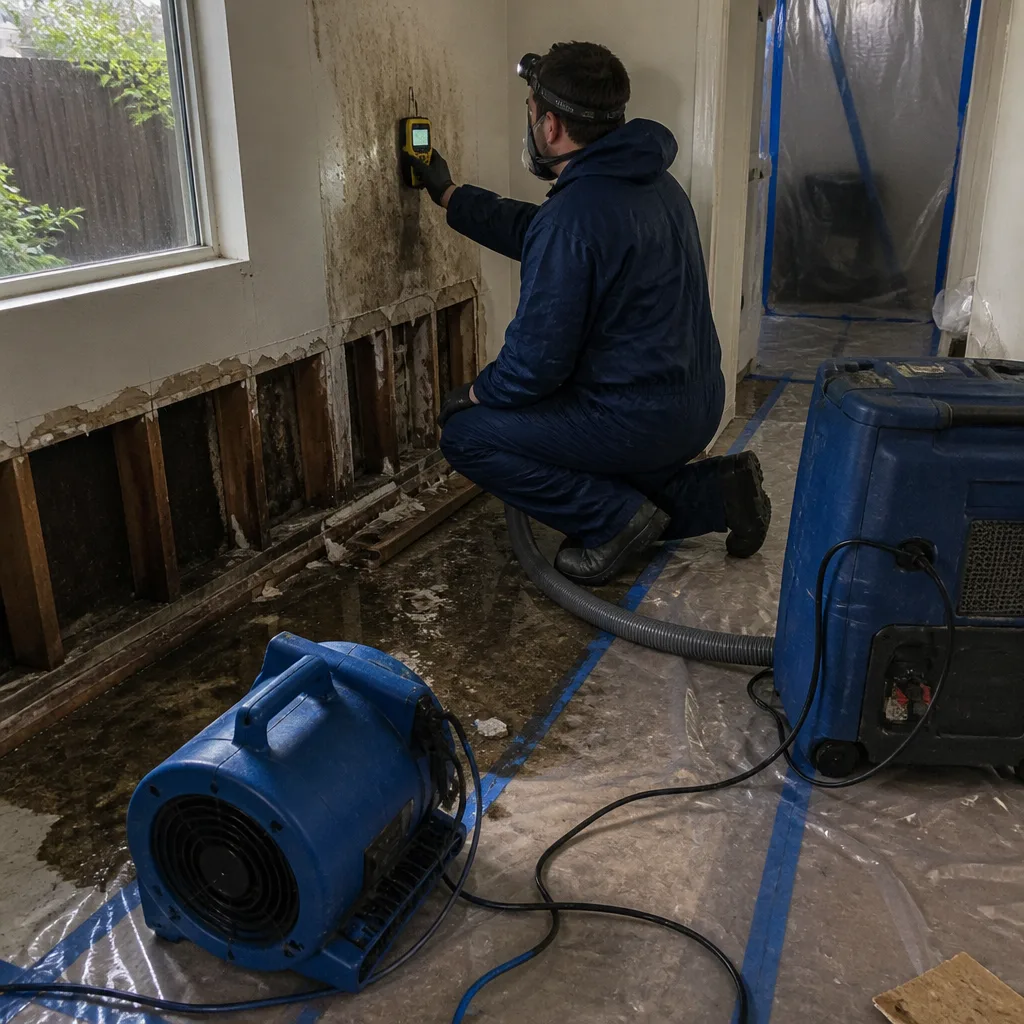 Before
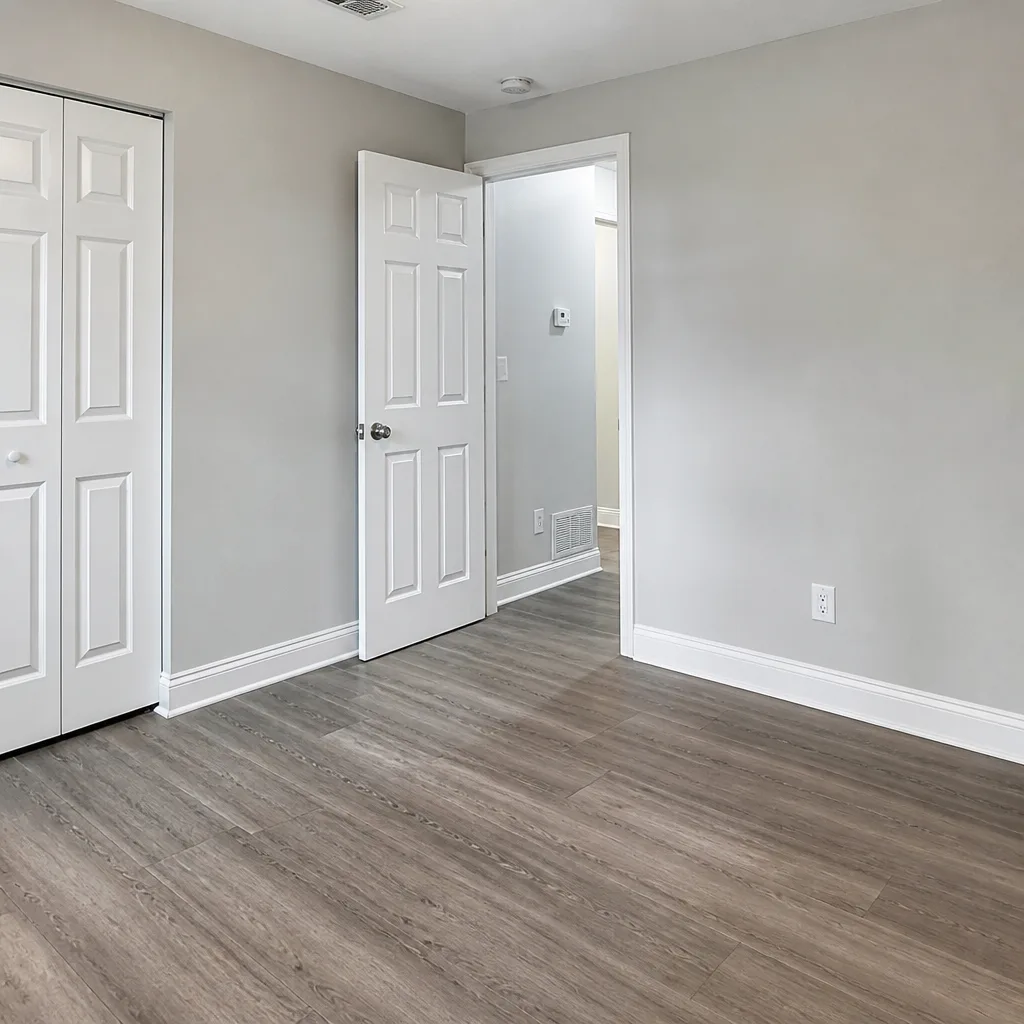 After
After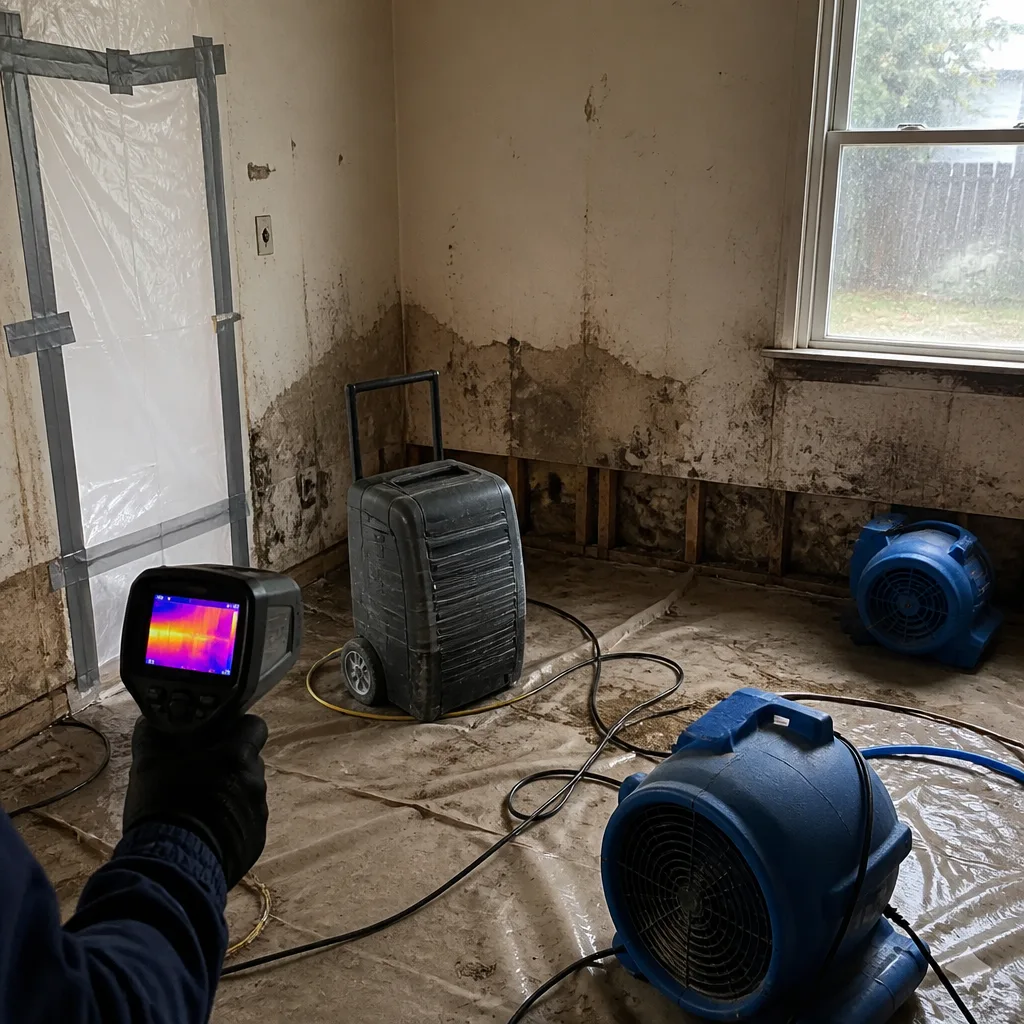 Before
 After
After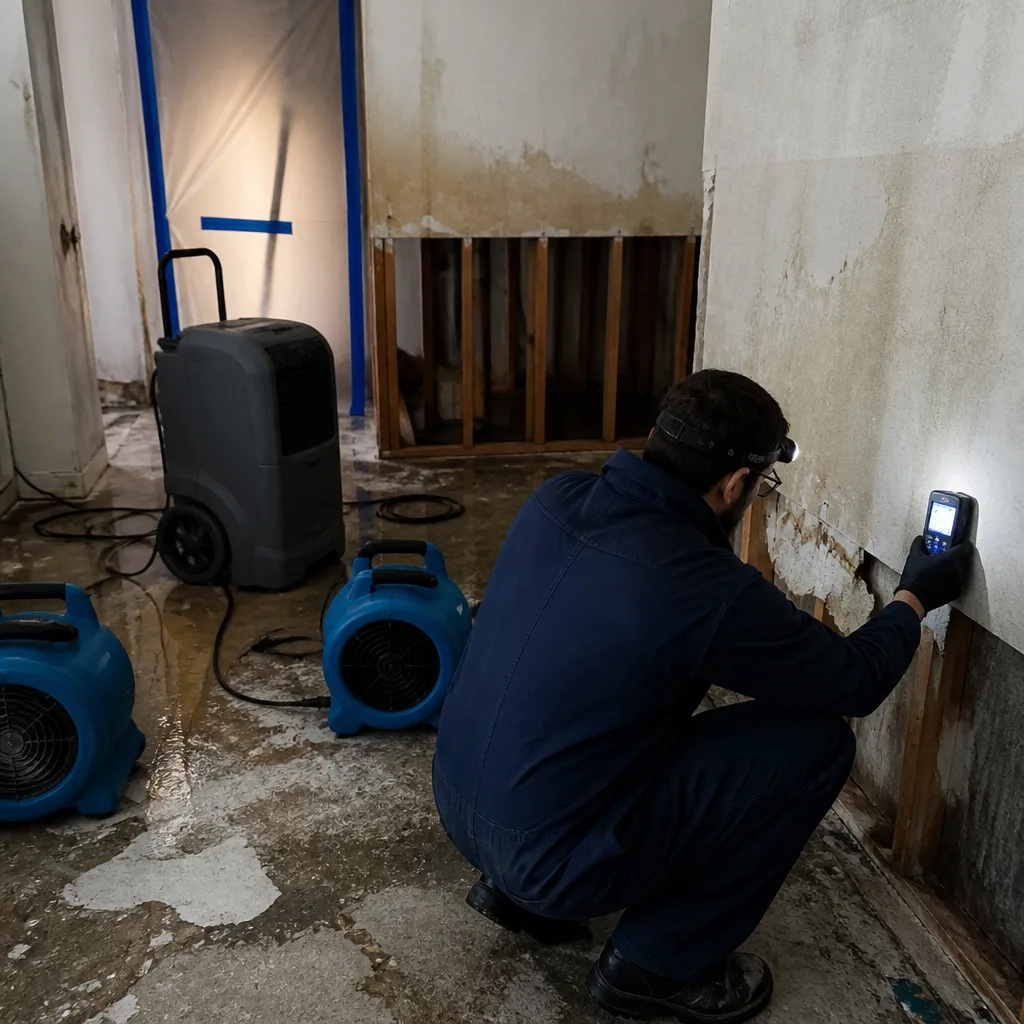 Before
 After
AfterDamage Restoration Cost Breakdown: The Fort Lauderdale Homeowner’s Reference for 2026
In Q1 2025, Xactimate published a regional unit cost of $2.18 per square foot for drywall installation in Fort Lauderdale. A homeowner in Victoria Park received an estimate at $3.40 per square foot and had no idea whether the markup was justified. That gap, $1.22 per square foot on a 2,000 square foot rebuild, is $2,440 in question - asked too late, after the crew had already started. This guide shows you how to ask it before anyone signs anything. We will walk through the four cost categories that appear on every restoration invoice, the specific Xactimate line codes and unit costs that apply to Fort Lauderdale in 2026, and how to read an estimate the way an adjuster does: line by line, with documentation for every number.
Quick Answer
Water damage restoration in Fort Lauderdale typically ranges from $3,500 for a contained Category 1 bathroom loss to $18,000+ for a whole-home Category 3 event with demolition and rebuild. The final invoice depends on four separate cost categories - emergency services, mitigation, demolition, and rebuild - each of which should appear as its own line-item section with quantities, unit costs, and documented justification. Homeowners who verify each line against Xactimate’s South Florida regional pricing database before work begins save an average of 12-18% on disputed invoices, based on what we have seen reviewing competitor estimates under our Free Second Opinion program.
Table of Contents
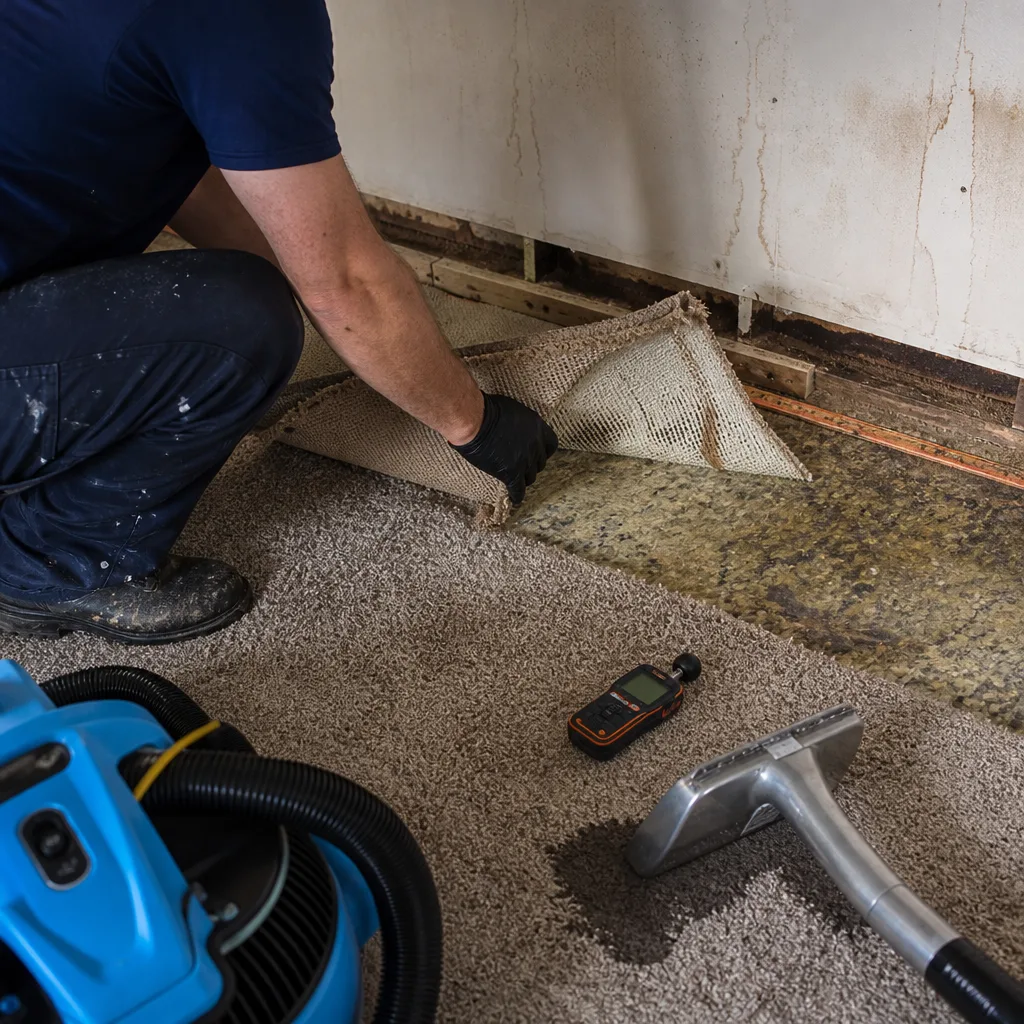
- The Four Cost Categories Every Invoice Should Show Separately
- Xactimate Regional Unit Costs: Fort Lauderdale’s Five Most Common Line Items
- How to Verify Equipment Costs Against the Daily Placement Log
- How Category 1, 2, and 3 Water Losses Change Your Line Items by 15-40%
- Worked Example: A 400 SF Fort Lauderdale Bathroom Loss, Itemized
- The Insurer’s Likely Response: Which Lines Get Reduced Without Documentation
- Common Mistakes to Avoid
- When to Call a Professional
- Frequently Asked Questions
 Before
 After
AfterThe Four Cost Categories Every Invoice Should Show Separately
Every restoration invoice we review at DryMark Restoration Fort Lauderdale home contains the same four cost categories. The problem is that most contractors combine them into a single total, or worse, into vague descriptions like “water mitigation - $8,500.” An adjuster cannot pay what they cannot verify. A homeowner cannot question what they cannot see.
Here is how the categories should break down, with what each one covers and what documentation it requires.
Emergency Services
This is the immediate response: extraction, containment, and initial assessment. It is billed as a combination of labor hours and equipment deployment, usually within the first 4-24 hours. In Fort Lauderdale, where summer thunderstorms can drop 3 inches in an hour and Category 1 hurricane rainfall can overwhelm drainage in neighborhoods like Rio Vista and Las Olas Isles, emergency services often include water extraction from multiple levels, not just the affected room.
Typical line items: water extraction per square foot, emergency board-up if needed, initial moisture mapping, and the first day of equipment rental. The written scope should specify how many gallons were extracted and what equipment was placed. Under Water Damage Restoration in Fort Lauderdale, we document this with a photo record on every visit, including the moisture meter readings that justify the equipment count.
Mitigation
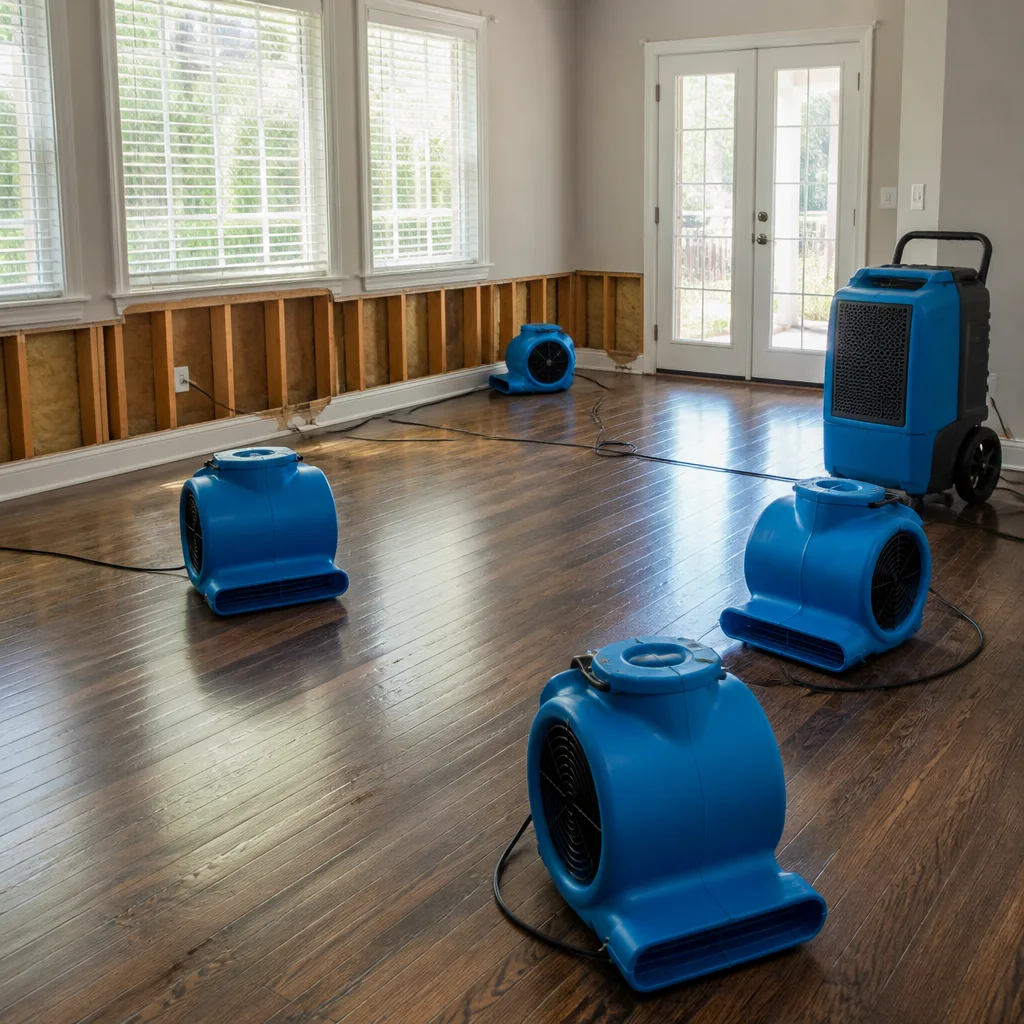
Mitigation is the controlled drying process: dehumidifiers, air movers, and sometimes specialized equipment like Injectidry systems for wall cavity drying. This category runs for multiple days and should include daily moisture logs showing psychrometric data - temperature, relative humidity, and specific humidity - that prove the drying is progressing. Psychrometric data is simply the measurement of how much moisture the air can hold at a given temperature; when the numbers trend down, the building is drying. When they plateau, something is wrong.
In Fort Lauderdale’s coastal climate, where outdoor relative humidity regularly exceeds 75% from May through October, mitigation takes longer than in drier inland markets. A drying job that might complete in 72 hours in Phoenix typically runs 96-120 hours here. That extra time means extra equipment days, and extra equipment days mean extra documentation. The daily placement log should show exactly which machine was in exactly which room on exactly which date.
Demolition
Not every loss requires demolition, but when materials are classified as non-salvageable by IICRC standards, they must be removed before rebuild begins. Demolition is billed by the square foot or linear foot for specific materials: drywall, flooring, baseboards, insulation, cabinetry. Each removal line should specify the material classification and the square footage affected.
Fort Lauderdale’s building stock varies enormously by neighborhood. A 1950s ranch in Poinsettia Heights may have plaster and lath walls where a 2005 townhouse in Flagler Village has 1/2″ drywall. The demolition line must match what is actually in the wall, not a generic assumption. We have seen estimates that assume drywall removal at $1.85 per square foot when the home has plaster at $3.40 per square foot, or vice versa - either error costs someone money.
Rebuild
Rebuild is construction, not restoration. It is scheduled, scoped, and priced like any remodeling work. This is where Xactimate’s regional unit costs matter most, because labor rates in Fort Lauderdale run 8-14% above the national average due to South Florida’s cost of living and the specialized skills required for flood-prone construction.
Rebuild estimates should include material costs, labor hours, and permit fees where applicable. In Fort Lauderdale, any electrical or plumbing work triggered by the restoration requires permitting through the city’s Building Services Division. A proper estimate notes which trades require permits and who will pull them. For details, read Damage Restoration Permits, Codes & Inspections in FL: What You Need to Know.
Xactimate Regional Unit Costs: Fort Lauderdale’s Five Most Common Line Items
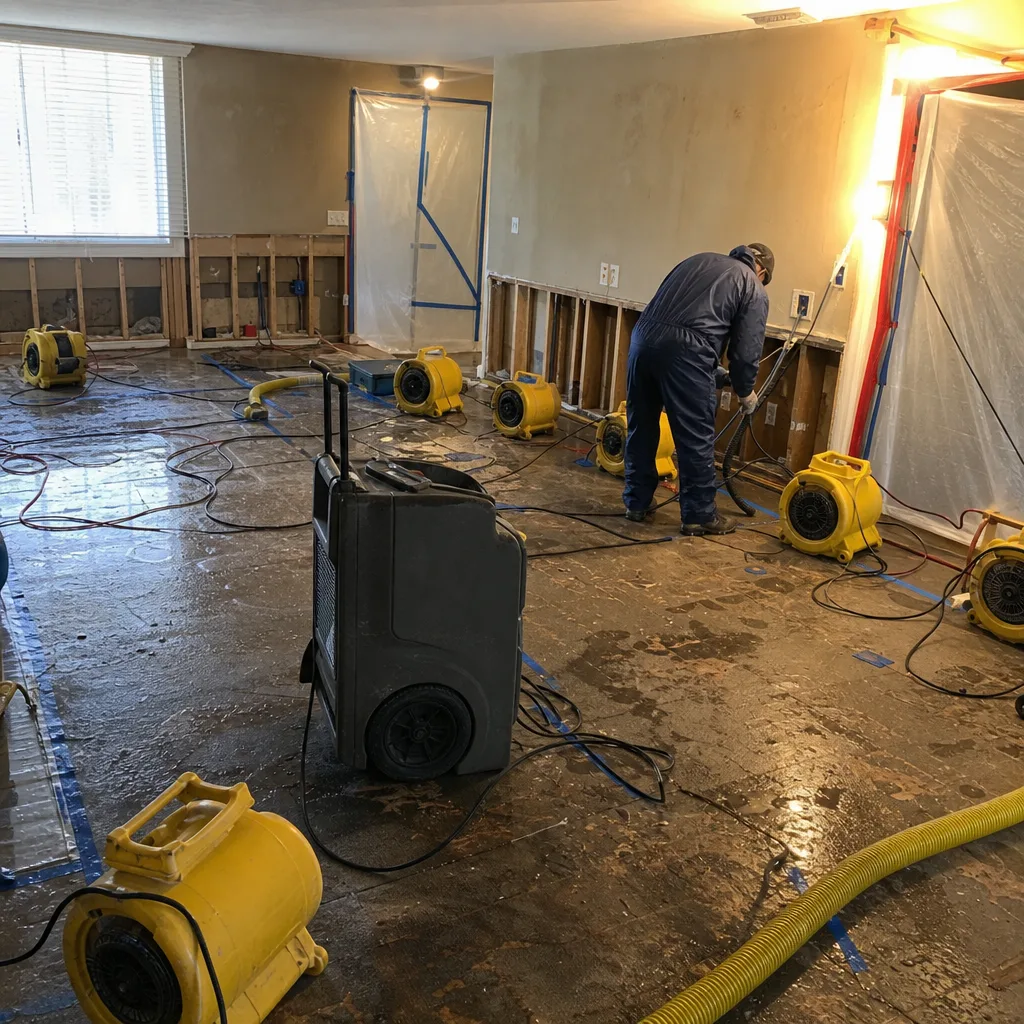
Xactimate publishes regional unit costs quarterly, and South Florida pricing reflects the market’s specific conditions: higher labor costs, salt-air corrosion considerations for materials, and the frequency of water-related losses that keeps restoration crews busy year-round. The figures below are drawn from Q1 2025 Xactimate data for the Fort Lauderdale/Broward County region, with the adjustments we expect for 2026 based on labor cost trends.
These are not prices we set. These are prices that appear in the software used by over 80% of U.S. insurance adjusters. When a contractor’s estimate diverges from these numbers, they should be prepared to explain why.
| Line Item | Xactimate Code | Q1 2025 Unit Cost | 2026 Projected Range | Unit |
|---|---|---|---|---|
| Drywall removal, 1/2″ | WTR DRYW | $1.85/SF | $1.92-$2.05/SF | Square foot |
| Drywall installation, 1/2″ | RFG DRYW | $2.18/SF | $2.26-$2.42/SF | Square foot |
| LVP flooring removal | WTR FLV | $1.34/SF | $1.39-$1.48/SF | Square foot |
| Antimicrobial application | WTR ANTM | $0.42/SF | $0.44-$0.47/SF | Square foot |
| Dehumidifier, large, per day | WTR DEH | $85/day | $88-$94/day | Per machine per day |
These figures assume standard access, no hazardous material abatement, and work performed during normal business hours. After-hours emergency rates, confined space conditions, or specialized equipment like Injectidry cavity drying systems carry legitimate surcharges that should be itemized separately, not buried in a blended rate.
The antimicrobial application line deserves particular attention in Fort Lauderdale. Our subtropical climate means mold can establish visible growth within 48-72 hours of water intrusion. Antimicrobial treatment is standard for Category 2 and 3 losses, and often justified for Category 1 losses in high-humidity conditions. The $0.42/SF rate covers application only; if testing or clearance sampling is required, that is a separate line item.
How to Verify Equipment Costs Against the Daily Placement Log
Equipment rental is the most frequently inflated category on Florida restoration invoices. The reason is simple: it is easy to charge for equipment that was never placed, or to charge for days after the equipment was removed, because most homeowners do not know to ask for proof.
Here is how to verify equipment costs in three steps.
- Request the daily placement log before work begins. Under Haven Standard, Clause 1, the written price should include the equipment list with quantities. Ask for the daily placement log as a standard deliverable, not an extra. This log shows which machine, identified by serial number or asset tag, was placed in which room on which date.
- Cross-check the log against the invoice. Every day of equipment rental on the invoice must correspond to an entry on the placement log. If the invoice shows 3 dehumidifiers for 5 days (15 machine-days), the log should show 15 separate entries with dates, room locations, and psychrometric readings that justify continued deployment.
- Verify the equipment count against the drying science. IICRC standards specify equipment placement based on cubic footage of the affected space, target drying time, and class of water loss. A Class 2 loss in a 12x12x8 room (1,152 cubic feet) typically requires 1 large dehumidifier and 4-6 air movers for initial deployment. If the estimate shows 3 dehumidifiers for that space, ask for the psychrometric justification. Sometimes it is warranted; often it is not.
In Fort Lauderdale’s market, where humidity slows evaporation, equipment runs longer than in drier climates. That is legitimate. What is not legitimate is charging for equipment days after the moisture logs show the space has reached dry standard, or charging for machines that never appear in the photo record.
Our documented photo record on every visit includes a dated photograph of each piece of equipment in place, with the moisture meter reading visible in the same frame. When an adjuster questions a line item, we send the photo. The dispute usually ends there.
How Category 1, 2, and 3 Water Losses Change Your Line Items by 15-40%
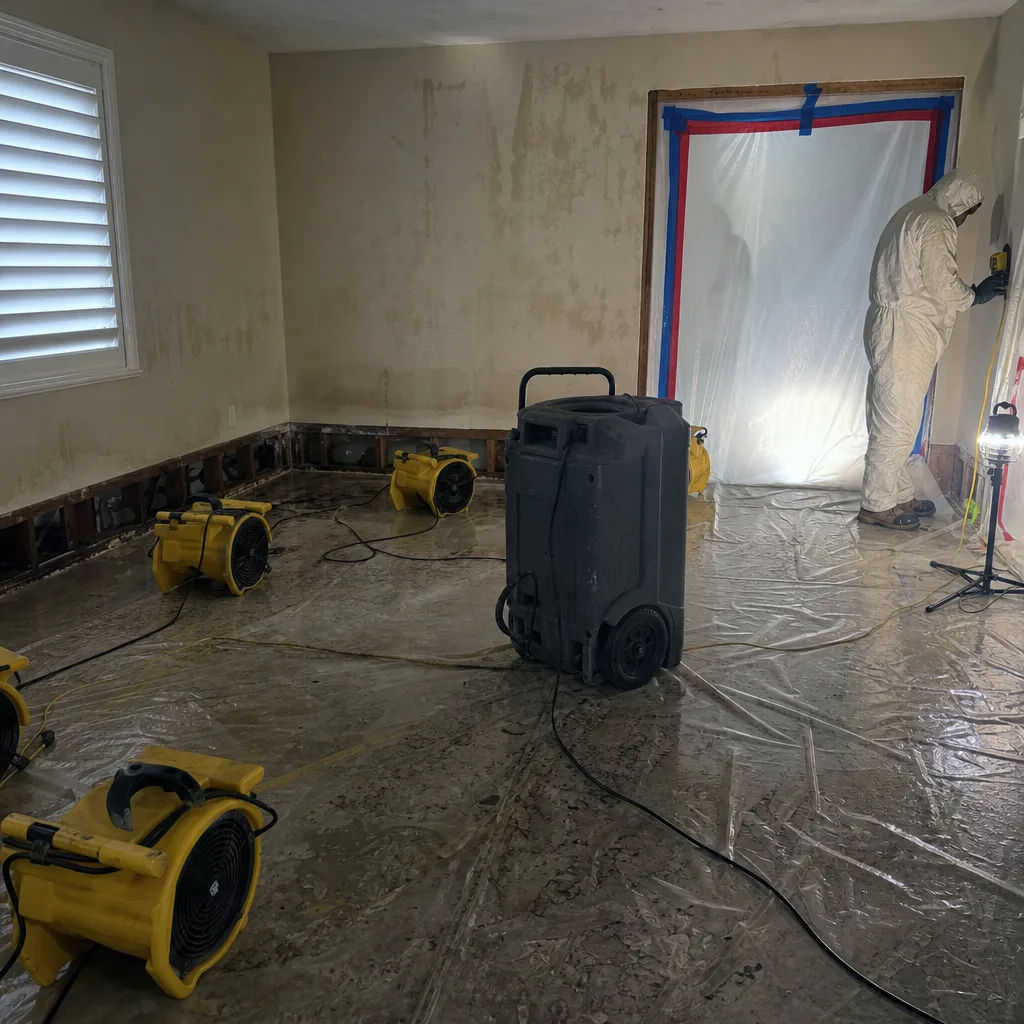
IICRC S500 defines three categories of water contamination, and the category determines which line items appear on the estimate and at what cost. A contractor who treats a Category 3 loss as Category 1 is cutting corners. A contractor who bills Category 3 rates for Category 1 water is padding the invoice.
Category 1: Clean Water
Source is a broken supply line, overflowing sink, or rainwater. No significant contamination. The standard line items are extraction, drying equipment, and limited demolition of directly affected materials. Category 1 losses in Fort Lauderdale typically run at the lower end of the cost spectrum because antimicrobial treatment is not automatically required, though we often recommend it given our humidity.
Typical additional costs: minimal. If drywall is removed, it is because it is structurally compromised by water, not because it is contaminated.
Category 2: Gray Water
Source contains significant contamination: dishwasher discharge, washing machine overflow, toilet bowl water without feces. Category 2 requires antimicrobial treatment of affected surfaces, more extensive demolition of porous materials, and often padding and carpet replacement rather than cleaning.
The cost increase over Category 1 is typically 15-25%. The specific additions are: antimicrobial application ($0.42/SF), additional PPE for technicians, and more square footage classified as non-salvageable. A carpet that might be cleaned in Category 1 is replaced in Category 2.
Category 3: Black Water
Source is grossly contaminated: sewage, seawater flooding, or rising ground water. Category 3 requires the most extensive demolition, full antimicrobial treatment, negative air machines to prevent cross-contamination, and often Mold Remediation in Fort Lauderdale if growth was established before discovery.
The cost increase over Category 1 is 30-40% or more. Specific additions include: negative air machine rental ($125-$150/day), HEPA filtration, disposal at a licensed biohazard facility rather than standard construction waste, and more extensive removal of porous materials. In Fort Lauderdale, where sea-level rise has increased the frequency of tidal flooding in neighborhoods like Edgewood and Dorsey-Riverbend, Category 3 losses from saltwater intrusion carry additional complications: salt residue accelerates corrosion of metal fasteners and can require specialized flushing before rebuild.
Under Fire & Smoke Damage Restoration in Fort Lauderdale, we handle a related Category 3 scenario: fire suppression water that sits for more than 48 hours before mitigation begins. The water starts as Category 1 from the sprinkler or hose, but degrades to Category 2 or 3 based on dwell time and temperature. The invoice must reflect the actual category at the time of extraction, not the original source.
Worked Example: A 400 SF Fort Lauderdale Bathroom Loss, Itemized
This is a real-world scenario based on losses we have mitigated in Fort Lauderdale’s older housing stock: a 20×20 master bathroom in a 1980s home in Coral Ridge, with a supply line failure behind the toilet that ran for approximately 6 hours before discovery. The water is Category 1. Affected materials: vinyl flooring, 1/2″ drywall on two walls to 18″ height, baseboards, and door trim.
Emergency Services
- Water extraction, 400 SF at $0.78/SF: $312
- Initial moisture mapping and photo documentation: $185
- Emergency equipment placement (2 air movers, 1 dehumidifier): $0 (included in mitigation)
- Emergency services subtotal: $497
Mitigation (4 days to dry standard)
- Dehumidifier, large, 4 days at $88/day: $352
- Air mover, 2 units, 4 days at $28/day: $224
- Daily moisture monitoring and log, 4 visits at $95/visit: $380
- Mitigation subtotal: $956
Demolition
- Drywall removal, 1/2″, 72 SF (two walls, 18″ height, 20′ length each): $1.92/SF x 72 = $138
- Vinyl flooring removal, 400 SF at $1.39/SF: $556
- Baseboard removal, 58 linear feet at $2.15/LF: $125
- Disposal, 1.5 tons at $85/ton: $128
- Demolition subtotal: $947
Rebuild
- Drywall installation, 1/2″, 72 SF at $2.26/SF: $163
- Joint compound, tape, texture to match: $185
- LVP flooring installation, 400 SF at $3.85/SF (material and labor): $1,540
- Baseboard installation, 58 LF at $4.20/LF: $244
- Paint, primer and two coats, 72 SF wall + 400 SF ceiling: $485
- Permit, Fort Lauderdale Building Services, minor repair: $125
- Rebuild subtotal: $2,742
Total estimate: $5,142
This total assumes no hidden damage, no mold growth, and no delay in discovery. In practice, we find additional moisture in the wall cavity in about 30% of similar losses, which triggers Injectidry cavity drying at approximately $185/day for 2-3 additional days. We note this possibility in the written scope with a “contingency if” clause, not a hidden add-on.
The Insurer’s Likely Response: Which Lines Get Reduced Without Documentation
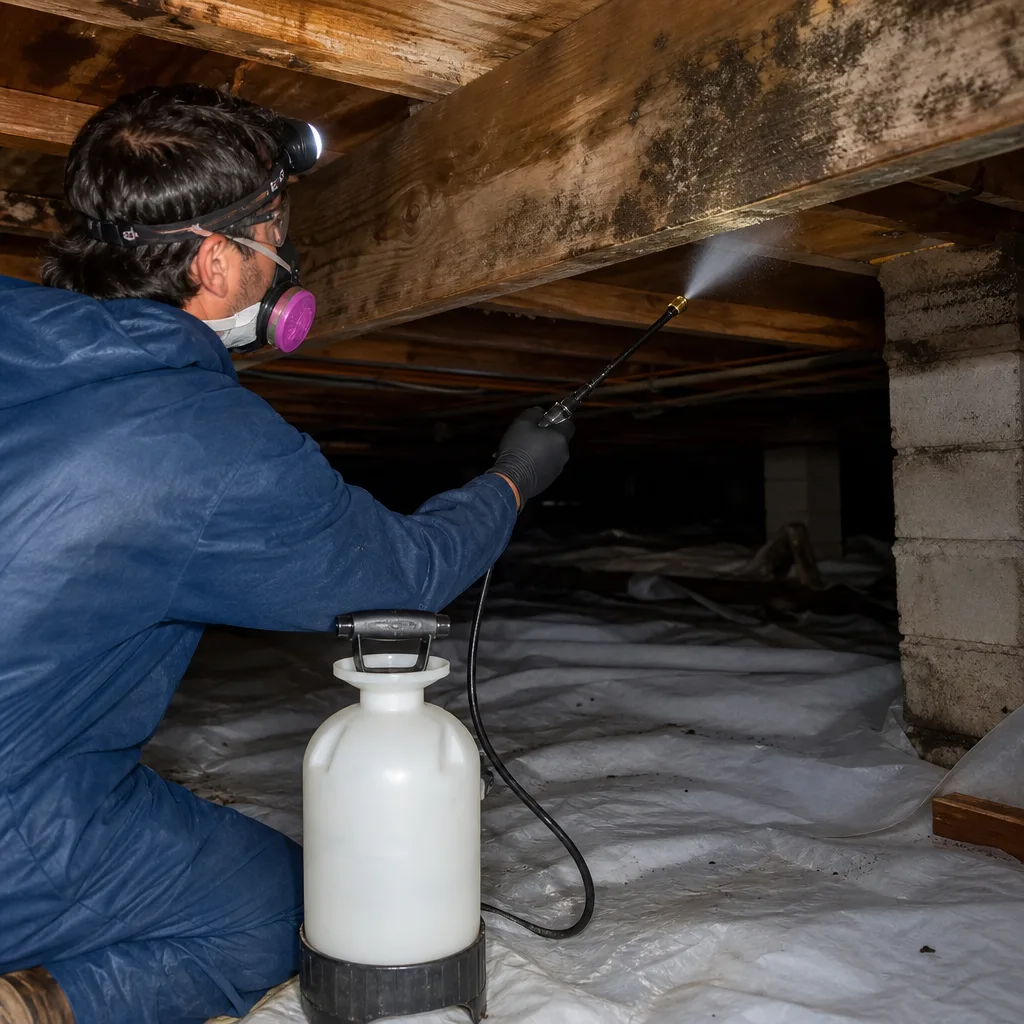
We have reviewed over 12,000 restoration jobs since 2011, and we have seen the same patterns in adjuster responses. Certain line items are statistically more likely to be reduced or denied if the contractor cannot produce specific documentation.
Most vulnerable lines, in order:
- Equipment days beyond day 3 without daily moisture logs. Adjusters apply a default 3-day drying assumption for standard losses. Days 4+ require proof that the space was not yet at dry standard. The daily moisture log with psychrometric data is the only accepted proof.
- Antimicrobial application on Category 1 losses. Adjusters question this unless the contractor can document high humidity or delayed discovery. We include a humidity reading from the day of loss and a note on our drying log if outdoor conditions justify the application.
- Full drywall replacement when only partial removal is visible. If the estimate shows 72 SF removed but 120 SF replaced, the adjuster wants to see photos of hidden damage or a moisture meter reading above 17% in the extended area. Our photo record includes probe readings in the wall cavity.
- Premium materials without prior approval. If the original flooring was builder-grade vinyl and the estimate shows mid-range LVP, the adjuster pays for like-kind replacement unless the homeowner has approved an upgrade and will pay the difference. We note material grade in the written scope and get homeowner signature before ordering.
- Rebuild overhead and profit (O&P) on small jobs. Xactimate applies O&P at 10% each when three or more trades are involved. A bathroom with drywall, flooring, and paint qualifies. A job with only flooring and paint may not. We itemize trades explicitly so the adjuster can see the three-trade threshold is met.
The pattern is clear: every disputed line traces back to missing documentation. A photo record on every visit, a written price before work begins, and daily moisture logs are not marketing points. They are the evidence that turns a restoration invoice into a payable claim.
Common Mistakes to Avoid
- Accepting a single total without line-item breakdown. A contractor who will not itemize is a contractor who does not want to be questioned. Haven Standard, Clause 1 requires a written price before work begins; if that price is one number with no explanation, it does not meet the standard.
- Assuming the insurance estimate is final. The adjuster’s first estimate is a starting point, not a ceiling. If the documented scope justifies additional line items, they can be added through supplement. We handle supplement documentation as part of our standard service, including direct adjuster coordination.
- Ignoring the category of water. A homeowner who does not know whether their loss is Category 1, 2, or 3 cannot evaluate whether the line items match the contamination level. Ask directly, and ask for the IICRC-based justification.
- Not verifying equipment is actually present. In Fort Lauderdale’s busy storm season, crews are stretched thin. We have seen invoices for equipment that was never deployed, or that was removed days before the invoice suggests. The daily placement log with serial numbers is your protection.
- Delaying the call to document. Every hour of delay in a water loss increases the mitigation cost by approximately 8-12% as water migrates to unaffected areas and materials degrade from salvageable to non-salvageable. It also increases the likelihood of mold, which triggers a completely different set of line items and costs.
- Paying out of pocket without understanding recoverable depreciation. Most Fort Lauderdale homeowners have replacement cost value (RCV) policies, which pay actual cash value (ACV) upfront and hold back recoverable depreciation until the work is completed and documented. Paying a contractor the ACV amount and not pursuing the depreciation holdback leaves money on the table.
When to Call a Professional
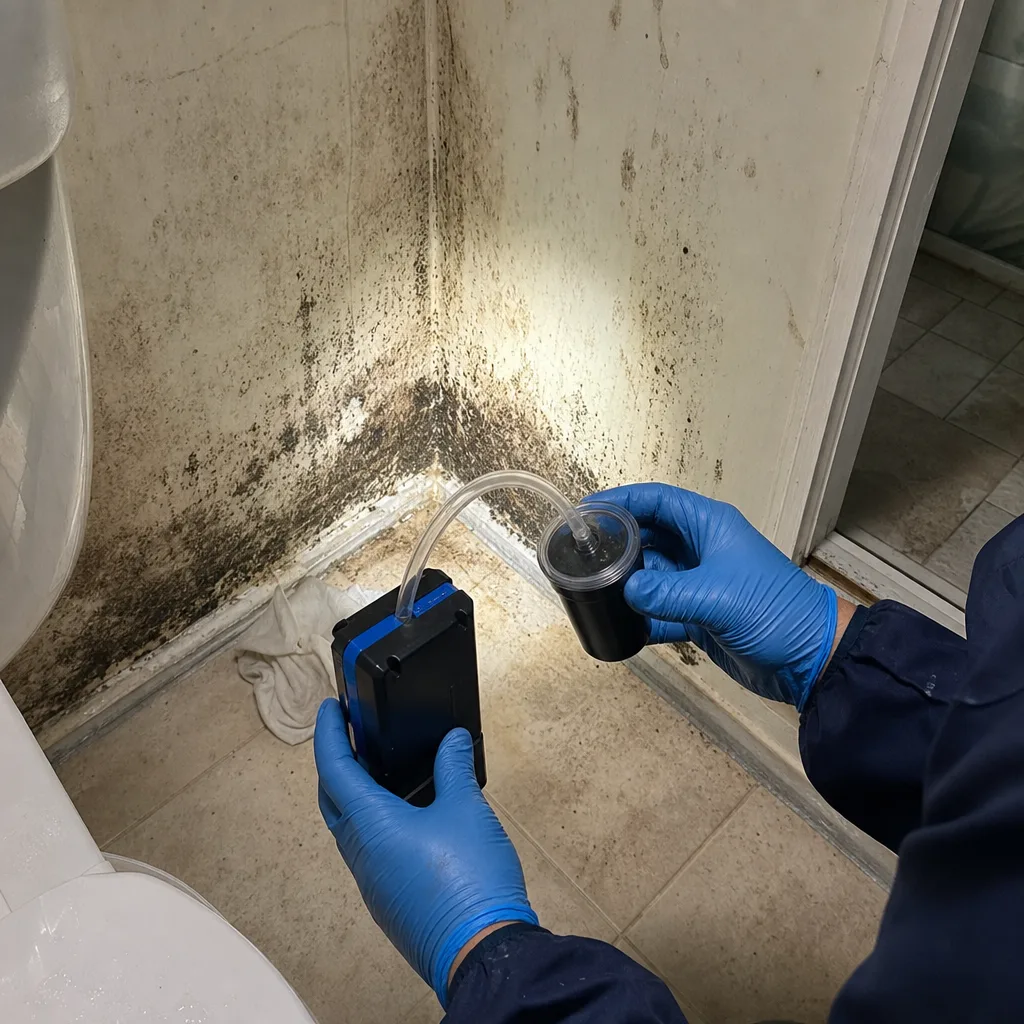
Call immediately when water is actively flowing, when you smell mold or see visible growth, when sewage is involved, or when the loss affects electrical systems or extends to multiple rooms. These are not diagnostic situations; they are containment situations, and delay increases cost in measurable ways.
For losses that appear contained to a single room with clean water and no visible mold, you still need documentation within 24 hours. Moisture travels through wall cavities and subfloors in ways that are not visible to inspection. A professional moisture mapping with thermal imaging and penetrating probes finds what eyes cannot.
DryMark Restoration Fort Lauderdale offers free estimates in Fort Lauderdale. We will review any competitor’s written estimate at no charge under our Free Second Opinion program. Every job is quoted in writing before work begins, documented with a photo record on every visit, and covered by our 365-Day Done Right Promise under The Haven Standard. Call (754) 254-1257.
Frequently Asked Questions
Most water damage restoration in Fort Lauderdale ranges from $3,500 for a contained Category 1 bathroom loss to $18,000 or more for a whole-home Category 3 event with full demolition and rebuild. The specific cost depends on the contamination category, square footage affected, materials involved, and how quickly mitigation begins. Call (754) 254-1257 for a written estimate with line-item breakdown before any work starts.
Most Fort Lauderdale homeowners policies cover sudden and accidental water damage from sources like burst pipes or appliance failures, but exclude gradual leaks, flood damage from rising water, and sewage backup without specific endorsement. The key to coverage is documentation: a photo record of the damage, a written scope of work, and daily moisture logs that prove the mitigation was necessary and properly executed. We coordinate directly with adjusters and provide the documentation package that supports the claim.
Our live phone coverage is available 24 hours a day, 7 days a week with no voicemail on emergency lines. For active water losses in Fort Lauderdale, we typically have a technician on site within 60-90 minutes during normal dispatch hours. Response time during major storm events may extend based on road conditions and call volume, but emergency triage prioritizes active water flow and electrical hazards.
Category 1 water in a small, immediately discovered loss can sometimes be handled by a homeowner with proper equipment, though we do not recommend it because documentation for insurance requires professional moisture logs. See DIY vs Professional Damage Restoration: The Fort Lauderdale Homeowner’s Decision Guide for a full comparison. Category 2 and 3 losses, any loss with visible mold, or any loss affecting wall cavities, subfloors, or HVAC systems requires professional mitigation. The safety risks in Category 3 water include bacterial and viral contamination; the structural risks in any unmitigated loss include hidden moisture that destroys framing and triggers mold growth within 48-72 hours in Fort Lauderdale’s climate.
We do. Our documentation package - written scope, photo record, daily moisture logs with psychrometric data, and itemized invoice - is formatted for direct adjuster submission. We handle supplement requests when the documented scope exceeds the initial estimate, and we do not ask homeowners to pay out of pocket and seek reimbursement unless the policy specifically requires it. Direct insurance billing is standard on every job we handle.
South Florida labor rates run 8-14% above national average due to cost of living, and our subtropical climate extends drying times by 25-40% compared to drier markets. Salt air corrosion also affects material selection and fastener specifications in coastal neighborhoods. These are real cost drivers reflected in Xactimate’s regional pricing database, not arbitrary markups.
The Bottom Line
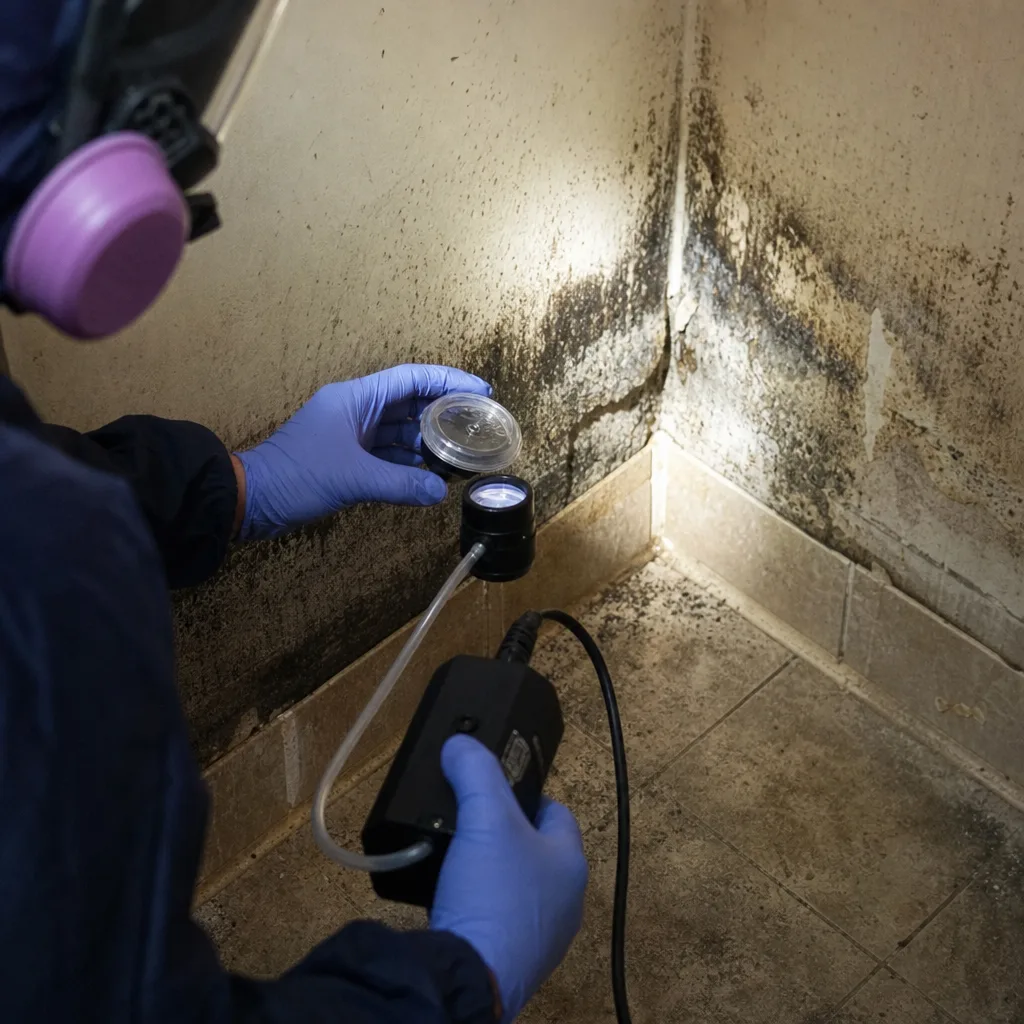
Restoration costs in Fort Lauderdale are knowable before work begins. The Xactimate regional pricing database gives homeowners the same unit costs that adjusters use to evaluate claims. The four cost categories - emergency services, mitigation, demolition, and rebuild - should appear as separate, itemized sections with quantities, unit costs, and documented justification for each line. Equipment costs are verified against daily placement logs. Contamination category determines which lines legitimately appear. And every disputed invoice we have seen traces back to the same failure: documentation that was promised and not delivered, or never promised at all.
We built DryMark Restoration Fort Lauderdale home around the opposite approach. Written price before work begins, every time, no exceptions. Photo record on every visit. Daily moisture logs with psychrometric data. And a 365-Day Done Right Promise backed by The Haven Standard, not a verbal assurance that evaporates with the crew.
Written by Alicia Brennan, Owner at DryMark Restoration Fort Lauderdale, serving Fort Lauderdale since 2011.