
Last updated September 23, 2026
Free visual inspection and a written scope of work before any mitigation begins - photos, moisture readings, and drying logs go in your claim file
The scope we write is the scope we bill. Anything new gets shown to you, in writing, before we touch it.
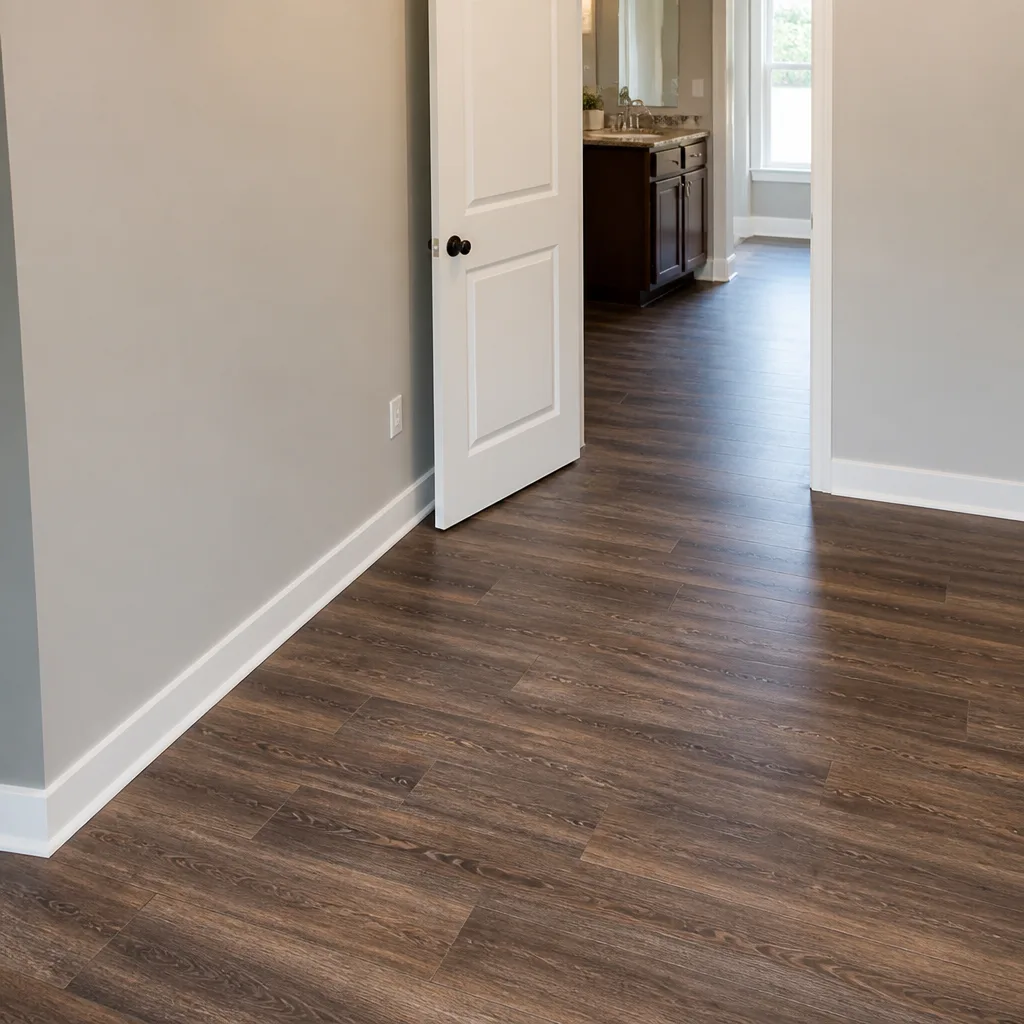

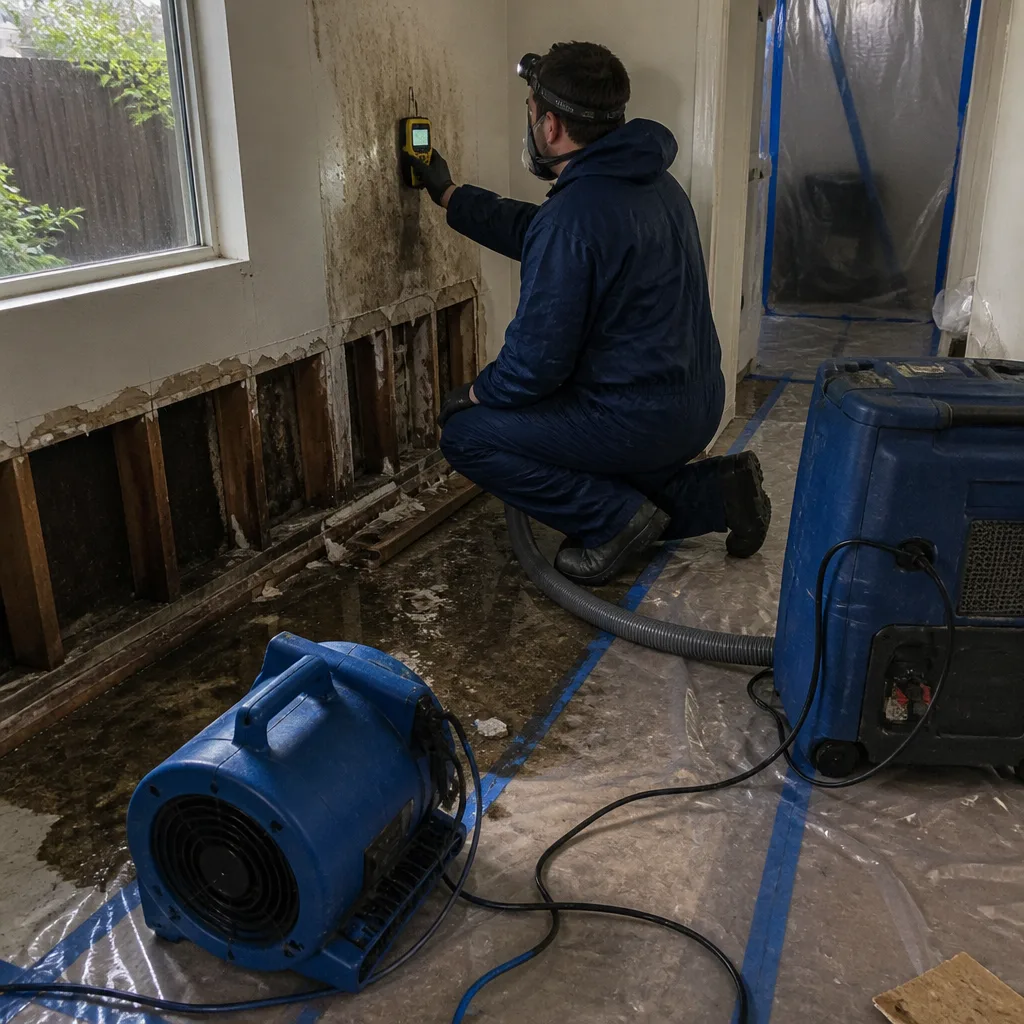 Before
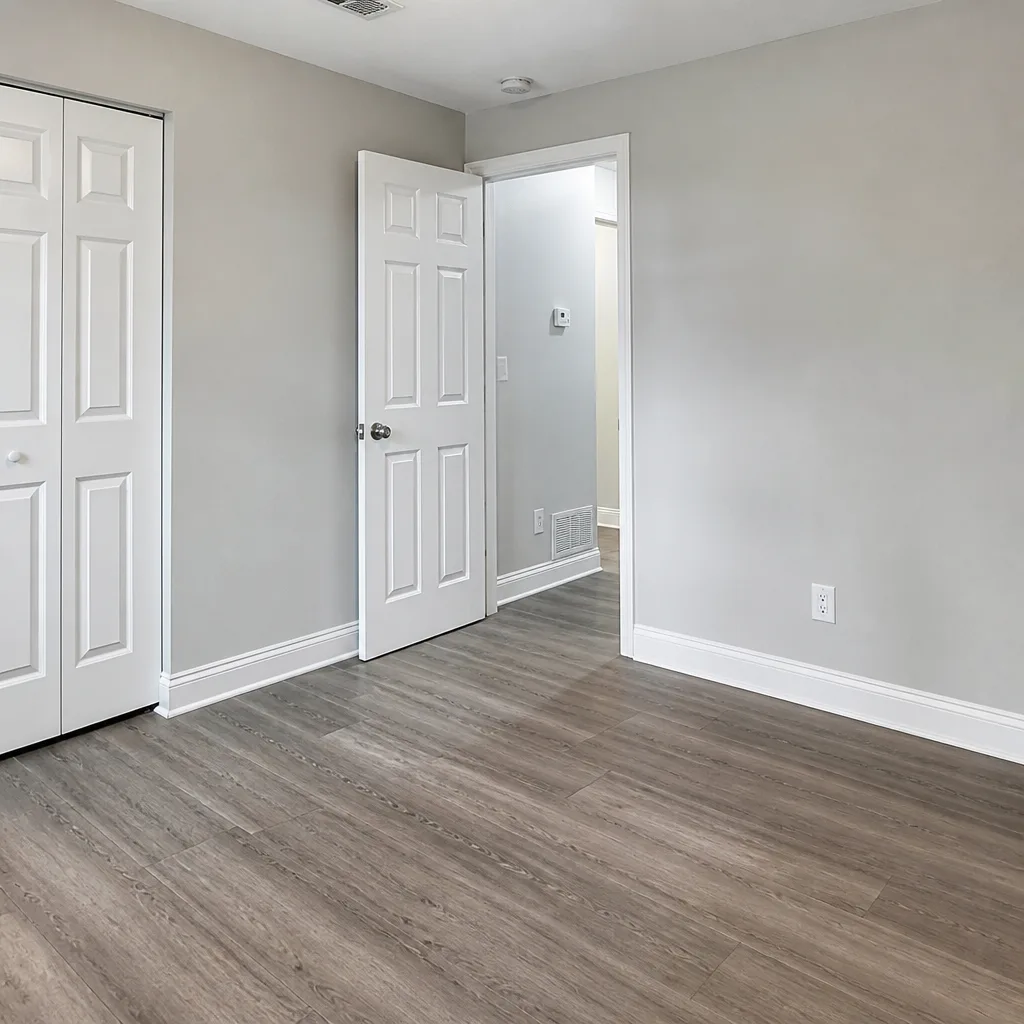 After
After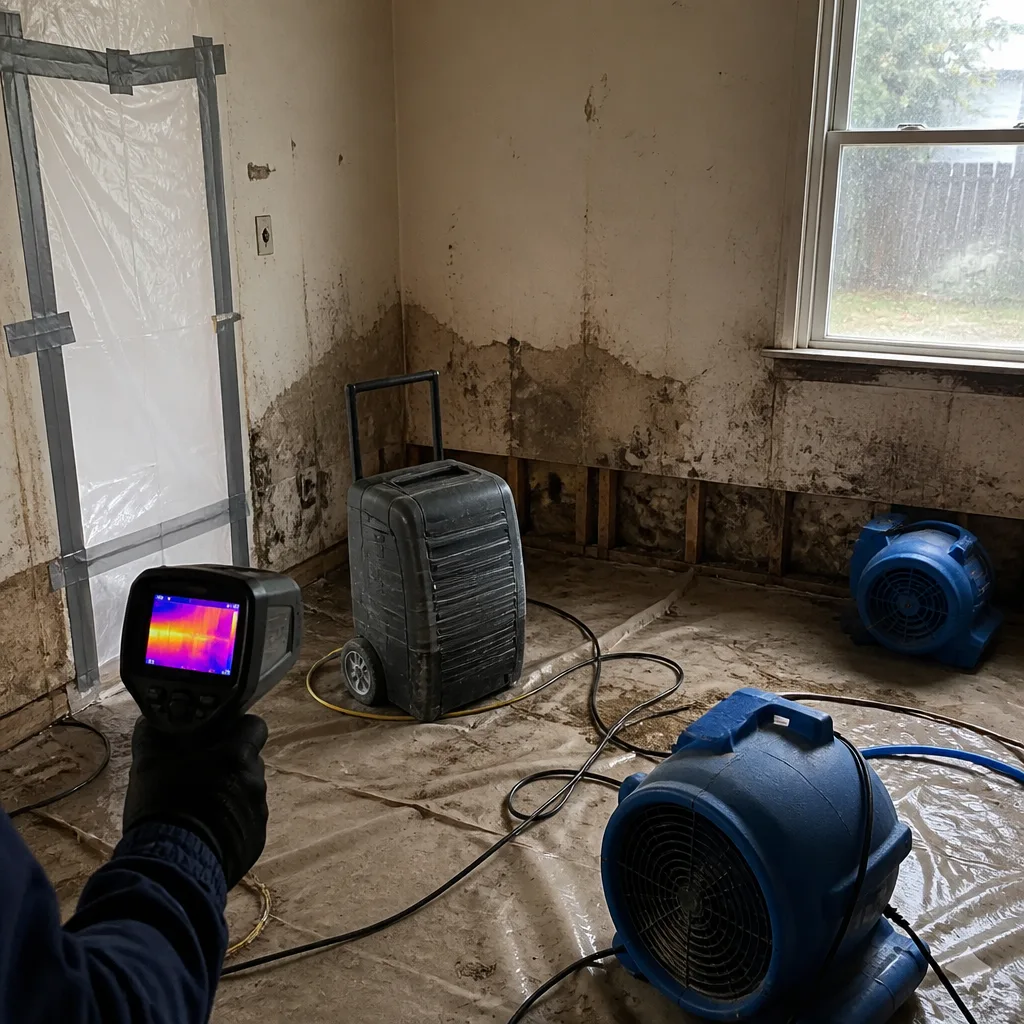 Before
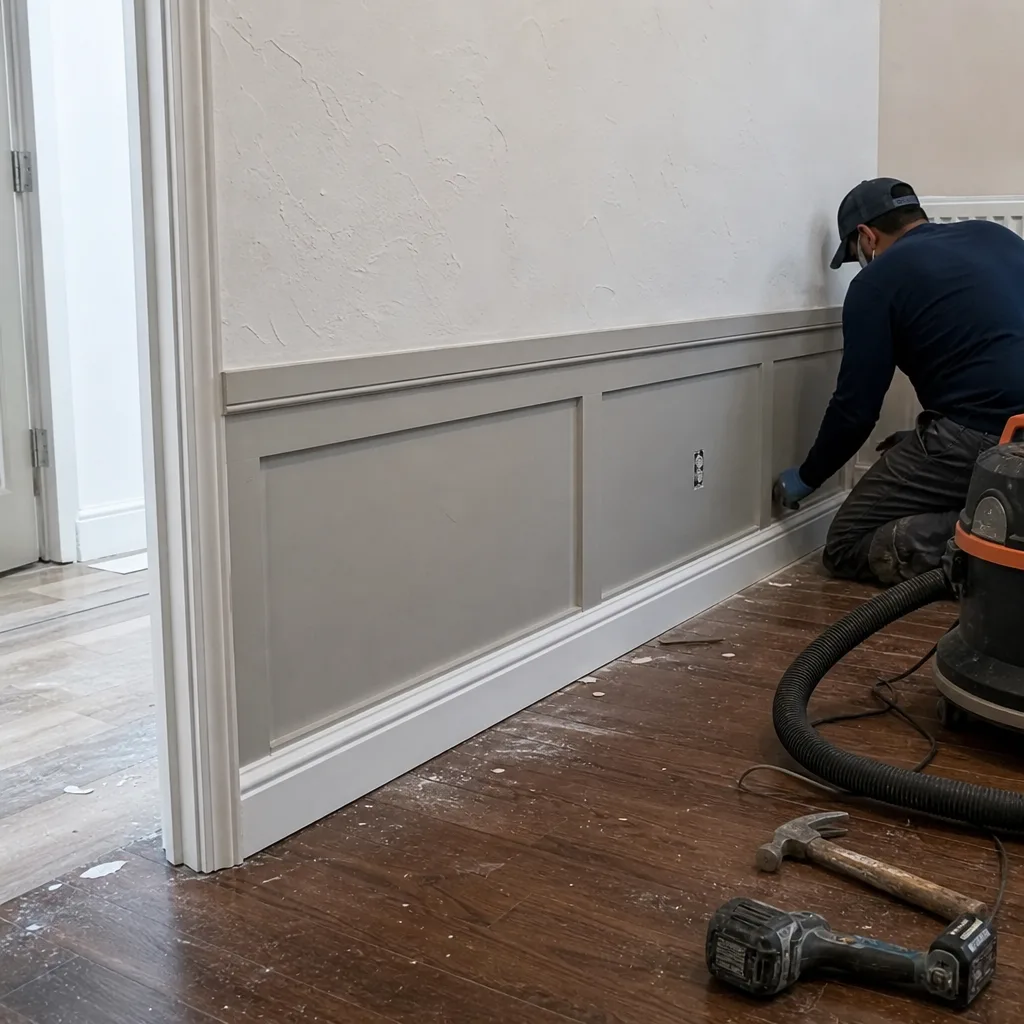 After
After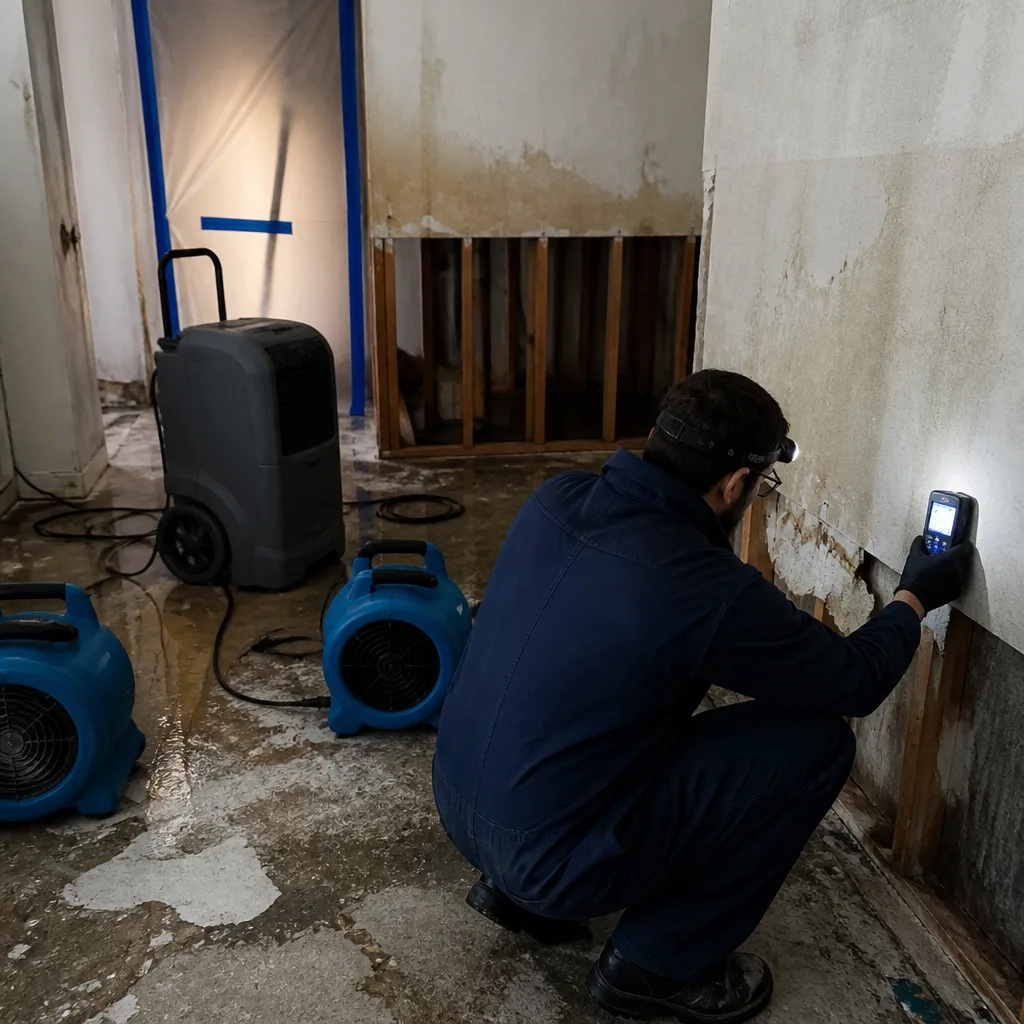 Before
 After
AfterHow to Hire a Damage Restoration Contractor in Fort Lauderdale: A Step-by-Step Guide
After Hurricane Ian, Florida’s Department of Business and Professional Regulation logged over 3,000 contractor complaints in a single quarter. The majority did not involve unlicensed operators. They involved licensed contractors who started demolition, set equipment, or billed insurance without ever delivering a written scope of work. In Fort Lauderdale’s post-storm market, that pattern repeats every summer: a homeowner signs an emergency work authorization, crews begin tear-out within the hour, and three months later the adjuster denies half the invoice because no documented scope existed at the start.
This guide teaches you to hire on evidence, not urgency. You’ll learn the three Florida license numbers to verify, the five written deliverables to demand before work begins, the red flags specific to Fort Lauderdale’s storm-chaser economy, and how to compare restoration bids using the same line-code system your adjuster uses. What follows is The Complete Guide to Damage Restoration in Fort Lauderdale we wish every homeowner followed before calling any contractor, including ours.
Quick Answer
To hire a damage restoration contractor in Fort Lauderdale, verify three active Florida licenses (Certified General Contractor, Mold Remediation Contractor, and IICRC WRT certification), demand five written deliverables before any work starts (itemized scope, line-item price, equipment list with placement plan, photo documentation schedule, and lien waiver policy), and compare bids using Xactimate line codes rather than lump-sum totals. Never sign an Assignment of Benefits or allow work to begin without a written scope you have read and retained.
Table of Contents
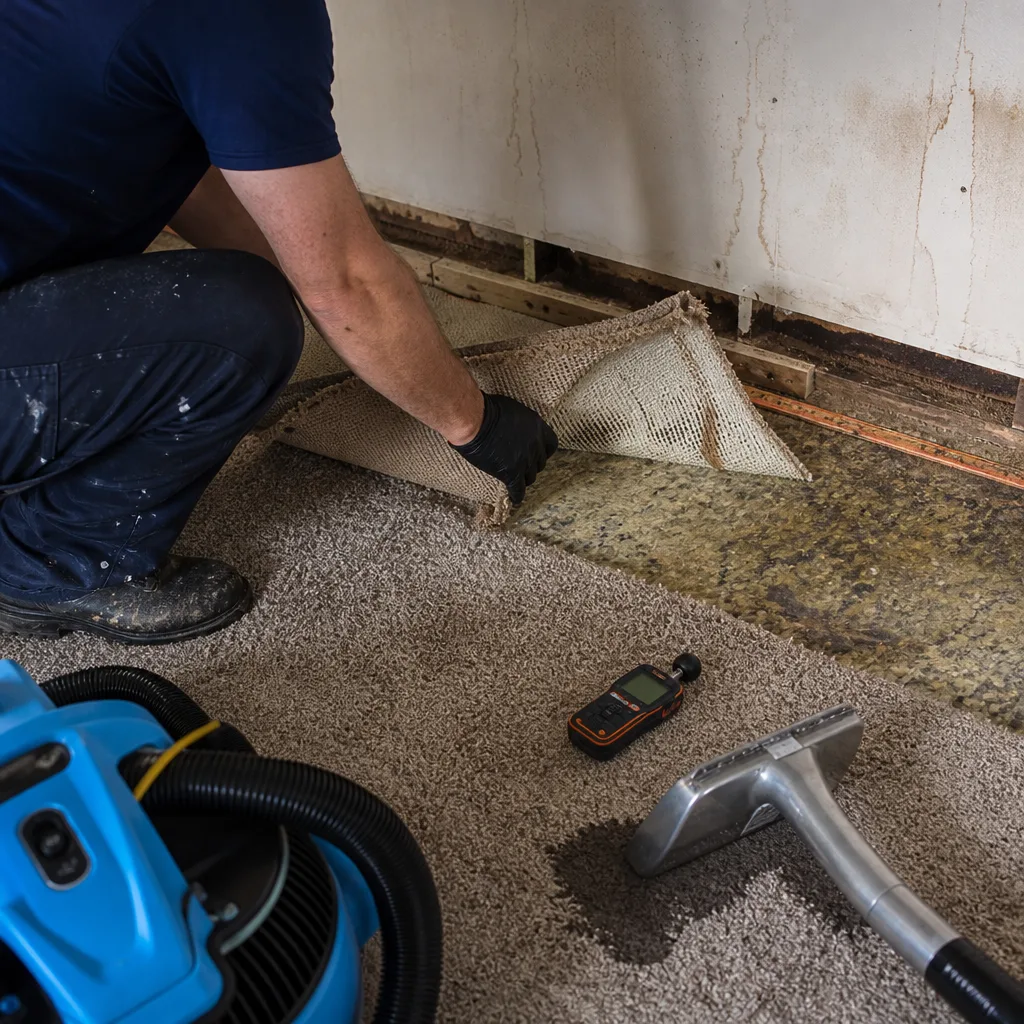
- The Three Florida Licenses to Verify Before Signing Anything
- The Five Written Deliverables to Require Before Work Begins
- Why “We Work Directly With Your Insurance” Can Cost You
- How to Compare Bids Using Xactimate Line Codes
- Red Flags Specific to Fort Lauderdale’s Market
- What to Expect During the Restoration Process
- Common Mistakes to Avoid
- When to Call a Professional
- Frequently Asked Questions
- The Bottom Line
 Before
 After
AfterThe Three Florida Licenses to Verify Before Signing Anything
Florida does not let just anyone tear out wet drywall or set drying equipment in your home. Three separate credentials govern restoration work, and a contractor who holds only one or two is operating outside their legal scope. Here’s what to check, where to check it, and what each license actually permits.
1. State Certified General Contractor (CGC) or Building Contractor (CBC)
This is the license that allows structural repair, reconstruction, and any work that returns your home to pre-loss condition. In Florida, you verify this through the Department of Business and Professional Regulation (DBPR) license lookup. Enter the contractor’s name or license number. What you want to see: status “Active,” a current insurance bond on file, and no pending disciplinary actions.
Fort Lauderdale sits in Broward County, where building codes incorporate the Florida Building Code with Broward-specific amendments for flood zones and wind-borne debris regions. A CGC licensed in Florida but not familiar with Broward’s amendments may spec the wrong window rating for a coastal zone rebuild. Ask specifically: “Have you pulled permits in Broward County in the last 12 months?” A yes with specific project addresses beats a vague assurance.
2. Mold Remediation Contractor License (MRSR or MRSA)
Florida requires this license for any mold assessment or remediation exceeding 10 square feet. The license is issued by DBPR and must be held by the company, not just an individual technician. Here’s the catch: many water damage contractors perform remediation-scale demolition without holding this license, gambling that the mold won’t be documented until after they’ve collected their invoice.
In Fort Lauderdale’s climate, this gamble pays off for them and costs you. Our humidity averages 75% annually, and a water loss left wet for 48 hours in July will support visible mold growth. If your contractor tears out soggy drywall without mold containment protocols and without the MRSR license, you’ve hired someone who cannot legally sign off that the space is mold-safe. That becomes your problem when you sell, refinance, or file a future claim.
3. IICRC Water Damage Restoration Technician (WRT) Certification
The Institute of Inspection, Cleaning and Restoration Certification sets the industry standard for water damage work. WRT certification means the technician has been trained in psychrometric science: the measurement of air temperature, relative humidity, and vapor pressure differential to calculate drying progress. Without this certification, a contractor is guessing at equipment placement and drying duration.
Ask for the certificate number and verify it at iicrc.org. Then ask how the technician documents psychrometric data. The answer should include daily moisture readings, specific humidity calculations, and a drying log that tracks progress by room and by material. If they mention “feels dry” or “looks good,” keep looking.
At DryMark Restoration Fort Lauderdale, every technician holds current IICRC WRT certification, and our license numbers are provided on every written estimate before Haven Standard, Clause 1 is invoked.
The Five Written Deliverables to Require Before Work Begins
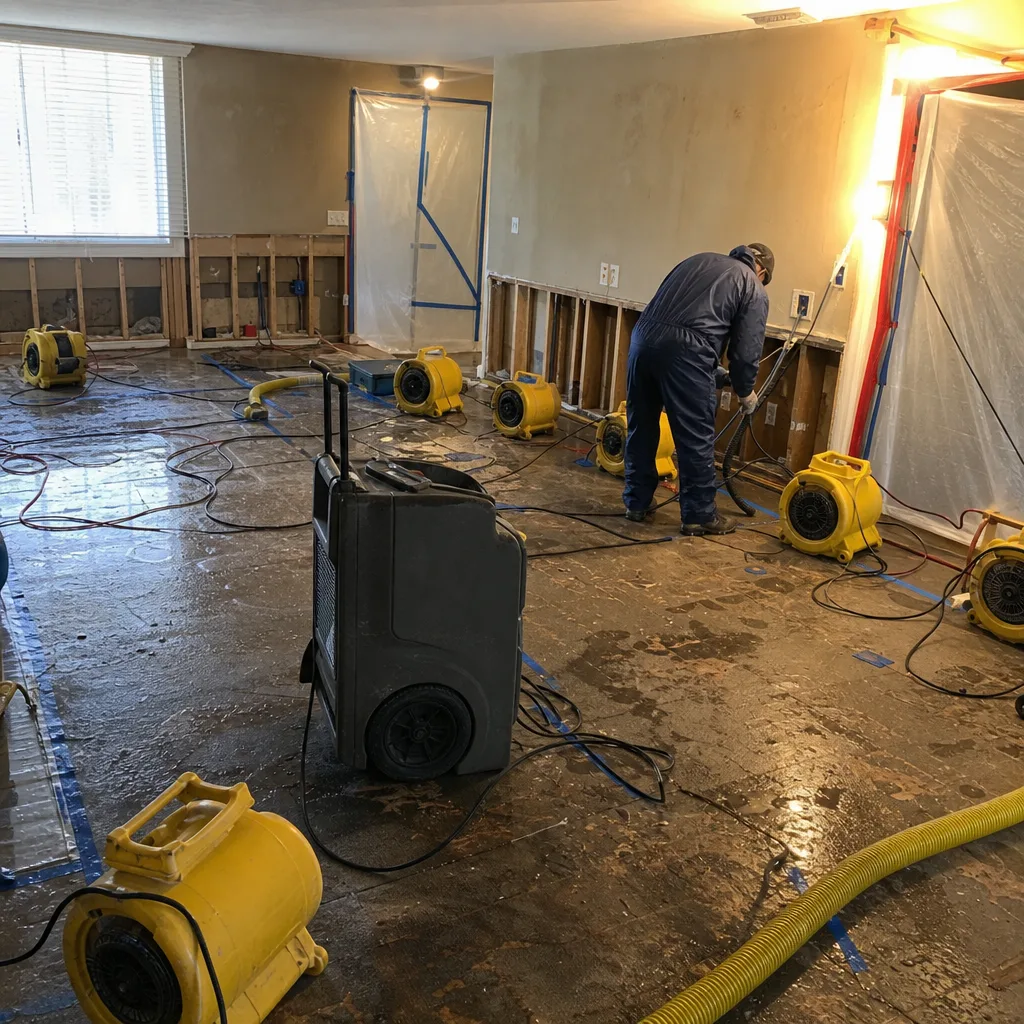
Haven Standard, Clause 1 exists because we have seen what happens when work starts without documentation. The clause states: a written price is delivered before anyone starts work, every time, with no exceptions. But price is only one of five documents that separate a professional restoration from a liability you inherit. Here’s what to demand, what each document should contain, and why skipping any one of them exposes you to non-payment, lien, or incomplete work.
Deliverable 1: Itemized Scope of Work
This document lists every action the contractor will take, by room, by material type. Not “dry out house.” Instead: “Remove 24 linear feet of 1/2″ drywall from east wall of master bedroom, 4 feet high; dispose per Broward County construction debris regulations; HEPA vacuum exposed studs; apply antimicrobial to studs per IICRC S520.” Each line ties to a specific building component and a specific standard.
The scope should also state what is not included. If reconstruction is separate, say so. If contents cleaning is by a third party, name them. Vague scopes invite scope creep, and scope creep invites disputes your adjuster will not resolve in your favor.
Deliverable 2: Line-Item Price
Every line in the scope gets a price. In Fort Lauderdale’s market, expect water mitigation to range from $3.50 to $7.50 per square foot of affected area, depending on category of water (clean, gray, or black) and class of destruction (slow evaporation to specialty drying situations). Mold remediation typically runs $15 to $30 per square foot of contained area, with Fort Lauderdale’s older homes in neighborhoods like Victoria Park and Rio Vista often requiring more extensive containment due to original plaster and lath construction.
The price should be fixed for the scope as written. If the contractor uses “time and materials” or “not to exceed” language without a cap, you have not received a price. You have received an estimate that will grow.
Deliverable 3: Equipment List with Placement Plan
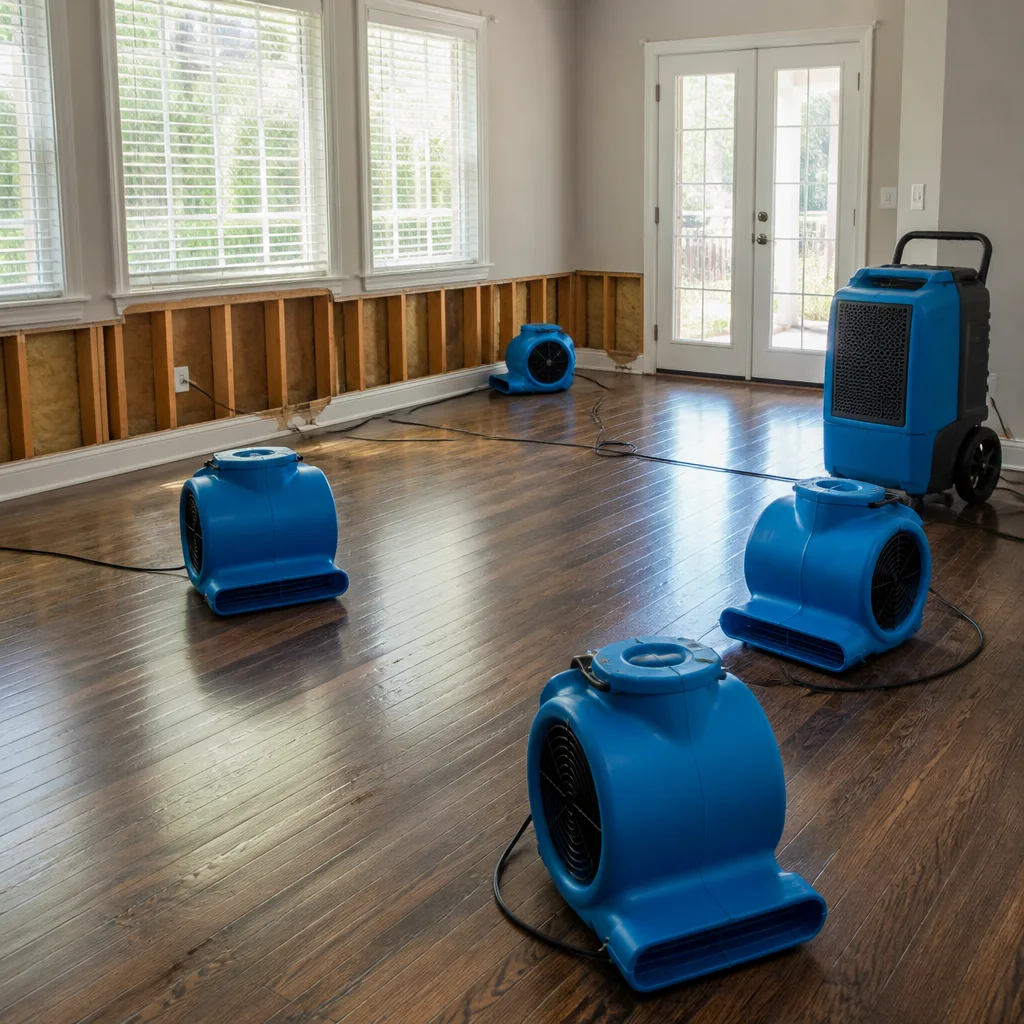
Professional drying requires calculating air changes per hour and dehumidifier pint capacity against the cubic feet of affected space. The contractor should list: number and model of air movers (we deploy Phoenix and XPOWER units), number and model of dehumidifiers (Dri-Eaz and B-Air systems), and any specialty equipment such as Injectidry cavity drying systems for hardwood floors or behind-cabinet drying.
The placement plan matters because equipment left running in unaffected rooms pads the bill. Ask for a sketch or photo-based plan showing where each unit goes, and cross-reference it against the moisture map in your drying log.
Deliverable 4: Photo Documentation Schedule
This states when photos are taken (pre-loss, during demolition, equipment placement, daily progress, post-drying verification), who takes them, and how you receive them. At minimum, demand access to a shared digital folder within 24 hours of each documentation event. Photos are your evidence if the adjuster questions whether a wall was actually wet, whether mold was present, or whether the drying met IICRC standards.
Our standard at DryMark Restoration Fort Lauderdale is a documented photo record on every visit, included as standard, never an upsell. The Haven Standard requires it.
Deliverable 5: Clear Lien Waiver Policy
Florida construction lien law allows contractors to file liens against your property for unpaid work, even if you paid in full but your insurer underpaid. The written deliverable should state: when lien waivers are provided (typically upon final payment or upon insurance payment, depending on your contract structure), whether partial waivers are issued for progress payments, and whether the contractor will indemnify you against subcontractor liens.
Never sign a contract that assigns your insurance benefits to the contractor without understanding that this transfer of rights can complicate or prevent lien waiver negotiation.
Why “We Work Directly With Your Insurance” Can Cost You
This phrase sounds like convenience. In practice, it often means the contractor will bill your insurer directly, negotiate the scope without your involvement, and present you with a finished invoice you never reviewed. Here’s why that structure creates perverse incentives, and how it affects your future premiums and coverage.
When a contractor bills insurance directly, their revenue depends on the insurer’s payment, not your satisfaction. The incentive shifts from “fix this home properly” to “maximize the line items the adjuster will approve.” That leads to overbuilding: replacing drywall that could be dried, running equipment longer than psychrometric data supports, or classifying clean water as gray to justify more extensive demolition. Each approved line item increases the claim total, and claim totals are a primary input in your future premium calculation.
The more insidious version is the contractor who offers to “handle everything” while asking you to sign an Assignment of Benefits (AOB). Under Florida law, an AOB transfers your insurance policy rights to the contractor, who then sues your insurer if payment is disputed. Florida’s legislature has tightened AOB rules, but the practice persists in storm-chaser corridors. A 2022 study by the Florida Office of Insurance Regulation found that AOB-related litigation accounted for a disproportionate share of homeowner premium increases in coastal counties, including Broward.
The correct structure: the contractor produces a written scope and price. You review it. You or the contractor submits it to insurance. You retain control of the claim, the contractor retains accountability for the work, and the insurer retains the right to question line items that lack documentation. If the scope is built on daily moisture logs, photo records, and Xactimate line codes-as detailed in our Water Damage Restoration Maintenance Checklist for Fort Lauderdale Homeowners-the adjuster has little grounds to dispute it. If the scope is a lump-sum invoice with no backup, the adjuster has every grounds, and you are left in the middle.
At Water Damage Restoration in Fort Lauderdale, we provide the documentation package that makes direct billing transparent, not opaque. You see every line item before it goes to your carrier.
How to Compare Bids Using Xactimate Line Codes
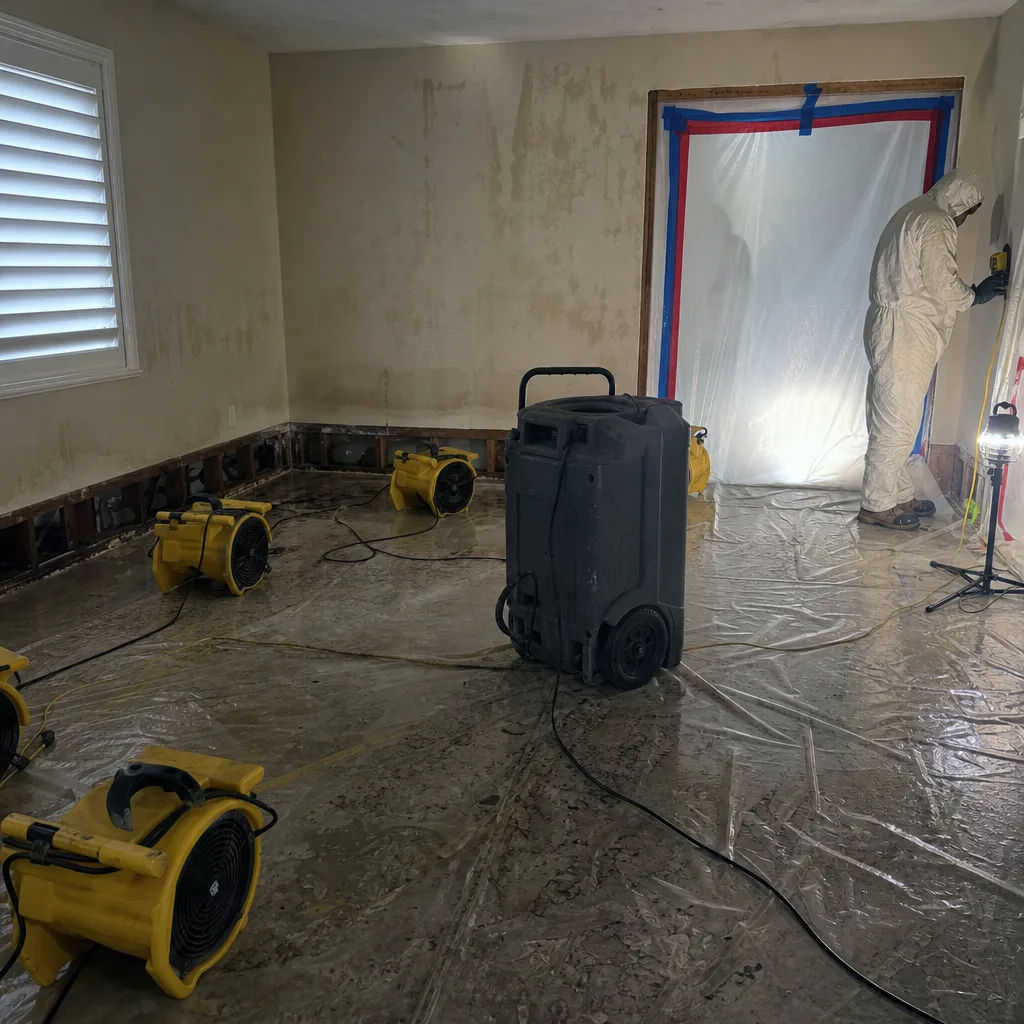
Homeowners comparing three restoration bids typically look at the bottom line. Adjusters comparing the same bids look at line codes. Learning to read like an adjuster is the only way to perform an apples-to-apples comparison, and it protects you from both low-ball bait-and-switch and inflated padding.
Xactimate is the pricing software used by most insurance carriers and by contractors who want their invoices paid without dispute. Every action in a restoration job maps to a specific line code: WTR DRY for drying, WTR REM for water removal, WTR MISC for miscellaneous water damage tasks, and so on. Each code carries a unit price derived from regional cost data for Fort Lauderdale and Broward County.
Step-by-Step Comparison Method
- Request Xactimate-format estimates from each bidder. A contractor who cannot produce this format is either not insurance-literate or is deliberately obscuring their pricing.
- Compare line code quantities, not just line code presence. Two bids may both list WTR DRY for air mover rental, but one specifies 6 units for 3 days and the other specifies 4 units for 5 days. The total may be similar, but the second bid may indicate inadequate equipment for the space.
- Check for line code splitting. A common tactic is to split a single action into multiple codes to inflate the total. For example, separating “set up air mover” (WTR DRY) from “monitor air mover” (WTR MISC) when standard practice includes monitoring in the rental period.
- Verify unit prices against Xactimate’s regional database. Fort Lauderdale’s unit prices run approximately 8-12% above the Florida state average due to higher labor and disposal costs. A bid significantly below Xactimate rates may indicate uninsured labor, unpermitted work, or a plan to change-order you later.
- Demand line-item documentation for any code you do not recognize. If a bid includes a code you’ve never seen, the contractor should explain the action, the quantity justification, and the standard that supports it.
Here’s a simplified comparison table for typical Fort Lauderdale water mitigation:
| Line Code | Description | Typical Fort Lauderdale Unit Price | Quantity Basis |
|---|---|---|---|
| WTR DRY | Air mover, per day | $25 – $35 | Per unit, per day |
| WTR DHM | Dehumidifier, per day | $85 – $120 | Per unit, per day |
| WTR REM | Water extraction, per square foot | $0.75 – $1.50 | Per square foot of affected area |
| WTR MISC | Miscellaneous water damage (HEPA vacuum, antimicrobial application) | $125 – $250 | Per application, per room |
| WTR INJ | Injectidry or specialty cavity drying | $200 – $400 | Per system, per day |
A bid that lists only lump sums or that refuses to break out line codes is not comparable. Request the detail. If the contractor declines, that decline is information.
Red Flags Specific to Fort Lauderdale’s Market
Fort Lauderdale’s geography and storm exposure create a contractor ecosystem unlike inland Florida markets. The Atlantic hurricane season, the Intracoastal Waterway’s flood zones, and the city’s mix of 1950s ranch homes, 1980s condos, and new construction each attract different species of operator. Here are the warning signs we’ve observed across 12,000+ homes since 2011.
Out-of-State Plates and Temporary Addresses
After major storms, contractors arrive from Texas, Georgia, and the Carolinas with wrapped trucks and local phone numbers forwarded to out-of-state dispatch. They may be competent. They may also be gone before your warranty claim arises. Verify the business address on the estimate: is it a Fort Lauderdale location you can visit, or a UPS store mailbox? Ask for a local reference from a job completed in the last 90 days in neighborhoods like Coral Ridge, Imperial Point, or Lauderdale-by-the-Sea.
Pressure to Sign an Assignment of Benefits on the First Visit
Any contractor who arrives with an AOB form pre-filled, or who presents it as “standard paperwork” while water is still spreading, is prioritizing their litigation leverage over your interests. In Fort Lauderdale’s ZIP codes 33301, 33304, 33308, and 33316, we’ve documented AOB presentations within 15 minutes of arrival. The correct response: “I’ll review this with my insurer and attorney before signing anything.” A legitimate contractor continues the assessment. A predatory one packs up and leaves.
No Local Permit History
Broward County’s online permit search shows every building permit pulled by contractor license number. A contractor active in Fort Lauderdale for years should have dozens or hundreds of permits. Zero permits with a claim of “we just handle mitigation, not reconstruction” is sometimes legitimate, but often indicates unpermitted work or subcontracting to unlicensed operators. Cross-reference the license number on the estimate with the permit database.
Vague Equipment Specifications
“Industrial dehumidifier” is not a specification. “Two big fans” is not a drying plan. Fort Lauderdale’s humidity demands equipment sized to the space, and that sizing requires calculation. A contractor who cannot tell you the pint capacity of their dehumidifiers or the CFM rating of their air movers is guessing. In our climate, guesses fail: we’ve seen mold bloom behind “dried” walls because the contractor deployed residential-grade equipment in a 3,000-square-foot water loss.
Payment Demands Before Documentation
Florida law limits advance payments on residential restoration contracts, but the more common issue is the contractor who demands a deductible payment or deposit before producing the written scope. Haven Standard, Clause 1 exists to prevent this: the price comes first, in writing, with your copy retained. Any payment before that moment is a risk you cannot document.
What to Expect During the Restoration Process
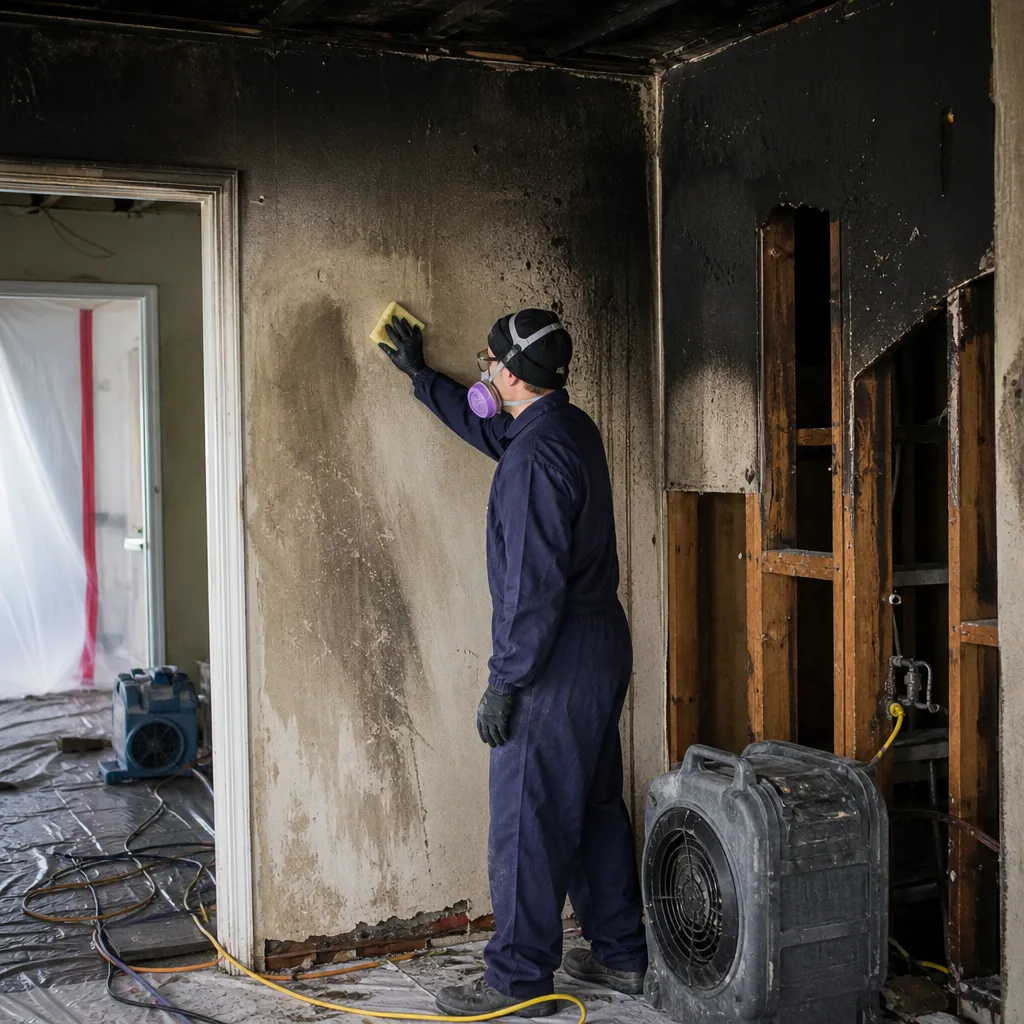
Understanding the sequence of professional restoration helps you evaluate whether your contractor is following recognized standards or cutting corners. Here’s the process as documented to IICRC, RIA, and IFA standards, with Fort Lauderdale-specific context at each stage. Explore more guides & resources for deeper coverage.
Emergency Response and Assessment
For water damage, the clock starts at discovery. In Fort Lauderdale’s summer heat, microbial growth can begin within 24-48 hours. A professional response includes: moisture mapping with penetrating and non-penetrating meters, categorization of water (clean, gray, or black), and classification of destruction (Class 1 through 4, from minimal to specialty drying). The assessment produces the baseline documentation that all subsequent work references.
Our live phone coverage means a person answers every call, 24 hours a day, 7 days a week, with no voicemail on emergency lines. The person who answers can dispatch, not just take a message.
Containment and Mitigation
Mitigation stops the damage from spreading. For water, this means extraction, controlled demolition of unsalvageable materials, and equipment placement per the psychrometric calculation. For mold, this means negative air containment, HEPA filtration, and removal of contaminated materials per the remediation plan. For fire, this means soot and odor source removal before any reconstruction begins.
In Fort Lauderdale’s condo market, particularly buildings constructed 1970-1990, mitigation must account for concrete slab construction and shared plumbing chases. Water travels horizontally along slabs and vertically through chase walls in ways that wood-frame homes do not experience. A contractor unfamiliar with these building types will miss secondary damage.
Drying and Monitoring
Professional drying is not “set it and forget it.” Daily monitoring includes: moisture readings at established test points, relative humidity and specific humidity measurements, temperature logging, and equipment adjustment based on progress. The drying log documents each reading, each adjustment, and each decision. This log becomes part of your insurance submission and your warranty file.
We use professional-grade drying systems from Phoenix, XPOWER, and B-Air, with Injectidry systems for hardwood and cavity drying. Each unit’s deployment is logged to the drying record.
Verification and Documentation
Work is not complete when the contractor says it is. It’s complete when moisture readings return to dry standard for the material and region. In Fort Lauderdale, that typically means wood moisture content below 16% and relative humidity below 60% in the affected space. The contractor should provide: final moisture readings, photo documentation of dry conditions, and a written statement that work meets IICRC S500 (water) or S520 (mold) standards.
Reconstruction or Build-Back
Reconstruction is separate from mitigation in scope, pricing, and scheduling. It requires the General Contractor license, building permits for structural, electrical, or plumbing work, and inspections by Broward County. Never allow a mitigation contractor to begin reconstruction without the proper license and permits. Unpermitted reconstruction voids insurance coverage for future losses and creates title issues when you sell.
At Fire & Smoke Damage Restoration in Fort Lauderdale, reconstruction is scoped and scheduled after mitigation documentation is complete, with written pricing per Haven Standard, Clause 1.
Common Mistakes to Avoid
- Hiring based on speed of arrival alone. The contractor who arrives first after a 3 AM pipe burst may be the one sleeping in a truck near the airport, not the one most qualified. Verify credentials before authorizing work, even if water is still flowing.
- Signing blank or incomplete work authorizations. Any document with blank spaces for scope or price will be filled in later, not to your advantage. Insist on complete documents or sign nothing.
- Accepting verbal promises about insurance coverage. “Your insurance will cover this” is not a guarantee. Only your policy and your adjuster determine coverage. Get the scope in writing, submit it, and obtain written confirmation of coverage before work proceeds if possible.
- Neglecting to document pre-existing conditions. In Fort Lauderdale’s older homes, especially in neighborhoods like Colee Hammock and Sailboat Bend, contractors sometimes attribute pre-existing wear to the current loss. Photograph everything before demolition begins.
- Failing to verify mold remediation licensing separately. A water damage contractor with IICRC WRT is not automatically licensed for mold remediation. The MRSR license is separate, and performing mold work without it is a violation that can invalidate your insurance claim.
- Ignoring the equipment placement plan. Equipment left running in unaffected rooms, or left running longer than necessary, inflates your bill and your claim total. Cross-reference the placement plan against actual deployment, and question any deviation.
- Not requesting a final walkthrough with documentation. The job is not done when the trucks leave. Schedule a walkthrough, review the final moisture readings and photo record, and obtain the signed completion statement before final payment.
When to Call a Professional
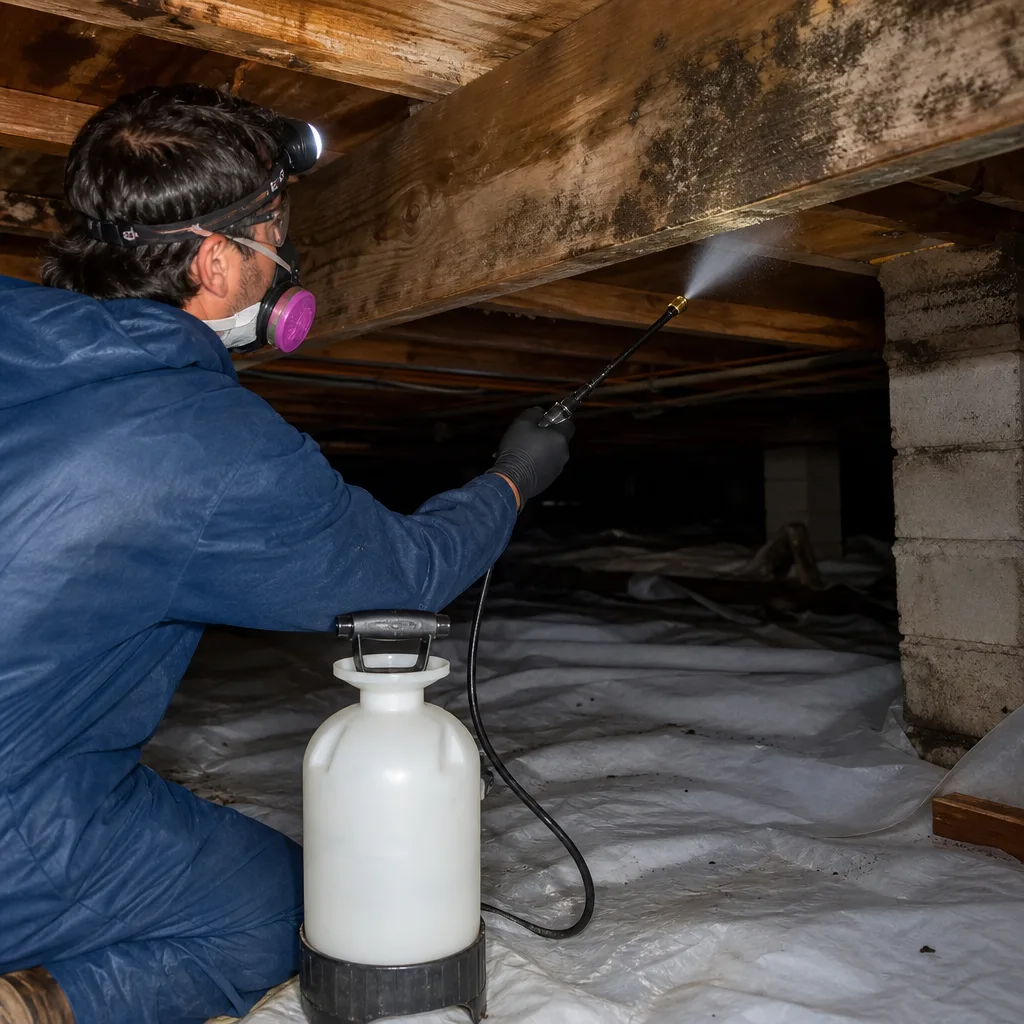
Call a professional restoration contractor when: water has affected more than a single small area and is not fully contained; you smell must or see visible mold growth exceeding a few square inches; fire or smoke has affected multiple rooms or the HVAC system; sewage or category 3 water is involved; or structural damage from storm or vehicle impact has compromised the building envelope. These scenarios require equipment, containment, and documentation that homeowner efforts cannot replicate.
In Fort Lauderdale’s climate, delay is the enemy of containment. Humidity extends drying times, heat accelerates microbial growth, and storm season compresses contractor availability. The decision to call should be made on evidence: moisture meter readings, visible damage, or odor. Waiting for the situation to “clear up” typically means the damage compounds and the documentation gap widens.
Mold Remediation in Fort Lauderdale requires particular urgency given our year-round humidity. If you suspect mold from a past or current water loss, professional assessment is warranted even if the water appears resolved.
DryMark Restoration Fort Lauderdale offers free estimates in Fort Lauderdale. Call (754) 254-1257 to schedule assessment, request a free second opinion on any competitor’s written estimate, or discuss documentation requirements before authorizing work with any contractor.
Frequently Asked Questions
Water damage mitigation in Fort Lauderdale typically ranges from $3.50 to $7.50 per square foot of affected area for clean water losses, with gray and black water losses running higher due to contamination protocols and protective equipment requirements. A standard single-family home with a burst pipe affecting 500 square feet might see mitigation costs of $2,000 to $4,500 before reconstruction. Reconstruction costs vary widely based on finishes and permit requirements. Call (754) 254-1257 for a written estimate specific to your loss - estimates are free, and we provide a free second opinion on any competitor’s written quote.
Insurance coverage depends on your policy language, the cause of loss, and whether the damage was sudden and accidental versus gradual or maintenance-related. Most Fort Lauderdale homeowners policies cover sudden water damage from burst pipes or storm intrusion, but exclude flooding from rising surface water unless you carry separate flood insurance through the NFIP or a private carrier. The key to full coverage is documentation: an itemized scope, line-item pricing, photo records, and drying logs that prove the work was necessary and properly performed. We document to IICRC, RIA, and IFA standards specifically to support your claim. Call (754) 254-1257 to discuss your policy and our documentation process.
For active water losses, professional response time in Fort Lauderdale typically ranges from 45 minutes to 2 hours during normal periods, and 2 to 4 hours during major storm events when road conditions and call volume affect dispatch. What matters more than arrival time is what the contractor does upon arrival: moisture mapping, scope documentation, and written pricing before work begins. A fast arrival with no documentation is not an emergency response; it’s a sales call. Our live person answers every call, 24 hours a day, 7 days a week, with no voicemail on emergency lines.
For mold growth exceeding 10 square feet, or for mold resulting from Category 2 or 3 water damage, Florida law requires licensed mold remediation. More importantly, visible mold on a surface often indicates hidden mold in wall cavities, behind baseboards, or in HVAC systems - especially in Fort Lauderdale’s humid climate where condensation in exterior walls is common. DIY cleaning of visible growth without addressing the moisture source and hidden contamination typically results in recurrence within weeks. Professional remediation includes moisture source elimination, containment, HEPA filtration, and post-remediation verification that the space meets clearance standards. Call (754) 254-1257 for assessment if you suspect mold beyond a minor surface issue.
You retain control of your insurance claim unless you sign an Assignment of Benefits. The contractor’s role is to provide documentation that supports your claim: written scope, line-item pricing, photo records, drying logs, and completion verification. Some contractors offer to “work directly with your insurance,” which can mean anything from submitting documentation on your behalf to negotiating scope without your involvement. The safest structure: you review and approve the scope, the contractor documents the work, and you or the contractor submits to insurance with you copied on all communications. Never sign over claim control without understanding the implications for your coverage and your liability. Call (754) 254-1257 to discuss how we structure documentation for adjuster review.
Stop the work. Florida law provides protections for homeowners, but the practical protection is your refusal to authorize undocumented work. State clearly: “I need the written scope and price before work continues.” If the contractor refuses or pressures you, document the interaction (photos, notes, witness names) and contact another contractor. Work performed without a written scope is difficult to dispute, difficult to insure, and frequently results in balances that become your personal liability. Haven Standard, Clause 1 was written to prevent exactly this scenario: a written price before work begins, every time, with no exceptions.
Ask for the equipment list with model numbers, then verify those models against manufacturer specifications. Professional drying equipment includes: low-grain refrigerant dehumidifiers (Dri-Eaz LGR 7000XLi or equivalent, rated to 130 pints at AHAM conditions), axial or centrifugal air movers (Phoenix Axial Air Mover or XPOWER P-230AT, 2,000+ CFM), and HEPA air scrubbers for containment. The contractor should explain the calculation: how many air changes per hour the equipment produces for your affected cubic footage, and how dehumidifier capacity matches the latent load. Vague references to “industrial equipment” or refusal to specify models suggests residential-grade or inadequate deployment. Our equipment lists are included in every written scope.
The Bottom Line
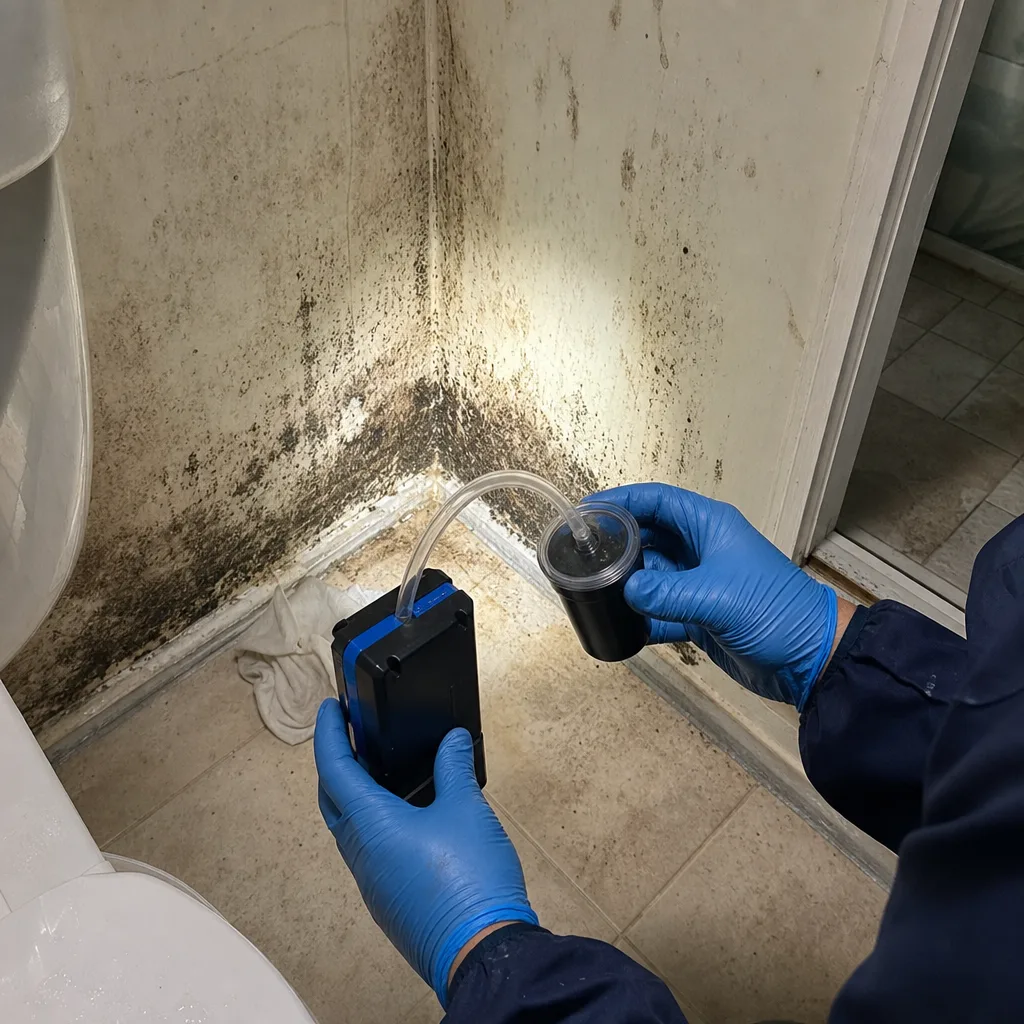
The most dangerous contractor in Fort Lauderdale is not the unlicensed operator working from a pickup truck. It is the licensed, seemingly professional firm that starts work before producing documentation, trusting that urgency and your stress will override your judgment. The antidote is systematic: verify three licenses, demand five written deliverables, compare bids using Xactimate line codes, and never sign an Assignment of Benefits without independent legal review.
Documentation is not bureaucracy. It is the evidence that turns a restoration invoice into a claim your insurer pays, a warranty your contractor honors, and a home that is actually restored rather than superficially dried. In Fort Lauderdale’s climate, where humidity hides incomplete work and storm season tests every building envelope, the contractor who documents thoroughly is the contractor who finishes thoroughly.
Since 2011, Back to Dry Restoration has built every process around this principle. The Haven Standard requires it. Our 365-Day Done Right Promise backs it. And our 12,000+ documented restorations prove it.
Call (754) 254-1257 for a free estimate, a free second opinion on any written competitor quote, or to discuss documentation requirements before you authorize work with any restoration contractor in Fort Lauderdale.
Written by Alicia Brennan, Owner at DryMark Restoration Fort Lauderdale, serving Fort Lauderdale since 2011.