
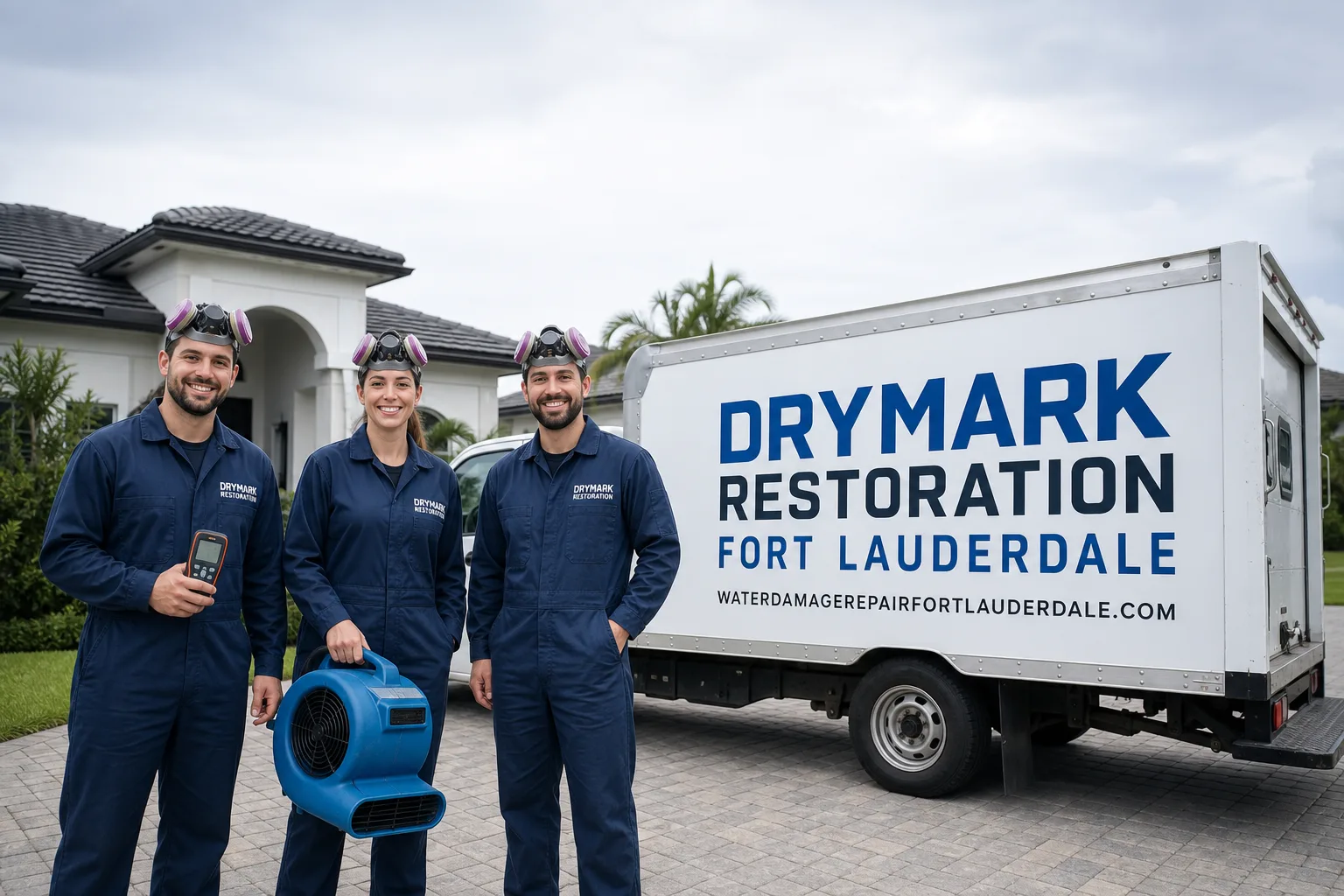
Free visual inspection and a written scope of work before any mitigation begins - photos, moisture readings, and drying logs go in your claim file
The scope we write is the scope we bill. Anything new gets shown to you, in writing, before we touch it.
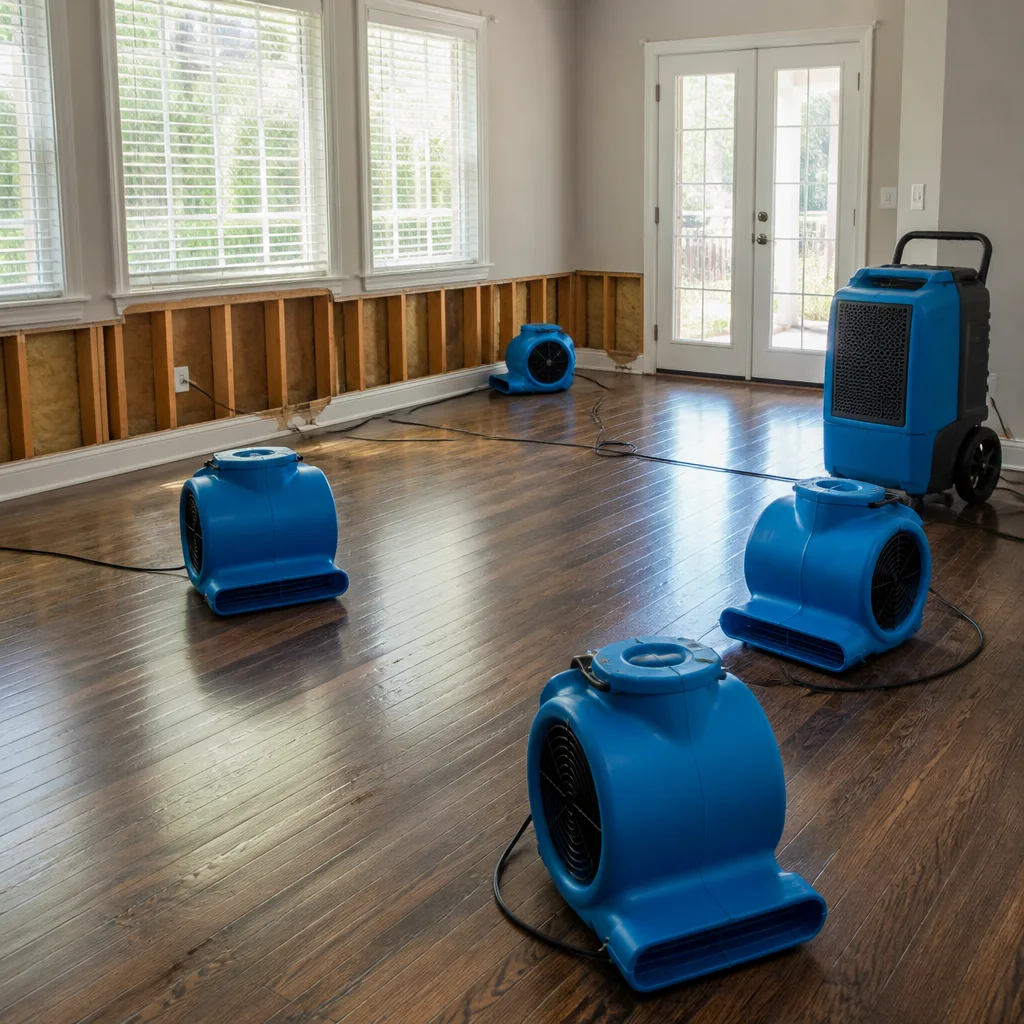
 Before
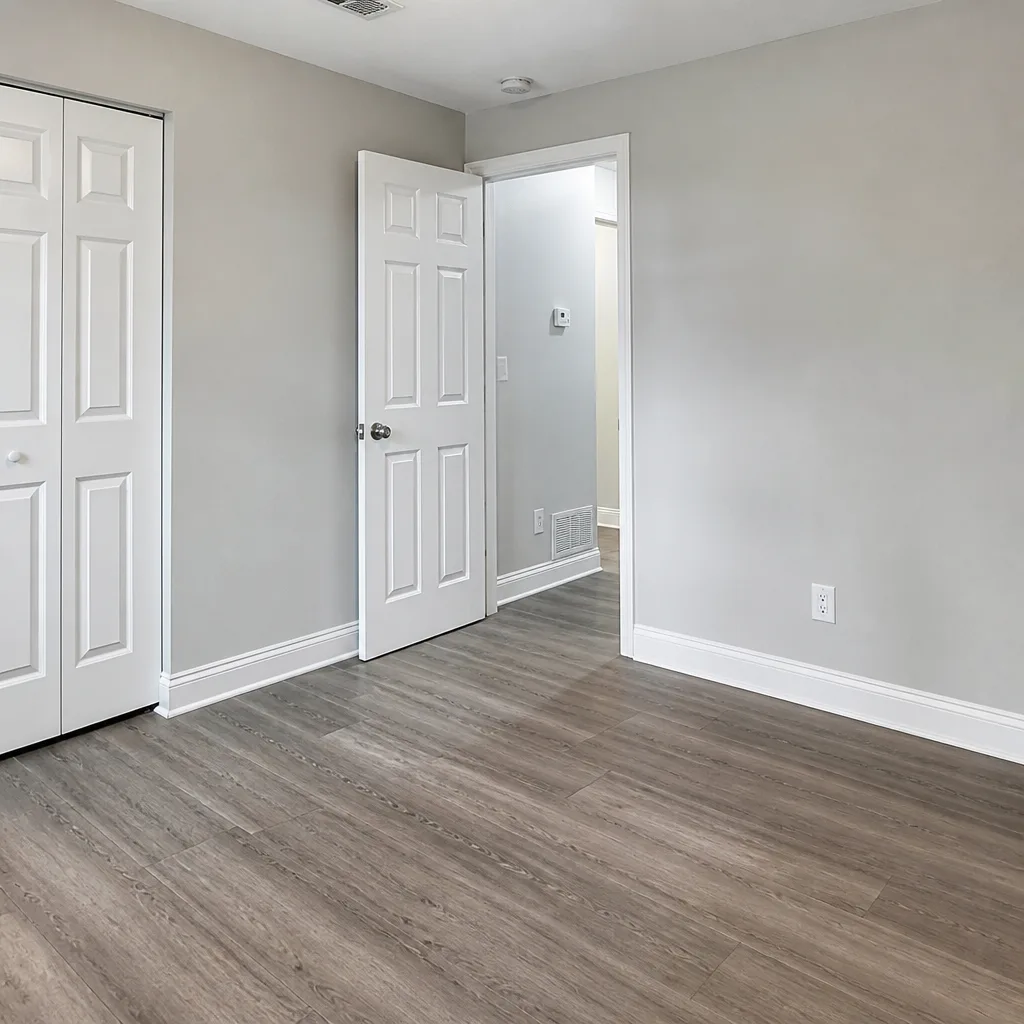 After
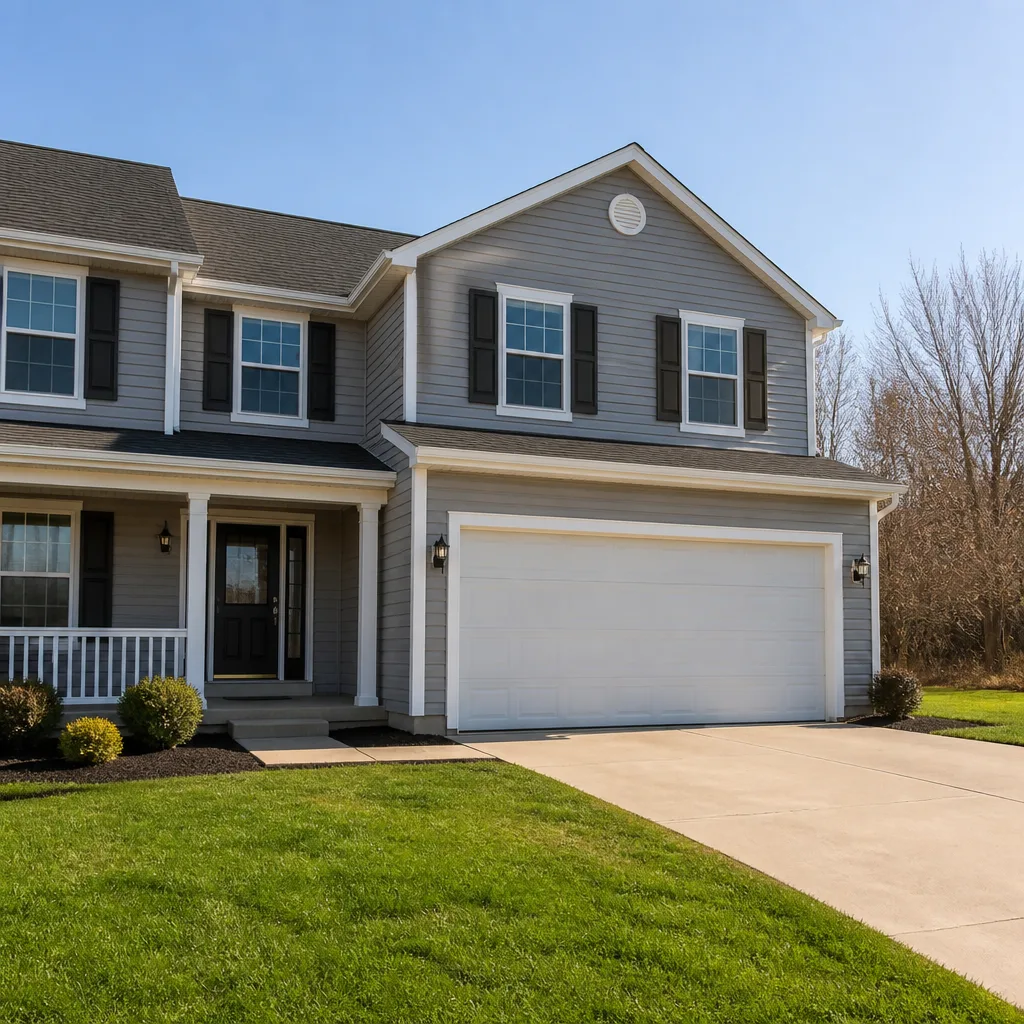
After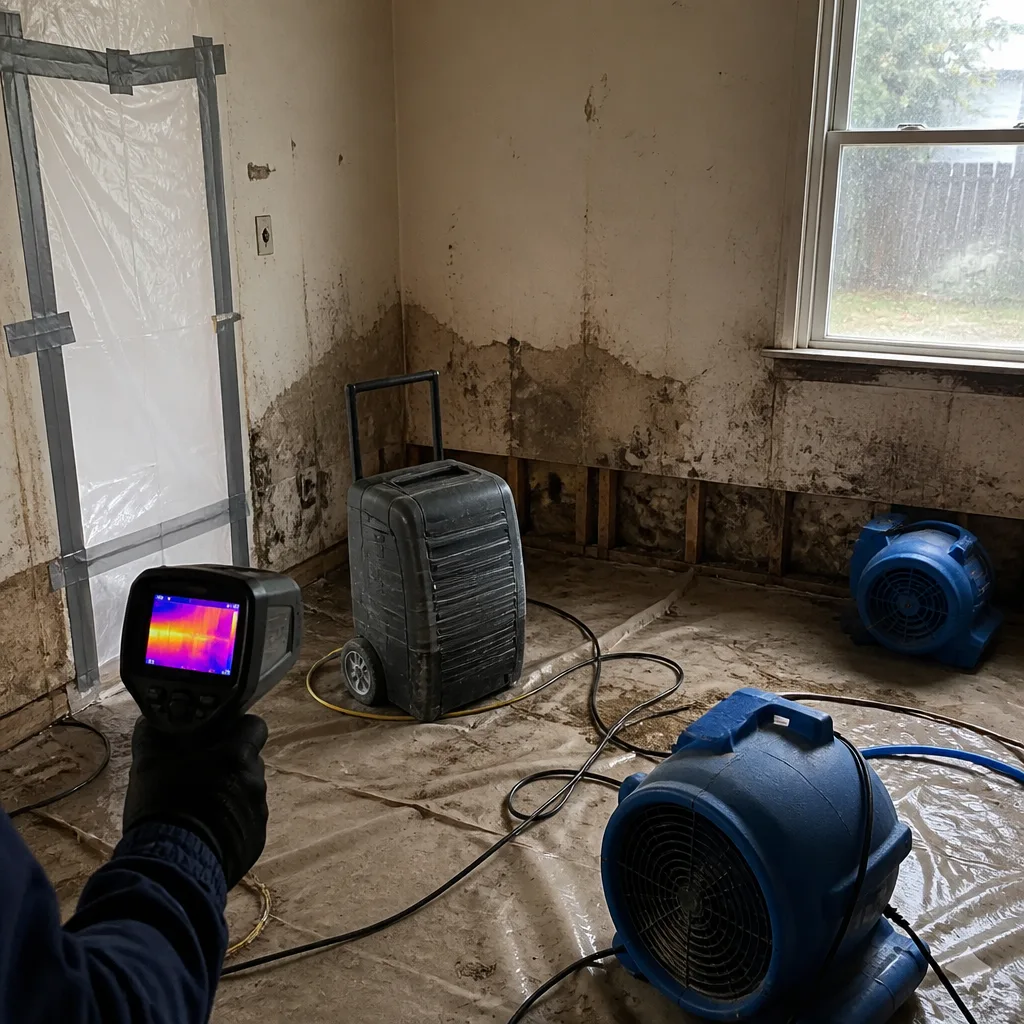 Before
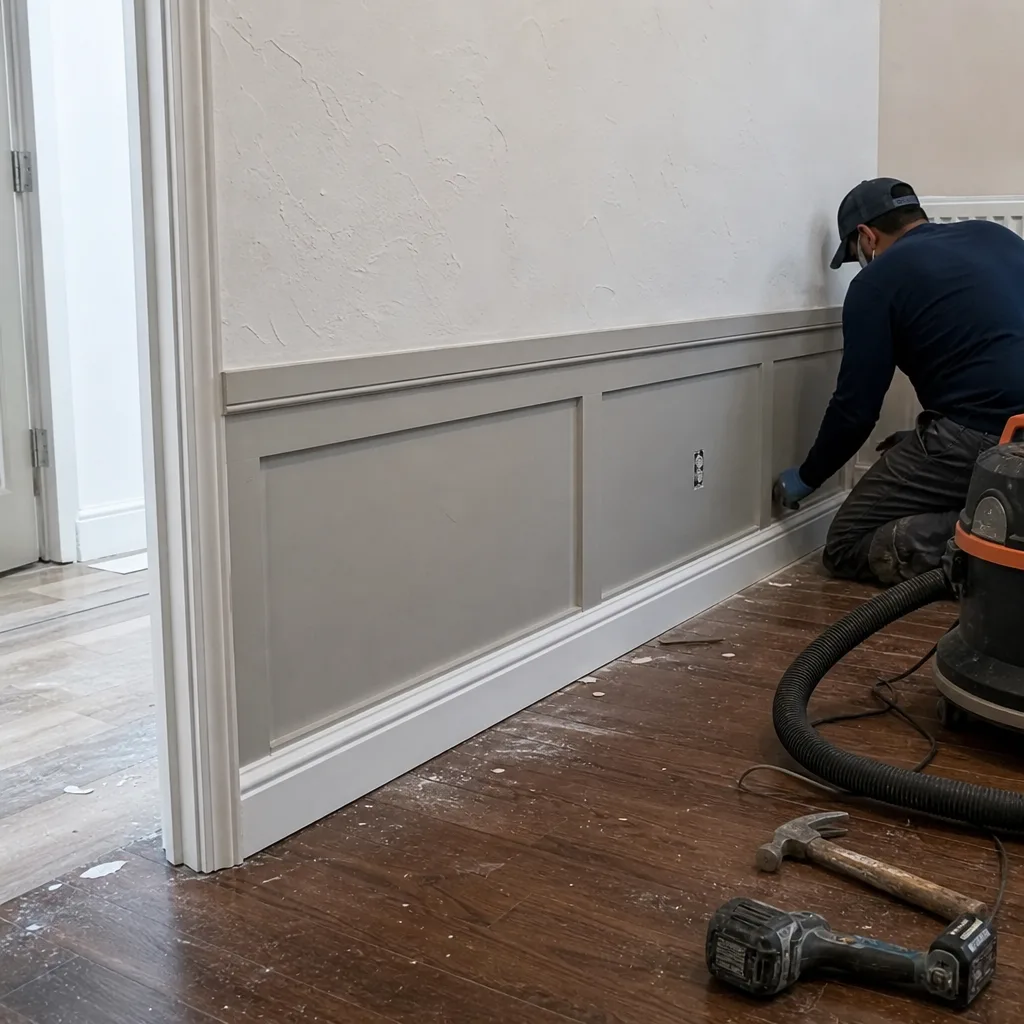 After
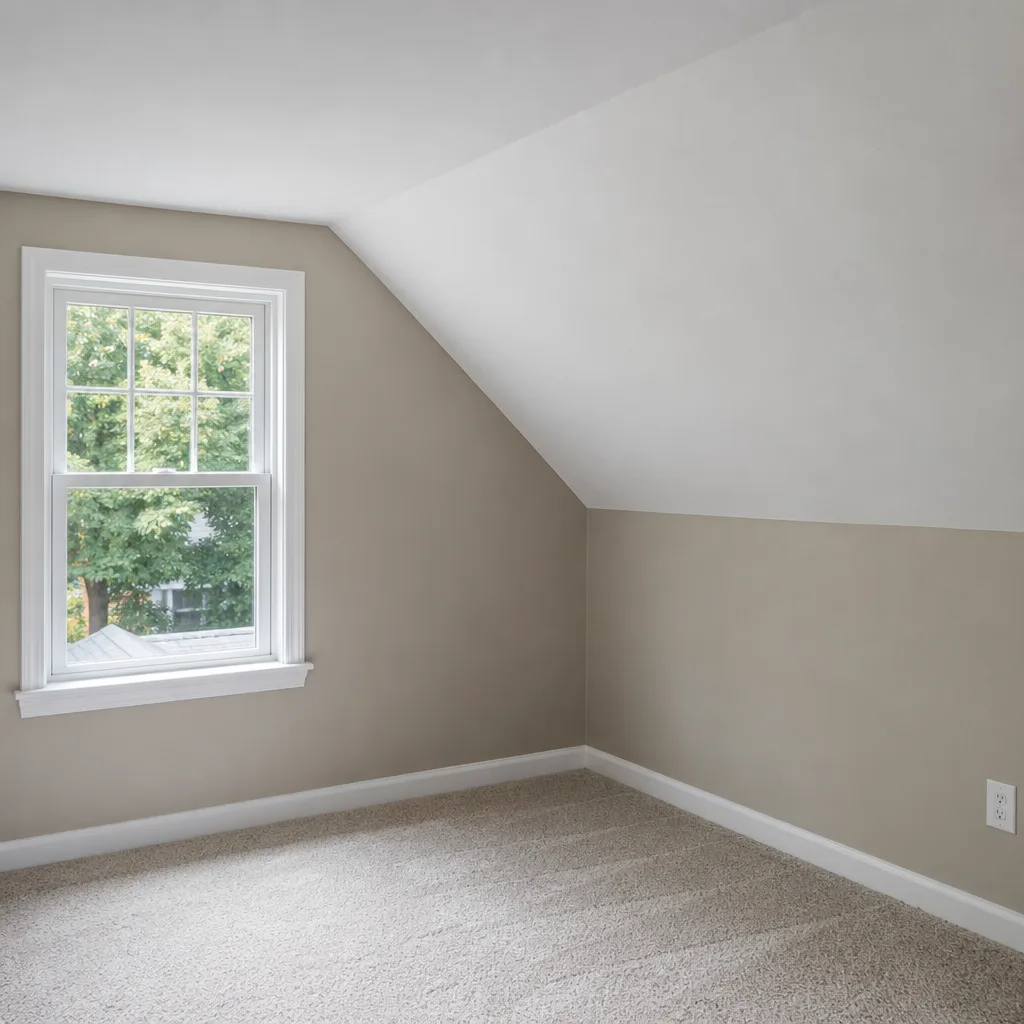
After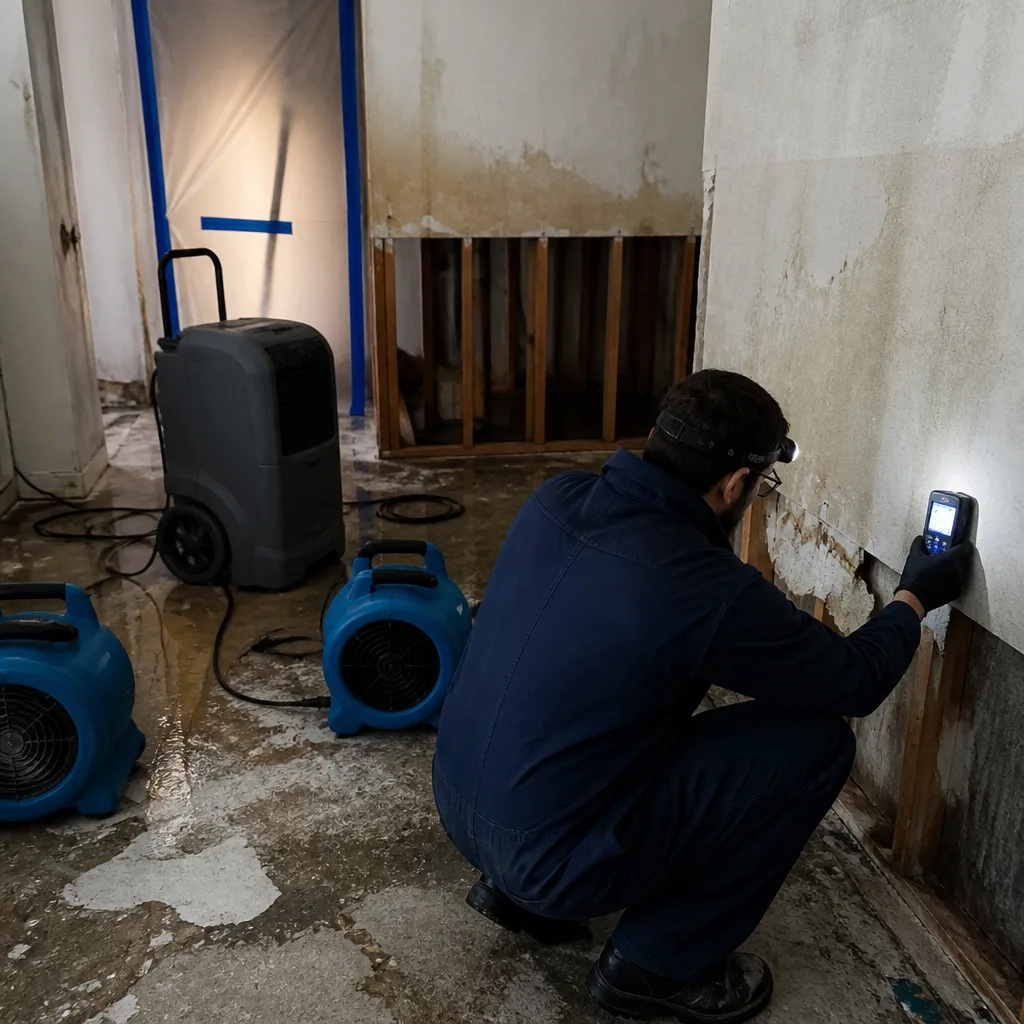 Before
 After
AfterFast, Reliable Water Damage Restoration Across Plantation
Water damage restoration in Plantation typically costs $2,800-$7,500 for a standard residential mitigation, with emergency extraction starting at $1,200-$2,400 and full structural drying running $1,600-$5,100 depending on affected square footage and cavity access. Our crews are dispatched from our South Florida office and usually arrive at Plantation homes within 45-60 minutes of a call to (754) 254-1257. We’ve restored water-damaged homes across Plantation’s 1950s-era neighborhoods from Jacaranda to Plantation Acres, and we know the specific failure patterns of the city’s 1960s-1980s CBS housing stock: flat membranes past service life, sealed block wall cavities that trap moisture, and Broward’s high water table pushing lateral wicking into framing long after surface water is gone.
Why DryMark Restoration Fort Lauderdale Is Plantation’s Preferred Water Damage Restoration Company
Plantation homeowners choose us because we document before we dry. Our Water Damage Restoration team has handled sequential-storm damage across the city’s mature canopy neighborhoods - from the oak-lined streets near Plantation Heritage Park to the older ranches off Broward Boulevard - and we understand that a roof puncture here is rarely just a roof claim.
Our reviews from Plantation customers consistently cite two things: the written price delivered before any equipment runs, and the photo record we hand over at job completion. Live person answers every call, 24 hours a day, 7 days a week. No voicemail trees while water is still moving through your ceiling.
We’re familiar with the local permitting landscape, the age of Plantation’s housing stock, and the specific psychrometric challenges of drying concrete-block construction in 75% ambient humidity. That local knowledge changes what we probe, where we place air movers, and how long we run dehumidification before signing off on a dry structure.
Our Water Damage Restoration Services in Plantation
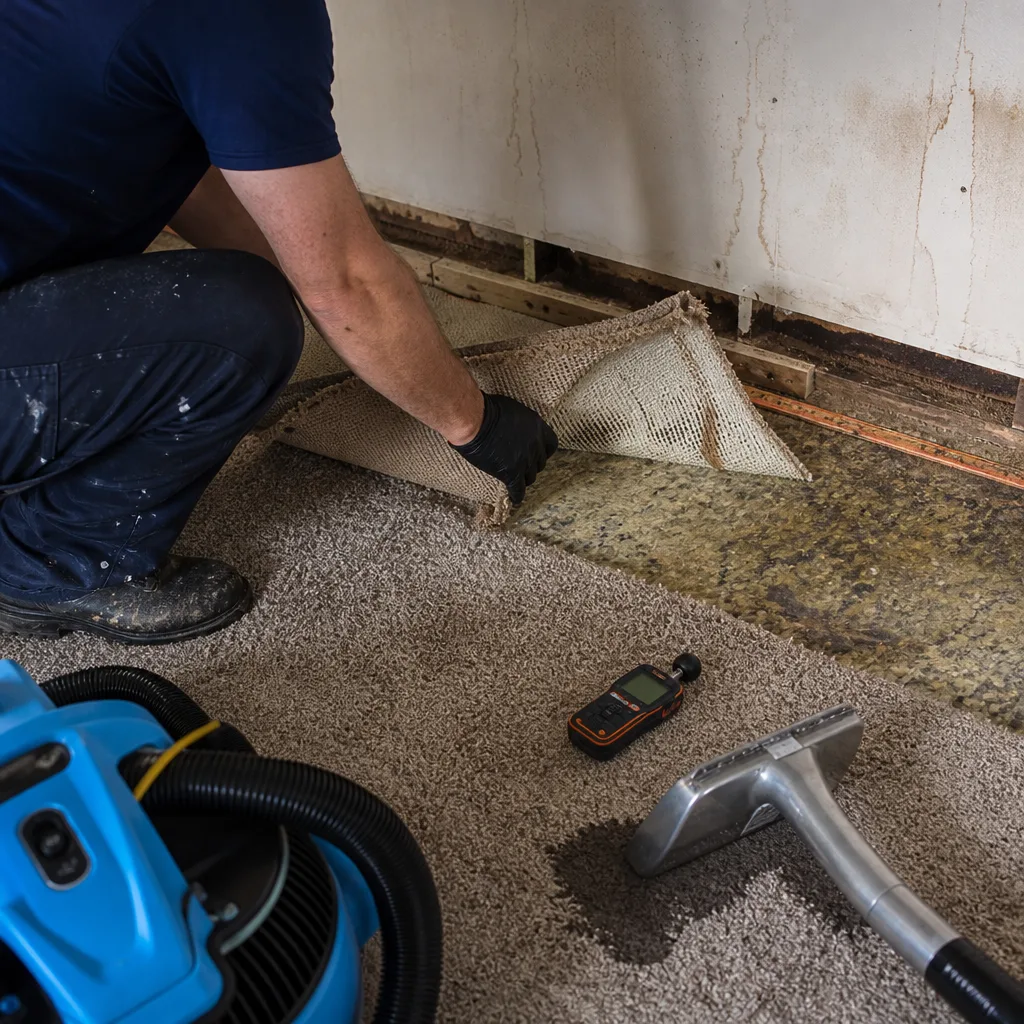
Emergency Water Extraction
When a tropical storm drops a live oak limb through your low-slope roof or a supply line fails inside a Jacaranda-area ranch, standing water needs to come out before it wicks into slab edges and wall cavities. Our emergency extraction crews in Plantation deploy truck-mounted systems and portable submersibles rated for Category 1 through Category 3 water, with extraction typically completed within 2-4 hours of arrival. We document pre-loss moisture readings with thermal imaging and pin meters before a single gallon is removed, so your drying logs start with defensible baseline data.
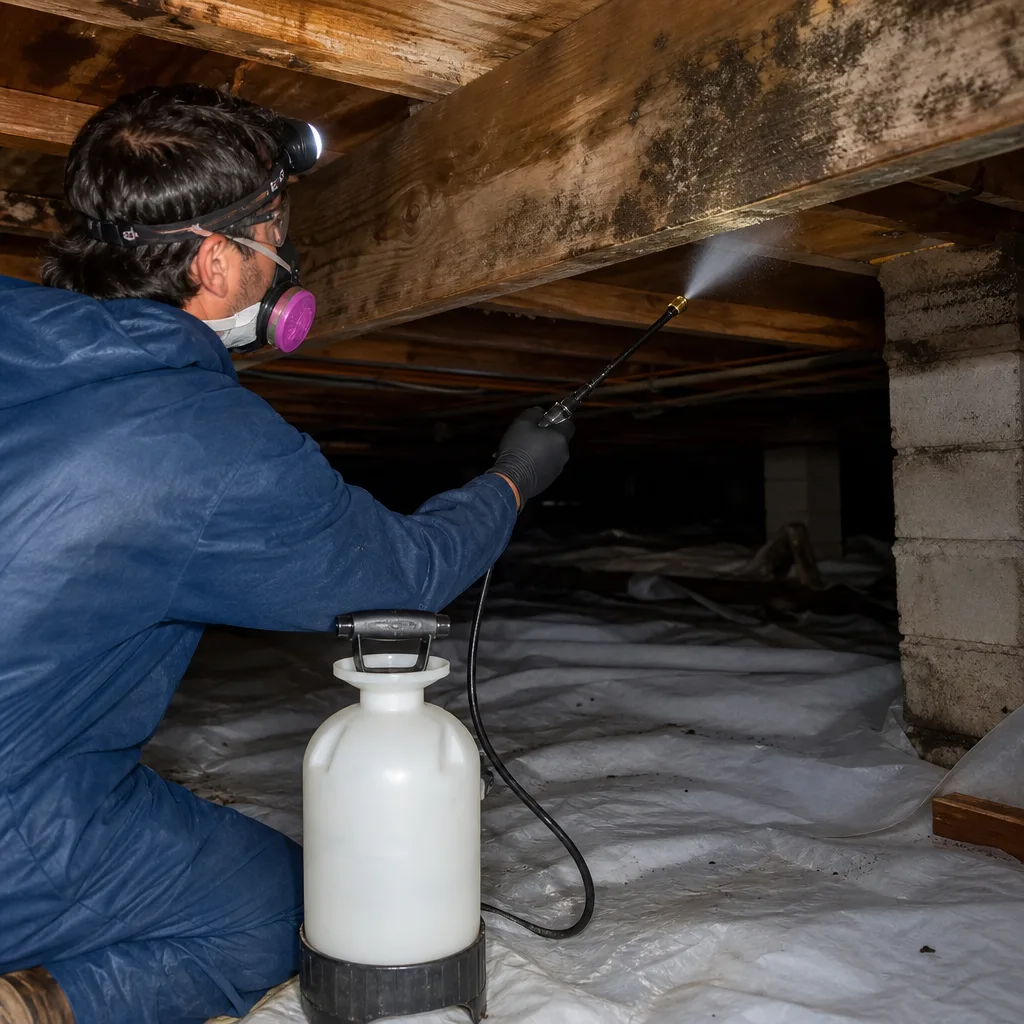
Structural Drying & Dehumidification
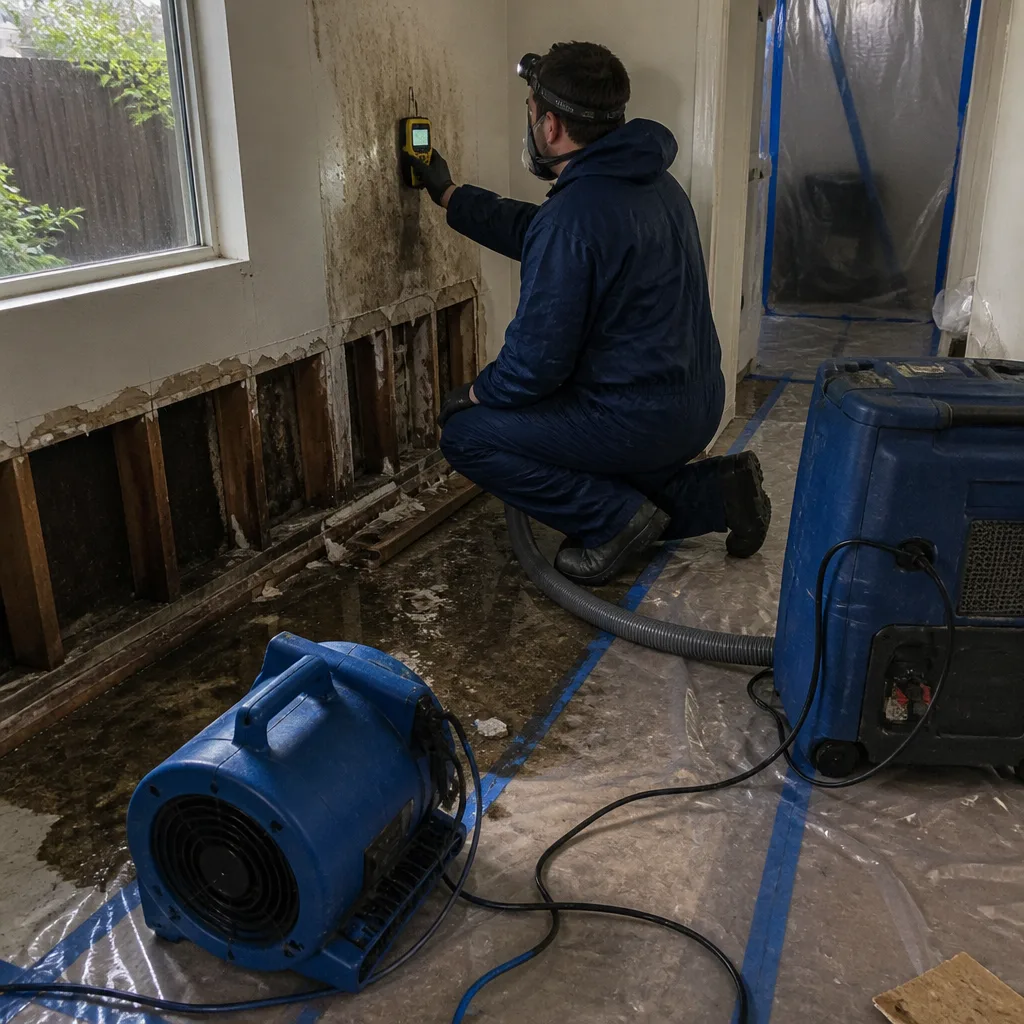
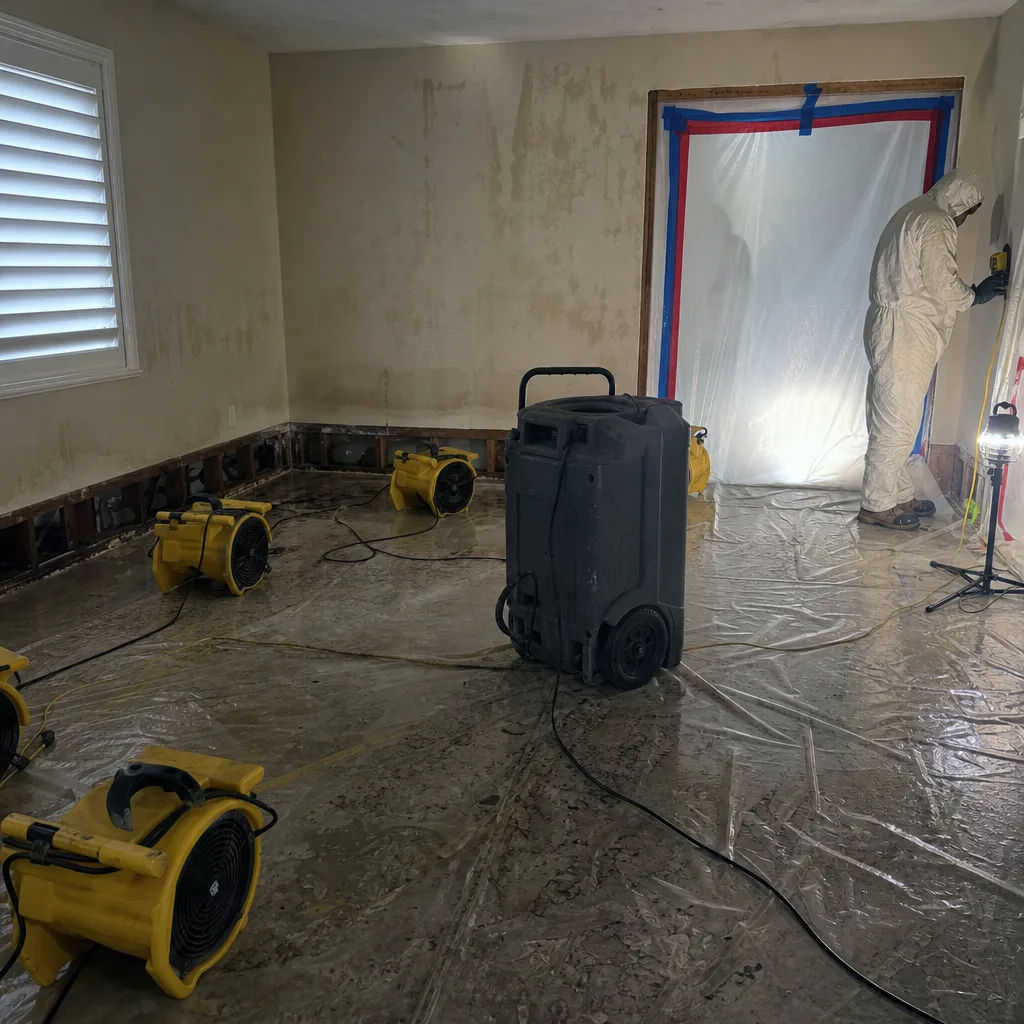
Plantation’s CBS homes don’t dry the way wood-frame construction does. Concrete block and stucco assemblies hold moisture in sealed cavities, and Broward’s year-round high humidity fights passive evaporation. Our structural drying protocol for Plantation properties includes vapor pressure differential monitoring - measuring the force that drives moisture from wet materials into the air - plus daily psychrometric data (temperature, relative humidity, and dew point) logged to IICRC standards. We run Dri-Eaz and Phoenix dehumidifiers with calculated air mover placement, and we don’t pull equipment until the drying logs prove pre-loss moisture content in every affected stud bay. Skipping this step is how hidden cavity moisture becomes a mold remediation six weeks later.
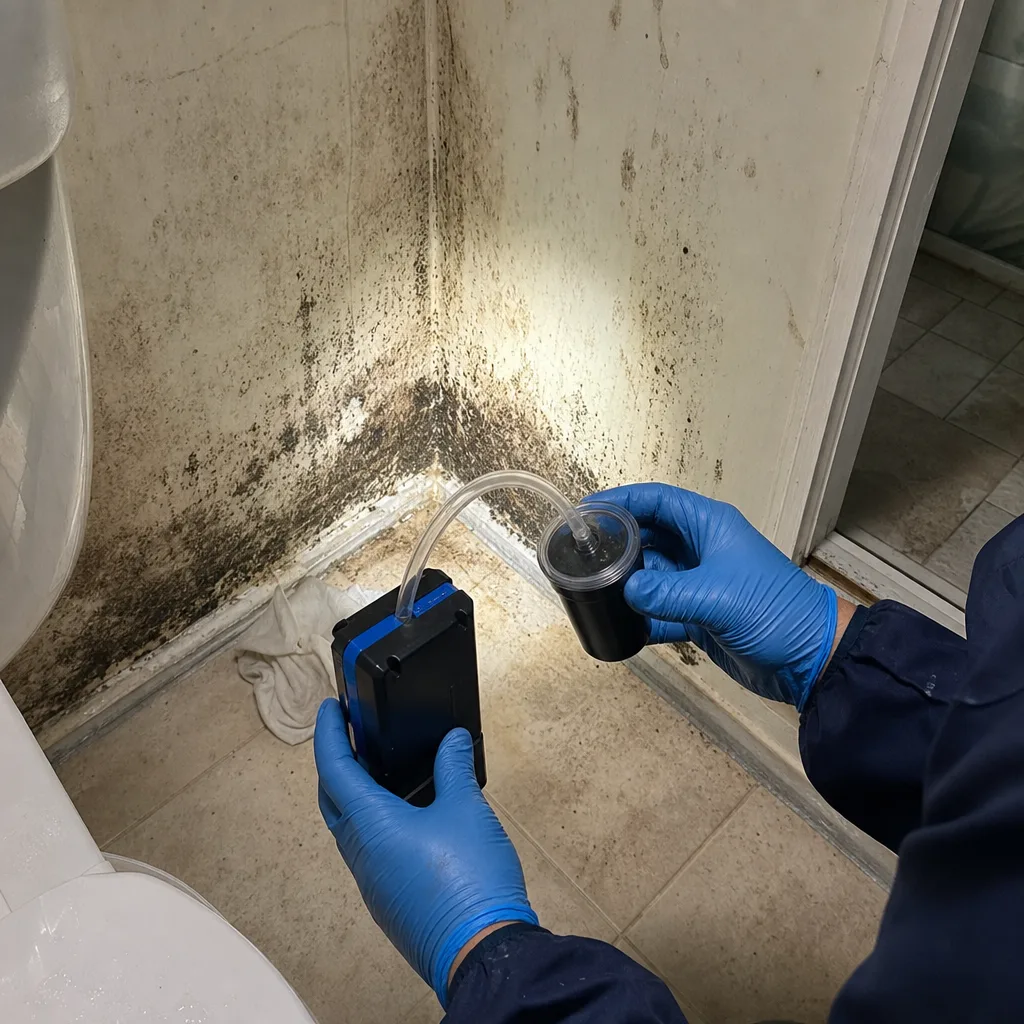
Flood Cleanup
Plantation’s interior location doesn’t eliminate flood risk; it changes the source. Aging flat-roof membranes on 1970s CBS homes near Nob Hill Road fail during sustained tropical downpours, and slab-on-grade construction means water sheets across finished floors rather than draining to a basement. Our flood cleanup in Plantation addresses both the visible water and the lateral wicking that pushes under slab perimeters into wall framing. We remove saturated materials by classification - Class 1 through Class 4 water damage - and we probe the slab edge in every west-side home from the 1970s, because Broward’s water table doesn’t let storm water simply drain away.
Burst Pipe Restoration
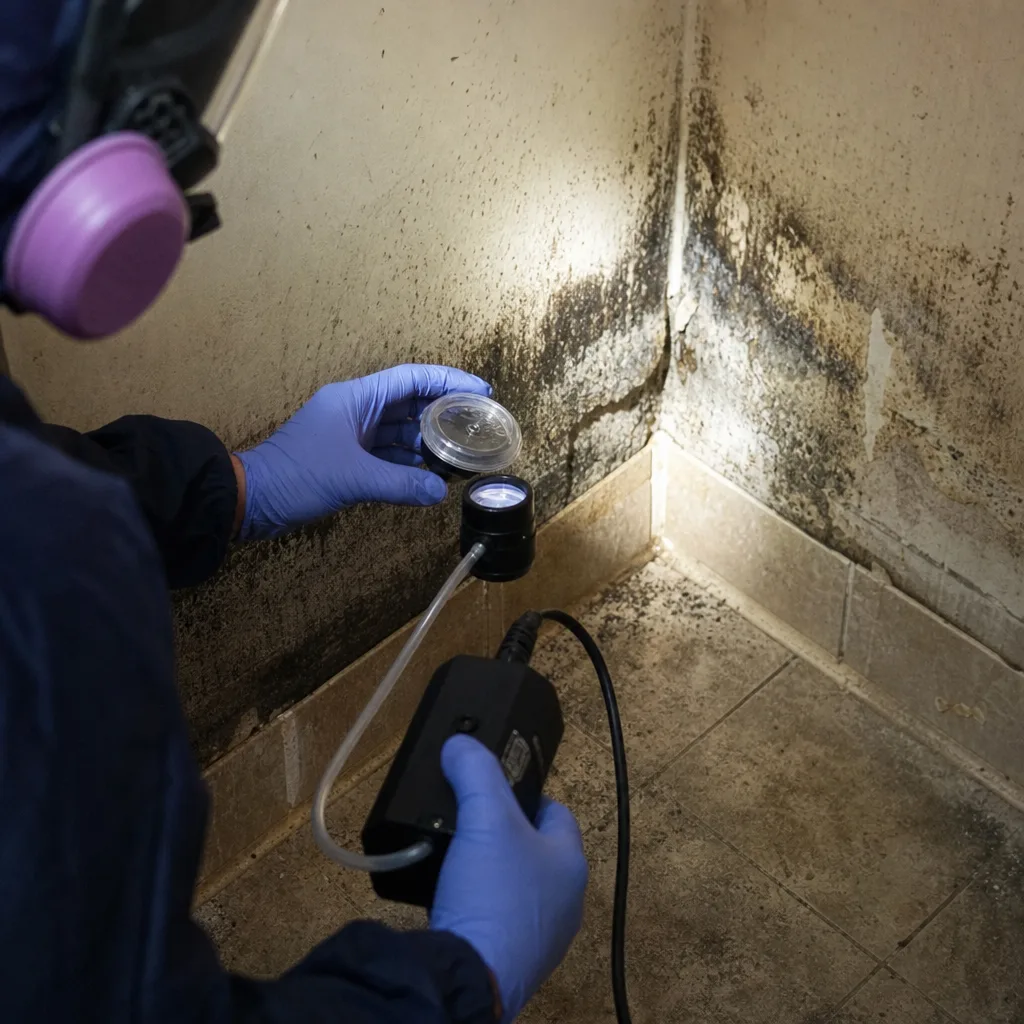
Older copper and early PVC supply lines in Plantation’s 1960s-1985 housing stock fail at joints, under slabs, and behind original bathroom vanities where decades of galvanic corrosion or chlorine degradation finally win. Our burst pipe restoration includes emergency shutoff, extraction, and full cavity drying, plus coordination with licensed plumbers for the repair itself. We document the line failure with photos for your adjuster, and we dry the affected assembly to pre-loss condition before any reconstruction begins. In Plantation’s humidity, a pipe burst left wet for 48 hours crosses from water damage to mold remediation fast.
Ceiling & Roof Leak Water Damage
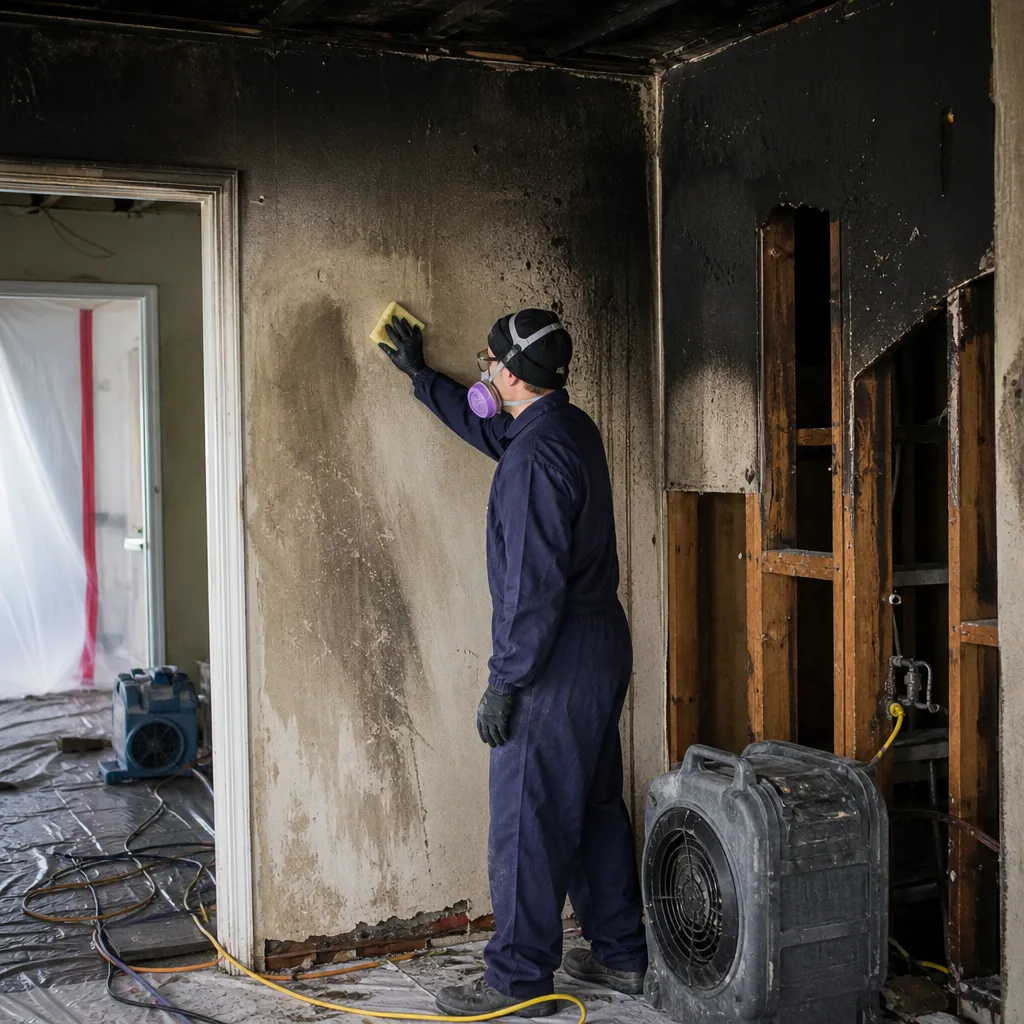
This is where Plantation’s legacy tree canopy becomes a structural liability. Mature oak and ficus limbs don’t just threaten the roof membrane; they create sequential damage patterns unique to this city. A limb puncture in Storm A leaves the CBS wall cavity wet. Storm B arrives before that cavity is vented and dried, and now you have layered water categories in the same assembly - plus mold risk in 24-48 hours. Our ceiling and roof leak protocol includes thermal imaging of the full ceiling plane, baseboard removal to probe wall cavities, and slab-edge testing on any ground-floor room beneath the leak. We treat the visible stain and the hidden cavity as one contiguous drying project, because in Plantation’s housing stock, they almost always are.
Basement Water Removal
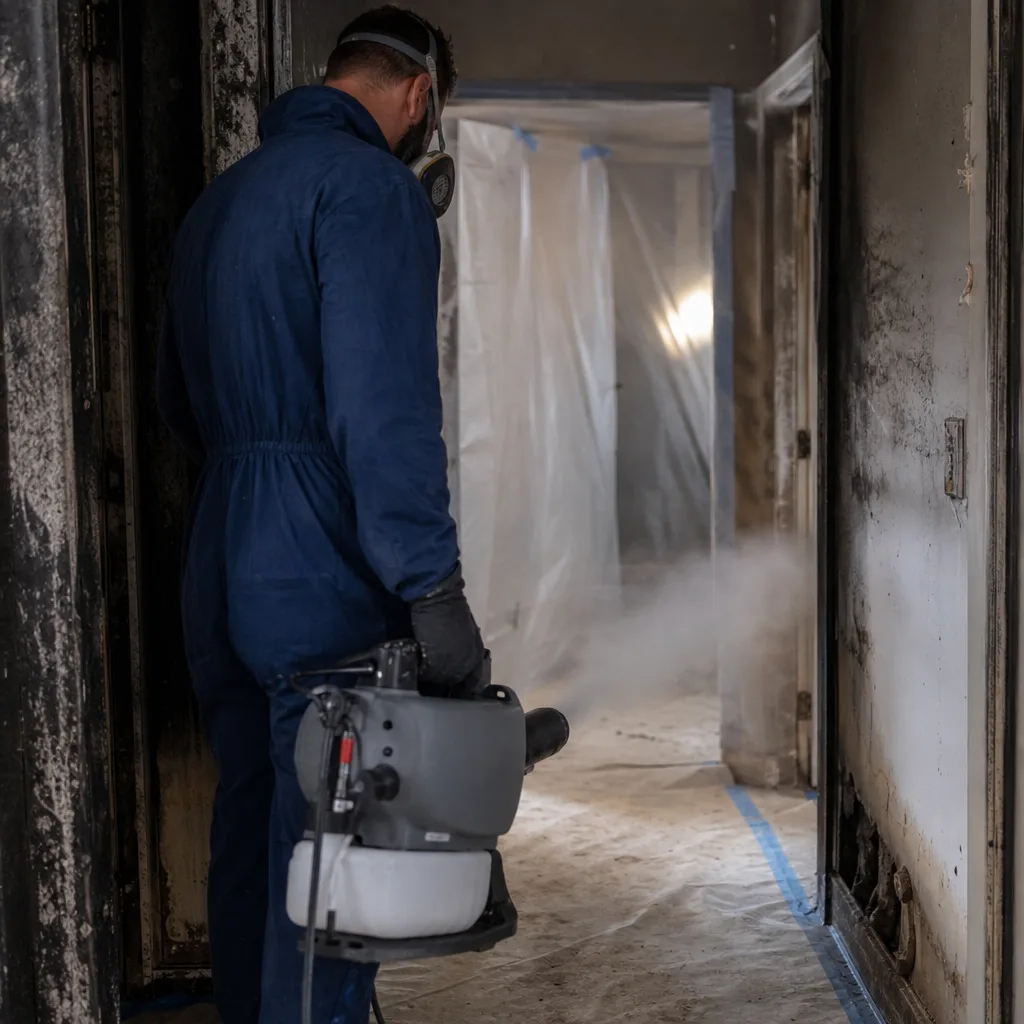
True basements are rare in Plantation’s slab-on-grade market, but partial below-grade rooms and converted crawl spaces do exist in some Plantation Acres and older Jacaranda properties. Where we find them, water removal requires submersible pumping followed by aggressive dehumidification - below-grade spaces in Broward County face hydrostatic pressure from the high water table that above-grade rooms don’t. We install vapor barriers and sealed dehumidification where the grade demands it, and we document moisture readings at the slab and wall junction until the drying logs show sustained pre-loss levels.
What happens when you call
- 1
A real person answersNo phone trees - you reach a local pro.
- 2
You get an upfront price rangeHonest numbers before anyone is dispatched.
- 3
A background-checked tech heads outLicensed & insured, dispatched right away.
- 4
You approve before work beginsNothing starts until you say go.
 Before
 After
AfterTrusted Brands We Service in Plantation
Our equipment inventory for Plantation jobs includes professional-grade drying systems from Dri-Eaz, Phoenix, and XPOWER - brands specified in IICRC S500 standards for water damage restoration. We don’t rent equipment by the day and hope for dry readings; we own our fleet, maintain it to manufacturer specs, and deploy the right machine for the material class and moisture load. For cavity drying in Plantation’s sealed CBS walls, we run Injectidry systems that deliver heated, dehumidified air directly into wall voids through minimal access points. That matters when you’re trying to dry a concrete-block cavity without tearing out every wall in a 1978 ranch near Plantation Heritage Park.
Common Water Damage Restoration Problems We See in Plantation Homes
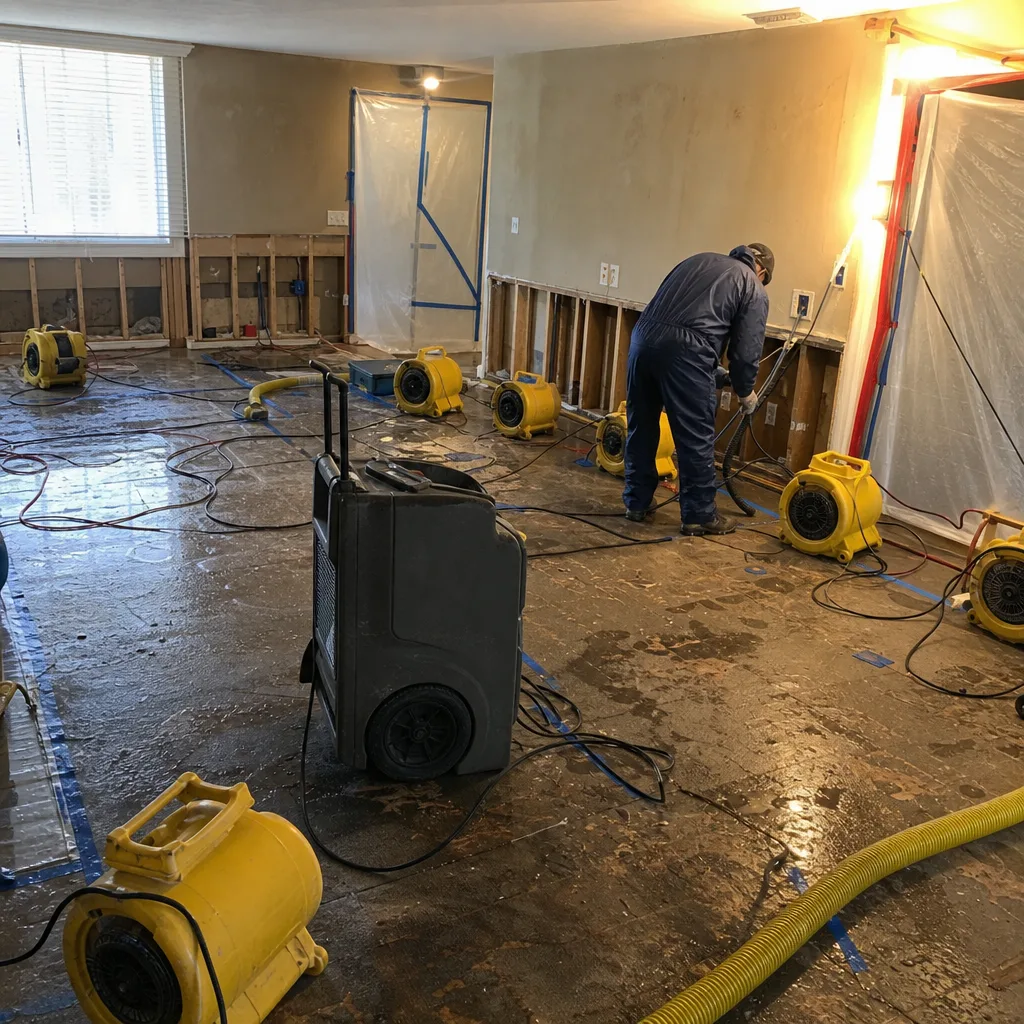
- Sequential storm damage from the legacy tree canopy. A mature oak limb breaches the flat membrane in Storm One. The homeowner patches the roof, dries the ceiling stain, and thinks the job is done. Storm Two arrives two weeks later and finds a sealed, wet CBS wall cavity. Now it’s mold remediation, not water mitigation. We see this pattern repeatedly in Plantation’s canopy neighborhoods.
- Slab-edge wicking in 1970s slab-on-grade homes. Broward’s water table sits high enough that storm water doesn’t drain vertically; it migrates horizontally under the slab and into stud bays through the slab perimeter. Homeowners call us weeks after a “successful” dry-out because baseboards are swelling and floors are cupping. We probe the slab edge on every Plantation job from this era.
- Flat-roof membrane failure on 1960s-1980s CBS construction. Original built-up roofing and early modified bitumen systems are 20-40 years past service life. The failure starts as a slow leak during sustained rain, saturates the roof deck, and shows as a ceiling stain that understates the actual moisture load by a factor of three or four.
- Unvented block wall cavities after partial mitigation. A competitor dries the visible room, skips the cavity because the stucco looks intact, and seals the wall with new paint. Trapped moisture from the original breach meets Plantation’s 75% ambient humidity, and mold colonizes the cavity within 48-72 hours. We vent and dry cavities before we sign off.
Pricing for Water Damage Restoration in Plantation, FL
Water damage restoration pricing in Plantation reflects the specific challenges of the city’s housing stock: older CBS construction with cavity-driven moisture, high ambient humidity extending drying times, and the frequent need for sequential-storm assessment that goes beyond the visible damage.
| Service Component | Typical Range in Plantation |
|---|---|
| Emergency water extraction (up to 1,500 sq ft) | $1,200 - $2,400 |
| Structural drying & dehumidification (3-5 day protocol) | $1,600 - $5,100 |
| Cavity drying with Injectidry or equivalent | $800 - $2,200 |
| Antimicrobial treatment (Category 2-3 water) | $400 - $1,100 |
| Contents pack-out and cleaning | $900 - $3,500 |
| Full residential mitigation (typical 2,000 sq ft home) | $2,800 - $7,500 |
What moves a Plantation job toward the higher end: multiple affected rooms, Category 2 or 3 water classification, cavity access requiring baseboard and trim removal, and extended drying days due to sealed block construction or slab-edge wicking. What keeps it lower: early call (within 4 hours of discovery), single-room containment, and Category 1 clean water with direct access to affected materials.
Haven Standard, Clause 1: your written price is delivered before any work begins, every time, with no scope-creep additions once the crew is inside. We also offer a Free Second Opinion on any competitor’s written estimate - bring it to us and we’ll review the scope and pricing at no charge. Call (754) 254-1257 for your written estimate.
We Also Serve Cities Near Plantation
Our crews respond throughout central and east Broward County, including Plantation and neighboring Fort Lauderdale, Margate, Coconut Creek, and Pompano Beach. Dispatch and scheduling are coordinated from our South Florida office, with local crews serving each market. Whether you’re in Plantation’s Jacaranda area or west toward Sawgrass Mills, the same documentation-first protocol applies: written price before work, photo record on every visit, and drying logs that support your insurance claim.
Serving Plantation, FL - Our Local Coverage Area
We’re based in the Plantation area and know this community well. Use the map below to see our service coverage - if you’re nearby, we can almost certainly help.
FAQs - Water Damage Restoration in Plantation
Broward County’s water table sits high enough that storm water doesn’t drain away from slab-on-grade foundations; it wicks horizontally under the slab and into stud bays through the slab perimeter. In Plantation’s 1960s-1980s CBS homes, this lateral moisture migration continues for weeks after surface flooding is gone, especially in west-side neighborhoods where the original grade preparation was minimal. We probe the slab edge on every Plantation job from this era and run moisture mapping until the drying logs prove the framing is at pre-loss condition, not just the visible drywall. Call (754) 254-1257 if you’re seeing baseboard swelling or floor cupping after a “completed” dry-out.
In Plantation’s sustained 75% ambient humidity, mold colonization in a wet concrete-block wall cavity can begin within 24-48 hours of water intrusion. The sealed block construction traps moisture with minimal air exchange, and the stucco exterior can hide cavity saturation for days. We apply antimicrobial treatment during mitigation and don’t seal cavities until drying logs confirm pre-loss moisture content. If your roof leak is more than 24 hours old, assume cavity moisture exists and call for thermal imaging assessment.
Yes, because Plantation’s mature tree canopy changes the damage pattern. A wind-driven rain event with limb puncture typically drives water into sealed wall cavities that require Injectidry or selective demolition to access. A slow tropical downpour with membrane failure may saturate the roof deck and ceiling assembly without immediate cavity intrusion, but the total moisture load is higher and drying takes longer. We classify the water category and damage class on arrival, then specify equipment and drying days accordingly. The storm type determines where we probe, not just how long we run dehumidifiers.
Plantation’s 1950s master-planned urban forest is a civic identity, but it’s also a disproportionate source of roof-puncture damage during tropical storms. Mature oak and ficus limbs breach flat or low-pitch membranes common on the city’s 1960s-1985 CBS homes, creating entry points that standard rain events don’t. Unlike coastal cities with wind-driven surge, Plantation’s interior location means most of our water damage calls trace to canopy-related roof failure followed by sequential storm events: Storm One punctures the roof, Storm Two finds the wet cavity. We factor canopy risk into our ceiling and roof leak assessments, including thermal imaging of the full assembly above any visible stain.
Check for ceiling stains or bubbling paint in rooms beneath tree canopy, musty odors from baseboard areas (signaling slab-edge wicking), and any soft or discolored drywall near exterior walls. In Plantation’s CBS homes, visible interior damage is usually the smaller part of the total moisture load. If your home was built between 1958 and 1985 and sits under mature canopy, schedule a moisture mapping assessment even if the visible water seems minor. Call (754) 254-1257 - estimates are free, and early documentation protects your insurance claim if the damage spreads.
After a tropical storm dropped a live oak limb through the low-slope membrane of a 1972 CBS ranch off Broward Boulevard, our crew ran moisture mapping with thermal imaging and pin meters across the ceiling and west-facing wall. We pulled baseboards and probed the slab edge, finding hidden lateral wicking from Broward’s high water table that had pushed the job from Category 1 ceiling intrusion to Category 2 cavity moisture. We set containment, applied antimicrobial treatment, and ran Dri-Eaz and Phoenix air movers with dehumidification until the drying logs showed the stud bays at pre-loss condition. The homeowner received a written price before we started, a photo record on every visit, and the 365-Day Done Right Promise backed by The Haven Standard.
Written by Alicia Brennan, Owner at Back to Dry Restoration, serving Plantation and Broward County since 2011.