
Last updated September 23, 2026
Free visual inspection and a written scope of work before any mitigation begins - photos, moisture readings, and drying logs go in your claim file
The scope we write is the scope we bill. Anything new gets shown to you, in writing, before we touch it.


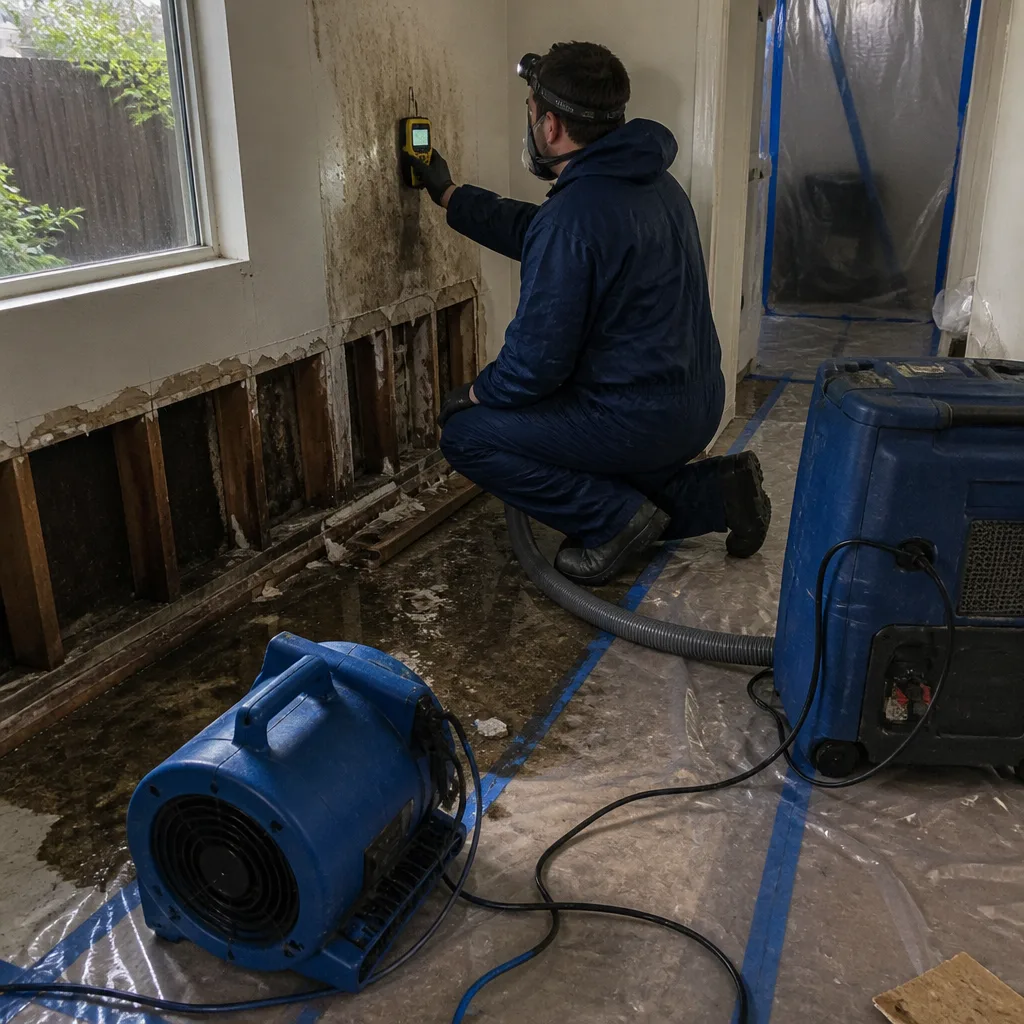 Before
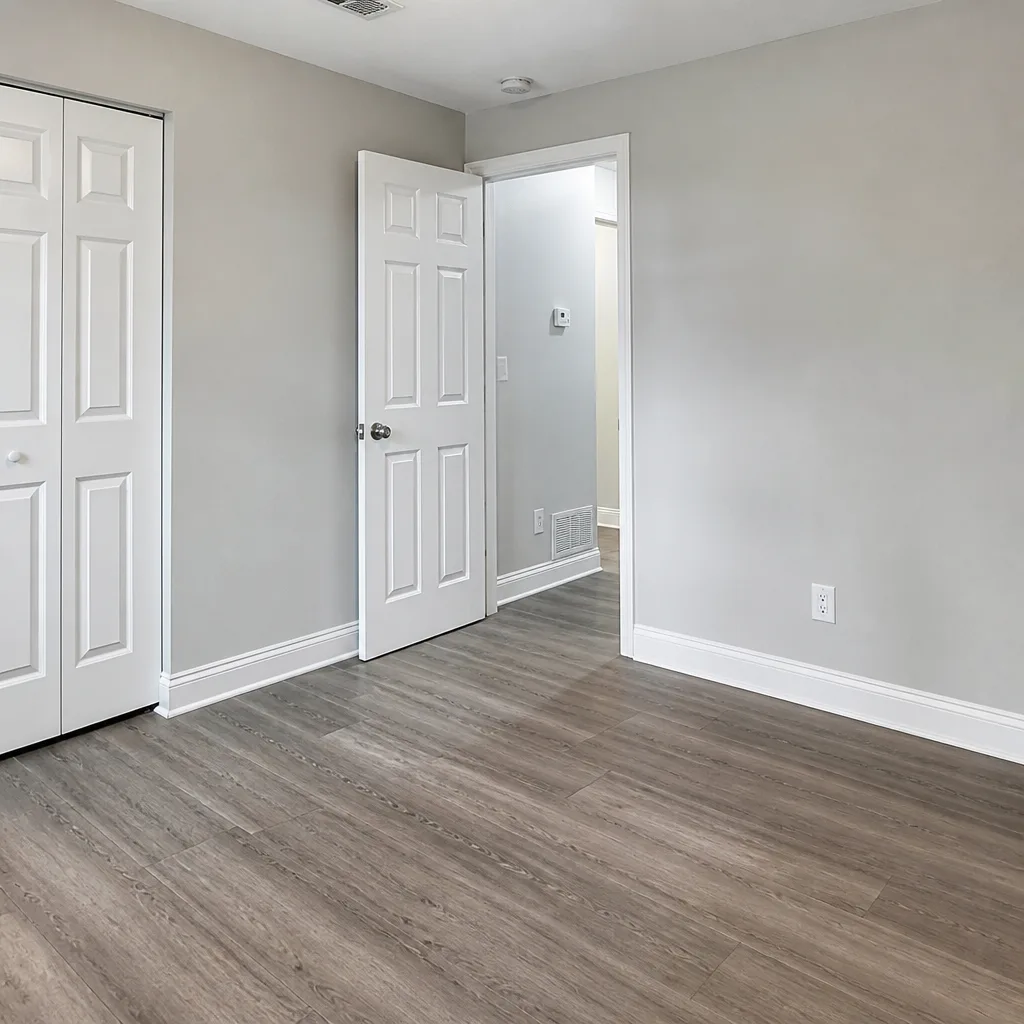 After
After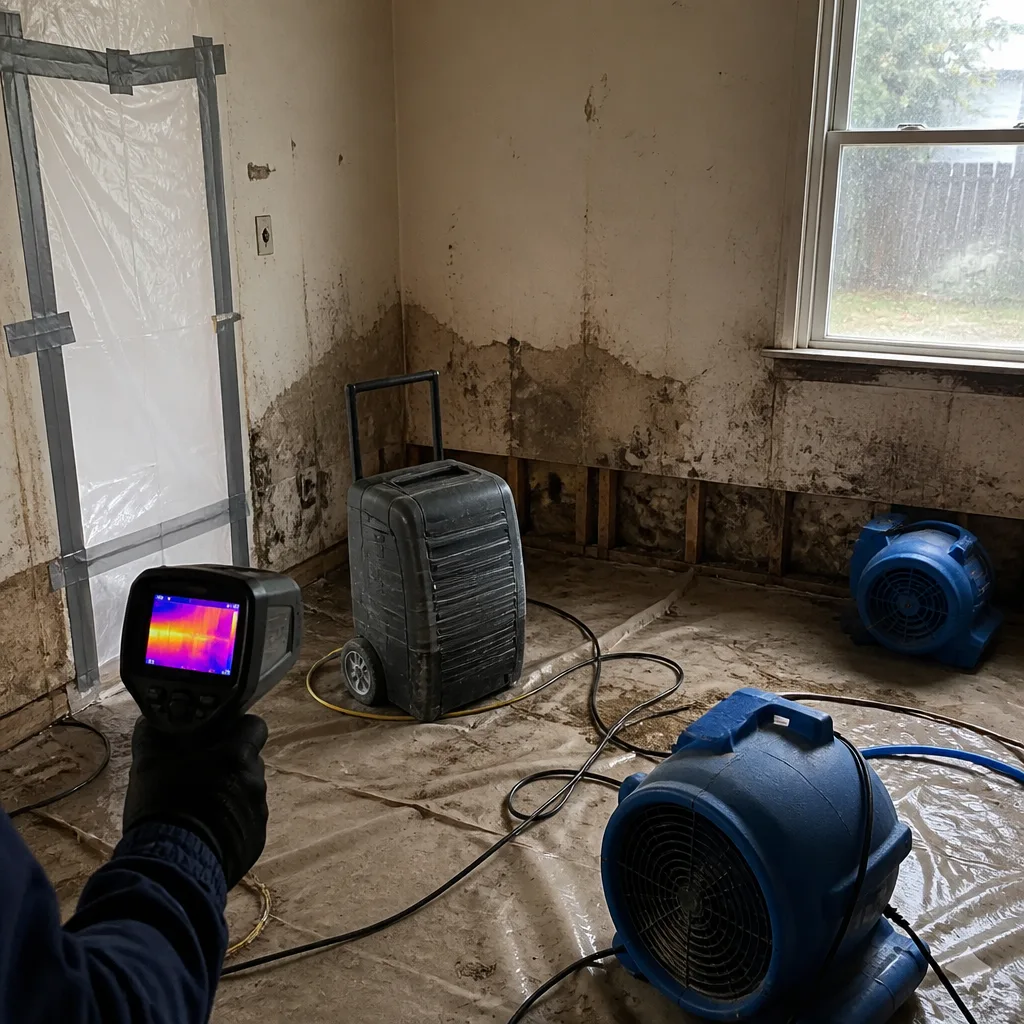 Before
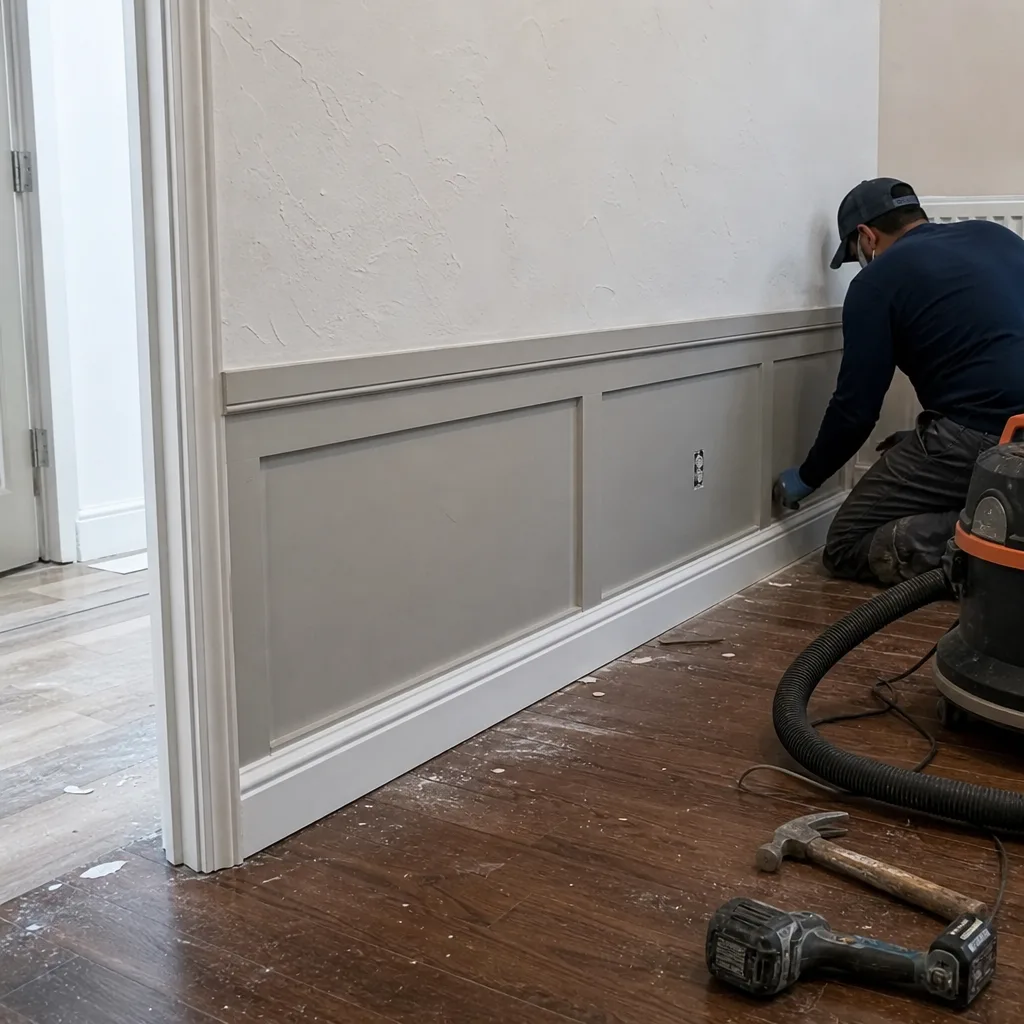 After
After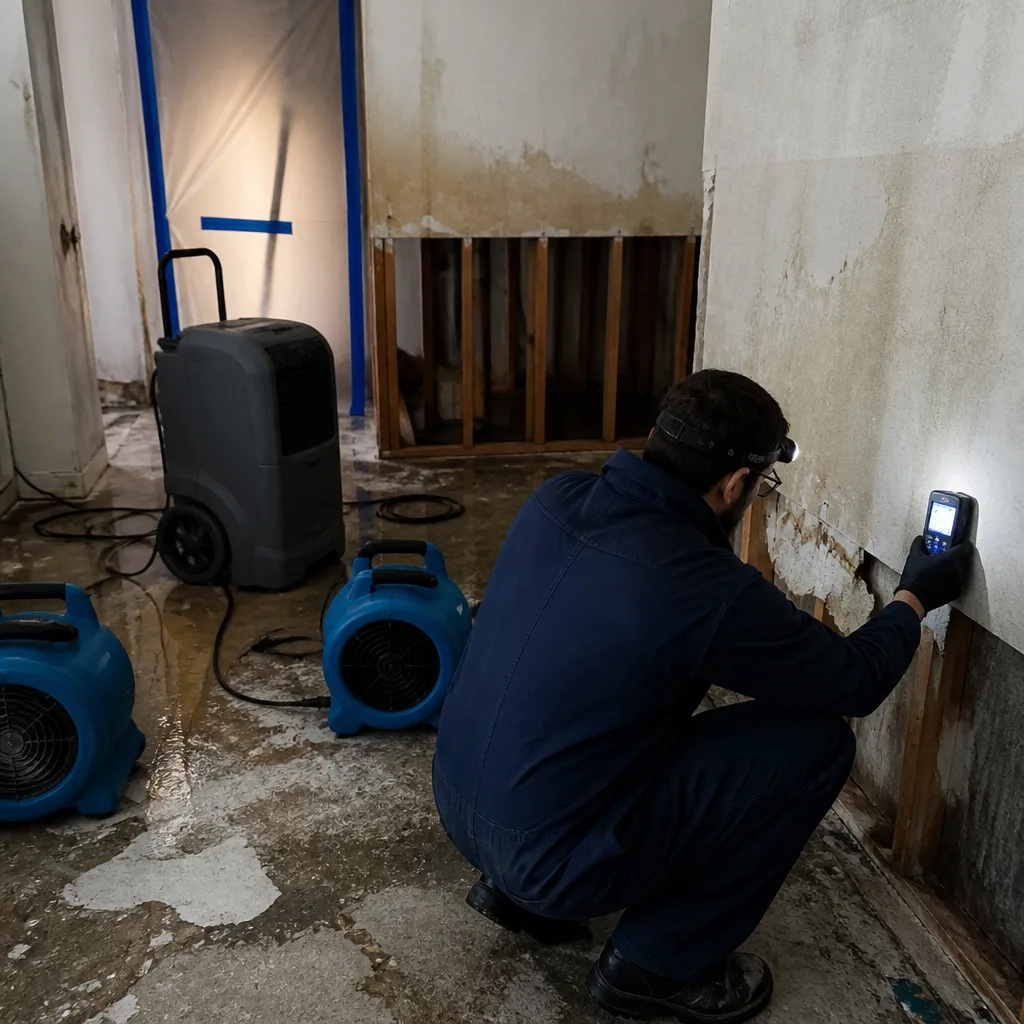 Before
 After
AfterDamage Restoration Warning Signs: A Fort Lauderdale Homeowner’s Reference Guide
A musty odor in a Fort Lauderdale home registers a mold colony that has already reached 1,000 to 10,000 spores per cubic meter. At that count, the remediation cost is typically three to five times what it would have been if a moisture meter had found the source 30 days earlier. This guide teaches homeowners to read the early instrument-level signals before the visible ones arrive, because the stain on your ceiling is not the problem - it is the receipt for a problem that has been compounding behind the wall.
Quick Answer
The earliest warning signs of water damage in Fort Lauderdale homes are measurable before they are visible: drywall moisture content above 17% and wood framing above 19% indicate active wetting and fungal risk, detectable with a $40 pin meter. Visible stains, musty odors, and efflorescence on concrete block appear weeks to months later, by which time remediation costs have typically multiplied. A homeowner who checks five specific locations per room with a moisture meter and tracks readings over 3-5 days can distinguish a one-time event from chronic intrusion and call for help before the damage spreads, as explained in our Seasonal Damage Restoration Care for Fort Lauderdale: Year-Round Homeowner’s Guide.
Table of Contents
- The Measurable Thresholds That Precede Visible Damage
- Fort Lauderdale-Specific Warning Signs Colder Climates Don’t Produce
- How to Distinguish a One-Time Event from Chronic Intrusion
- AC Air Handlers and Condensate Systems: The Hidden Source
- Room-by-Room Reference: Where to Check Before Damage Appears
- Mold, Fire, and Storm Warning Signs That Follow Water
- Common Mistakes to Avoid
- When to Call a Professional
- Frequently Asked Questions
- The Bottom Line
 Before
 After
AfterThe Measurable Thresholds That Precede Visible Damage
Every visible water damage symptom starts as an invisible number. Drywall at 12% moisture content is normal in Fort Lauderdale’s humid climate. At 17%, cellulose fibers begin to break down and support microbial growth. At 24%, the paper facing delaminates and the gypsum core loses structural integrity. By the time you see a stain, you’re typically reading 30% or higher - and the damage has been progressing for weeks.
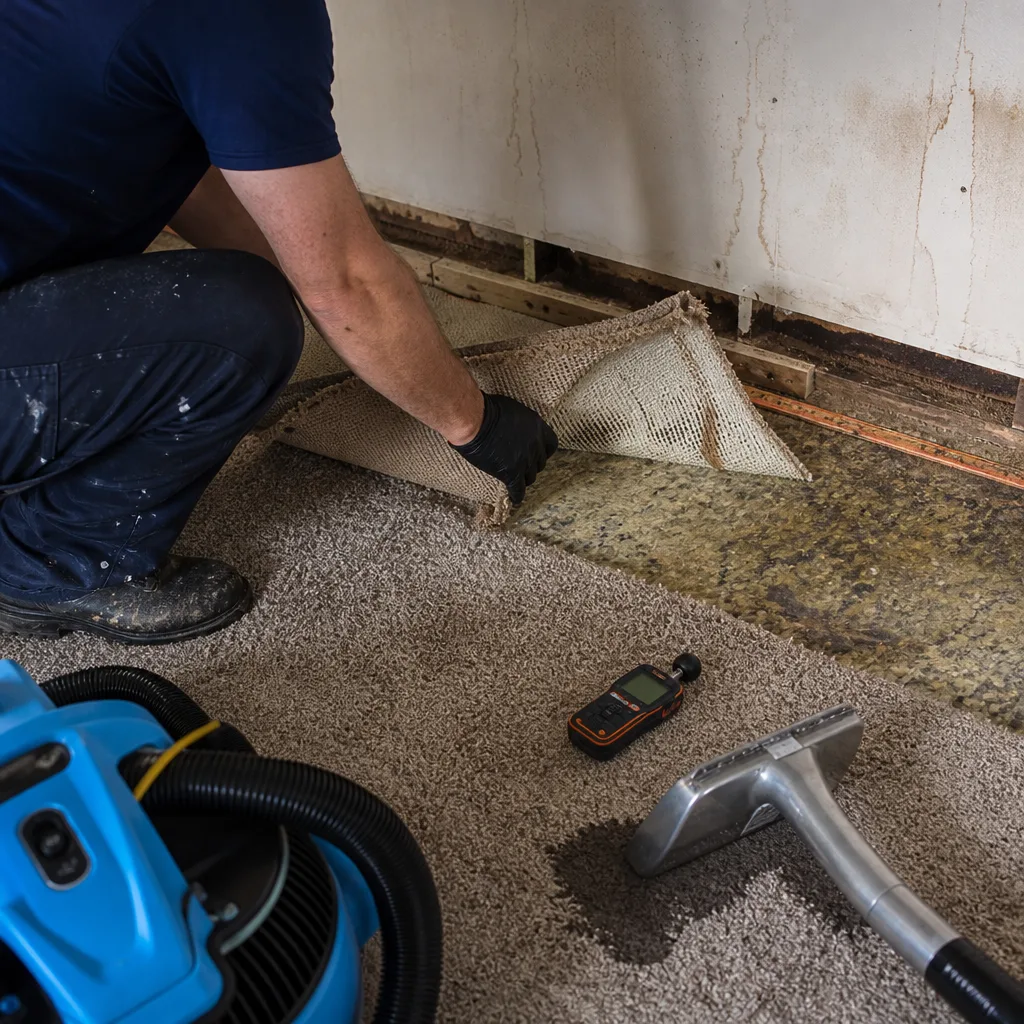
Wood framing follows a similar curve. Normal equilibrium moisture content for pine in Fort Lauderdale ranges from 11% to 14% depending on the season. At 19%, the wood reaches the threshold where fungal colonization becomes favorable. At 28%, decay fungi activate and structural weakening begins. A $40 pin-type moisture meter from any hardware store in Fort Lauderdale will read these levels accurately enough to trigger action.
We document these readings on every job. Our crews arrive with meters calibrated to ASTM D4442 standards, and the first page of every drying log records baseline moisture content by material and location. This is not extra service. It is standard documentation under The Haven Standard, and it is what turns a restoration invoice into a claim an insurer pays without dispute.
The key insight: moisture meters measure electrical resistance between two pins driven into the material. They do not detect surface wetness. A reading of 15% on drywall near a bathroom in Victoria Park or Rio Vista means water has migrated through the core, even if the paint looks fine. The meter is telling you what your eyes will confirm in 14 to 21 days.
Three readings matter most for early detection:
- Drywall moisture content: Action threshold is 17%. Document the exact location, depth of pin penetration, and ambient relative humidity.
- Wood framing moisture content: Action threshold is 19%. Note the species - southern yellow pine reads differently than engineered lumber.
- Relative humidity in enclosed cavities: Sustained readings above 60% RH predict condensation on cooler surfaces, especially in Fort Lauderdale’s shoulder seasons when AC cycles less frequently.
Track these numbers in a notebook with dates. A one-time leak from a supply line shows declining readings over 3-5 days as evaporation occurs. Chronic intrusion from a roof leak or foundation seepage shows readings that plateau or rise between checks. The pattern tells you whether you’re looking at a repair or a remediation.
Fort Lauderdale-Specific Warning Signs Colder Climates Don’t Produce
Fort Lauderdale’s coastal location, porous limestone geology, and year-round cooling load create damage signatures that homeowners in Atlanta or Charlotte never see. Recognizing these local patterns prevents the false reassurance that comes from applying generic advice to a specific environment.
Efflorescence on concrete block is the most commonly missed signal. Salt crystallization on interior or exterior block walls indicates chronic moisture migration through the masonry, driven by hydrostatic pressure from the high water table in neighborhoods like Coral Ridge, Las Olas Isles, and throughout the 33301 ZIP code. The white powder is not cosmetic. It documents a vapor pressure differential that has been active long enough to transport dissolved minerals to the surface. Clean it and it returns. The source is groundwater or irrigation overspray against the foundation, and the block cavity behind it is typically saturated.
Corrosion on galvanized steel fasteners accelerates dramatically within five miles of the Atlantic. We see this in garage ceiling hardware, attic truss connectors, and exterior door frames in Harbor Beach and Lauderdale-by-the-Sea. The salt air combined with interior humidity above 55% creates an electrochemical reaction that weakens structural connections before any wood shows damage. Orange staining on a garage ceiling in Fort Lauderdale is often the first visible sign that a roof leak has been active through multiple rainy seasons.
AC condensate overflow patterns differ here because systems run 10 to 11 months annually. In northern climates, a clogged condensate line announces itself during a summer heat wave. In Fort Lauderdale, the line may flow adequately at 0.8 gallons per hour for months, then fail completely during a September humidity spike when the evaporator coil produces 1.2 gallons per hour. The overflow follows ceiling joists and appears as a linear stain parallel to the duct run - a pattern that looks like a roof leak but originates three rooms away.
Tide-related sewer backup affects homes in low-lying Fort Lauderdale neighborhoods during king tides and heavy rain events. The warning sign is not a backup during use, but slow drainage across multiple fixtures during high tide, especially in areas near the New River or Intracoastal Waterway. This indicates a compromised lateral connection or municipal system surcharge, and it predicts a sewage event that standard water damage protocols cannot safely address.
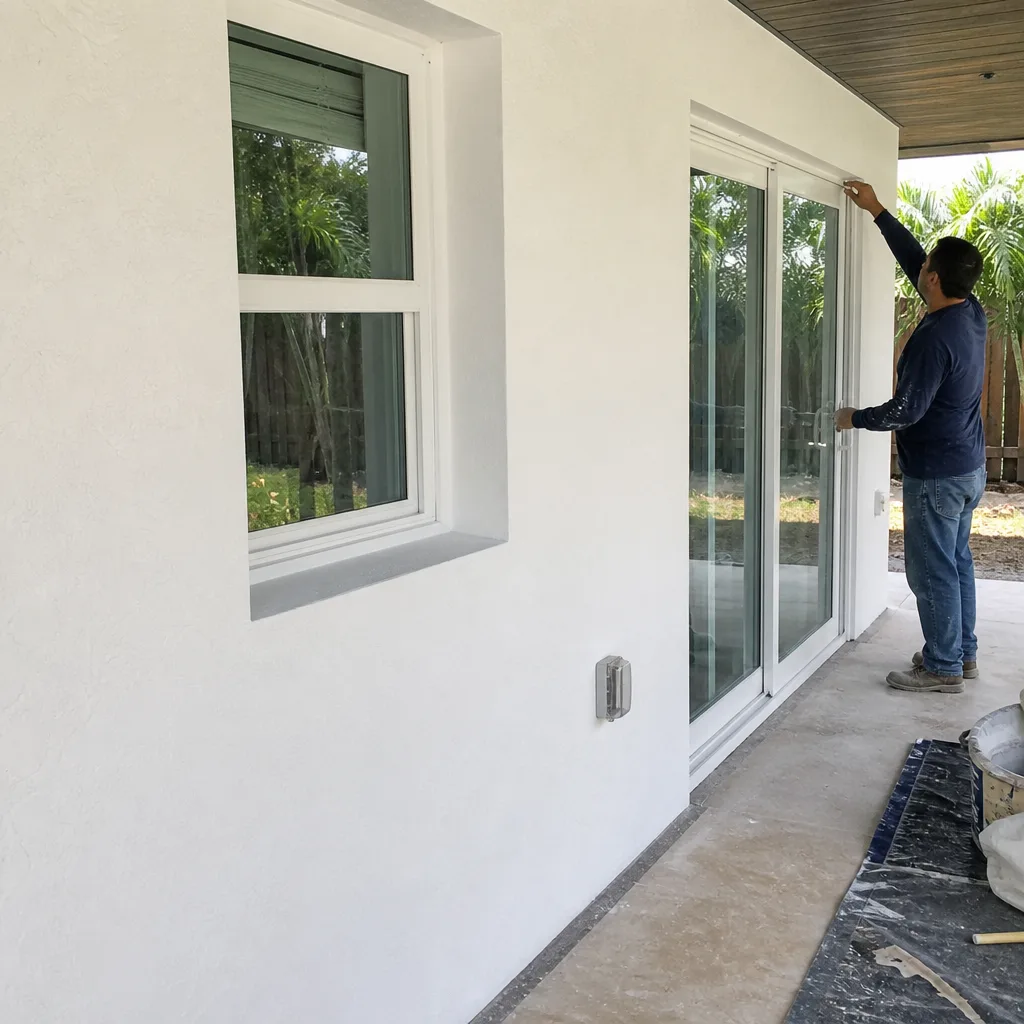
Stucco cracking patterns on coastal homes reveal moisture intrusion paths. Horizontal cracks at floor lines in multi-story construction, or stair-step cracking at window corners in single-story homes, indicate differential settlement accelerated by saturated soils. The moisture source is often irrigation misdirection against the foundation, compounded by Fort Lauderdale’s sandy soils that drain quickly but hydrostatically pressurize during sustained rain.
How to Distinguish a One-Time Event from Chronic Intrusion
The cost difference between a one-time moisture event and chronic water intrusion in Fort Lauderdale is typically $2,800 versus $14,000 or more. The distinction determines whether your insurer covers the loss, whether mold remediation is required, and whether structural repairs are likely. A moisture meter and a notebook provide the answer.
Step 1: Establish baseline readings within 24 hours of discovery.
Document moisture content at the visible stain, 12 inches in each cardinal direction, and at a known dry reference point in the same room. Record ambient temperature and relative humidity. In Fort Lauderdale, aim for readings taken between 10 AM and 4 PM when the home’s thermal mass is stable and AC cycling is predictable.
Step 2: Recheck at identical locations after 72 hours.
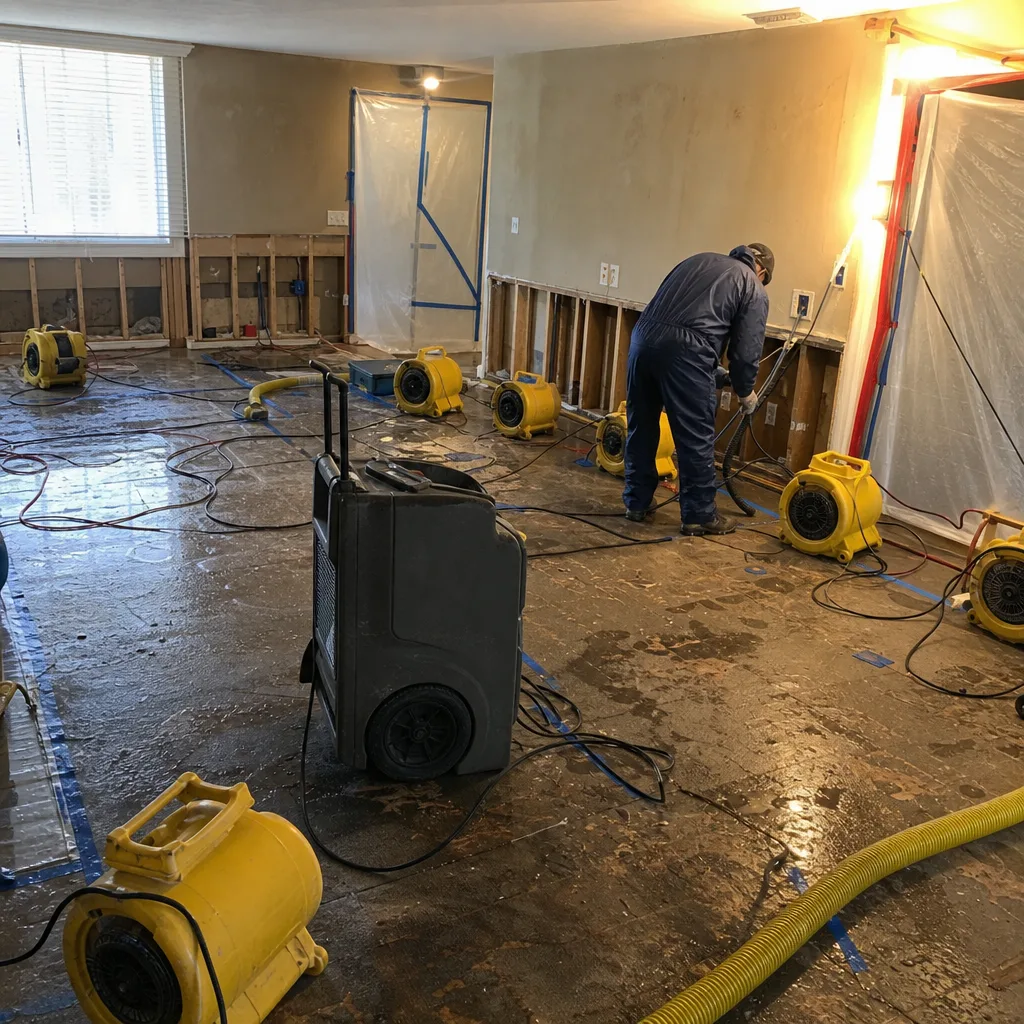
A one-time event from a contained supply line leak or overflow shows declining readings. Drywall drops from 22% to 18%. Framing drops from 21% to 17%. The drying curve follows predictable psychrometrics - the science of air moisture relationships that governs our professional drying systems from Phoenix and Dri-Eaz. If readings decline by 2 percentage points or more, you’re likely observing residual moisture from a resolved source.
Step 3: Recheck again at day 5 to 7.
This is where the pattern separates. One-time events continue declining, often reaching near-baseline by day 7 with normal AC operation. Chronic intrusion shows readings that plateau or rise. We see this in Fort Lauderdale homes with roof leaks that activate only during wind-driven rain from the southeast, or foundation seepage that worsens after irrigation cycles. The moisture source is still active, and the cavity is reaching equilibrium with that source rather than with the conditioned interior.
Step 4: Inspect the cavity if readings plateau above 17% drywall / 19% wood.
This step requires controlled opening - a 4-inch inspection hole with a borescope camera, or removal of baseboards to inspect the bottom plate. We do not recommend extensive demolition without documentation. But a homeowner who has tracked readings for a week and can show a professional a clear pattern of sustained elevation has already done the diagnostic work that accelerates accurate scoping, as outlined in our How to Hire a Damage Restoration Contractor in Fort Lauderdale: A Step-by-Step Guide.
The documentation matters for insurance. A claim supported by dated moisture readings, photos of meter displays, and a narrative of the monitoring process is processed faster and disputed less often than one based on “I smelled something musty.” Under The Haven Standard, we provide this documentation as a standard deliverable, not an upsell. Every visit produces a photo record, every drying day produces a moisture log, and every job concludes with a written summary of findings and readings.
AC Air Handlers and Condensate Systems: The Hidden Source
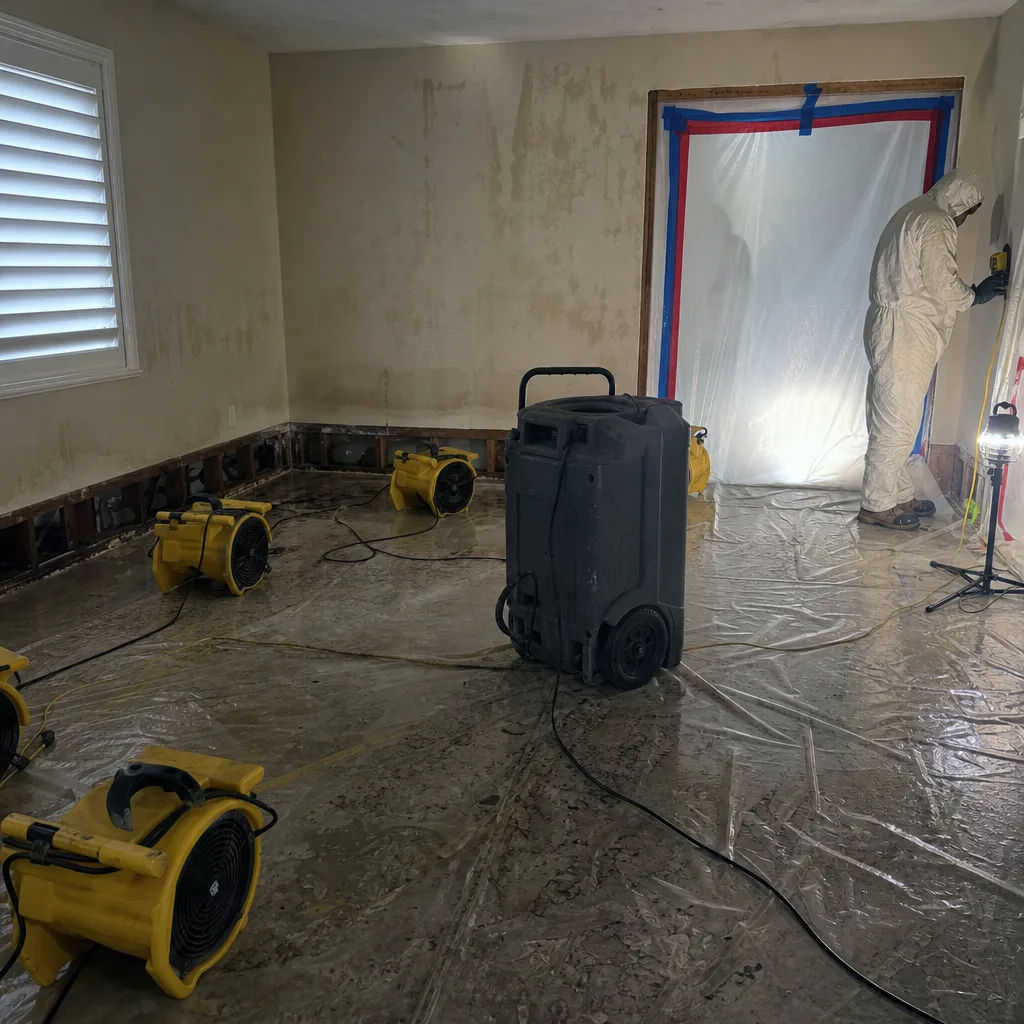
In Fort Lauderdale, air conditioning systems produce more water damage than roof leaks. A 3-ton system operating at design conditions generates approximately 3.5 gallons of condensate per hour. That water is supposed to flow through a primary drain line to plumbing or outdoors, with a secondary pan and float switch as backup. When any component fails, the water volume is sufficient to saturate multiple ceiling cavities before the homeowner notices.
Three instrument-level checks predict failure before water reaches the ceiling:
- Standing water in the secondary drain pan. The secondary pan beneath the air handler should be dry. Any water indicates the primary line is partially or fully blocked. In Fort Lauderdale’s humid climate, algae and biofilm colonize PVC drain lines within 18 to 24 months of cleaning. A secondary pan with water is a failure in progress, not a backup plan working.
- Ice formation on evaporator coils. Ice indicates either low refrigerant charge or restricted airflow. When the system cycles off, the ice melts at a rate exceeding drain line capacity. We see this pattern in older Fort Lauderdale homes with undersized returns or filters that haven’t been changed through multiple humid seasons. The melt event typically occurs at 2 to 4 AM, when the homeowner is asleep and the overflow has hours to migrate.
- Condensate line flow rate below 1 gallon per hour during peak operation. This requires a simple measurement: time how long it takes to fill a 1-gallon container at the line termination. Below 1 gallon per hour with the system running continuously suggests partial blockage that will fail during high-load conditions. In July and August in Fort Lauderdale, when systems run near continuously and humidity peaks, that margin disappears.
The ceiling stain from an AC leak has a distinctive signature: circular or oval, directly beneath the air handler or a major duct junction, with no corresponding roof penetration above. The drywall is often saturated across a broad area but stained in a smaller pattern, because the insulation above wicks water horizontally before the ceiling fails. Homeowners in Coral Shores and Poinsettia Heights frequently misdiagnose these as roof leaks and delay the actual repair.
Our crews document AC-related water damage with photos of the air handler label, the drain line configuration, and the float switch presence or absence. This documentation is submitted with the drying log because insurers frequently dispute whether the loss is sudden and accidental (covered) or maintenance-related (potentially excluded). The photo record protects the homeowner.
Room-by-Room Reference: Where to Check Before Damage Appears
Systematic inspection at five locations per room type catches the majority of hidden moisture problems in Fort Lauderdale homes. These locations are selected based on 12,000+ restorations since 2011, with patterns documented in our project database.
Bathroom
| Location | What to Check | Typical Early Reading |
|---|---|---|
| Base of toilet, behind bowl | Moisture meter at baseboard; wiggle test for flange seal | Tile: 8-12% normal; subfloor above 19% indicates wax ring failure |
| Shower/tub surround, bottom corners | Grout integrity, caulk adhesion, pin meter at adjacent drywall | Drywall above 17% indicates failed waterproofing membrane |
| Vanity sink plumbing wall | Moisture at shutoff valves, supply line connections, drain trap | Framing above 19% indicates slow leak at compression fitting |
| Exhaust fan housing | Operation, duct termination (must vent to exterior, not attic) | Attic framing above 19% near duct indicates condensation or vent failure |
| Floor near tub/shower threshold | Tile lippage, grout haze, moisture at transition to adjacent flooring | Subfloor above 21% indicates recurring splash overflow or failed curb |
Kitchen
| Location | What to Check | Typical Early Reading |
|---|---|---|
| Under sink cabinet floor | Visual inspection, moisture meter at cabinet base and wall behind | Particleboard above 18% swells and loses fastener hold; action at 16% |
| Dishwasher supply and drain connections | Brass elbow, braided supply, drain hose clamp integrity | Framing behind dishwasher above 19% indicates seepage from failed connection |
| Refrigerator water line | Copper or PEX line at saddle valve, floor beneath | Subfloor above 19% indicates pinhole or connection weep |
| Window above sink (if present) | Caulk condition, sill slope, moisture at stool and apron | Framing above 17% indicates wind-driven rain intrusion during easterlies |
| Range hood vent termination | Damper operation, exterior wall penetration seal | Attic or wall cavity moisture indicates backdraft or missing damper |
Bedroom
| Location | What to Check | Typical Early Reading |
|---|---|---|
| Exterior wall, baseboard level | Moisture meter 2 inches above floor, multiple points along wall | Drywall above 17% indicates window leak, stucco failure, or slab edge moisture |
| Ceiling, all corners and center | Visual for discoloration; meter if accessible from attic above | Framing above 19% indicates roof leak or AC duct condensation |
| Closet interior wall, floor level | Musty odor check, moisture at base of shoes or stored items | Drywall above 16% in closet indicates adjacent plumbing leak or poor ventilation |
| Window sill and stool | Caulk adhesion, paint condition, moisture at stool ends | Framing above 18% indicates failed flashing or improper sill slope |
| Shared wall with bathroom | Moisture at baseboard, outlet covers, switch plates | Drywall above 17% indicates shower/tub leak in adjacent cavity |
Garage
| Location | What to Check | Typical Early Reading |
|---|---|---|
| Bottom of garage door, threshold seal | Rubber seal integrity, daylight visible when closed, moisture at slab edge | Slab perimeter above 15% indicates storm surge or irrigation backflow |
| Water heater pan and connections | Pan integrity, T&P valve discharge, supply line condition | Subfloor or slab above 19% indicates tank failure or valve weep |
| Washer/dryer supply wall (if present) | Hose condition, valve operation, moisture at box and floor | Framing above 19% indicates hose fatigue or valve packing failure |
| Ceiling, especially near house penetration | Visual for stains, moisture at drywall access panels | Drywall above 17% indicates kitchen/bath leak in floor above |
| Exterior walls, base to 24 inches | Efflorescence on block, moisture at bottom plate or slab | Block above 15% or wood above 19% indicates groundwater or surface drainage failure |
In Fort Lauderdale’s older neighborhoods like Edgewood and Progresso Village, slab-on-grade construction with no vapor barrier beneath the slab adds a sixth location: any interior wall base where flooring meets drywall. Capillary rise through porous concrete delivers moisture to bottom plates continuously, and the only early indicator is a moisture meter reading that exceeds ambient conditions with no other apparent source.
Mold, Fire, and Storm Warning Signs That Follow Water
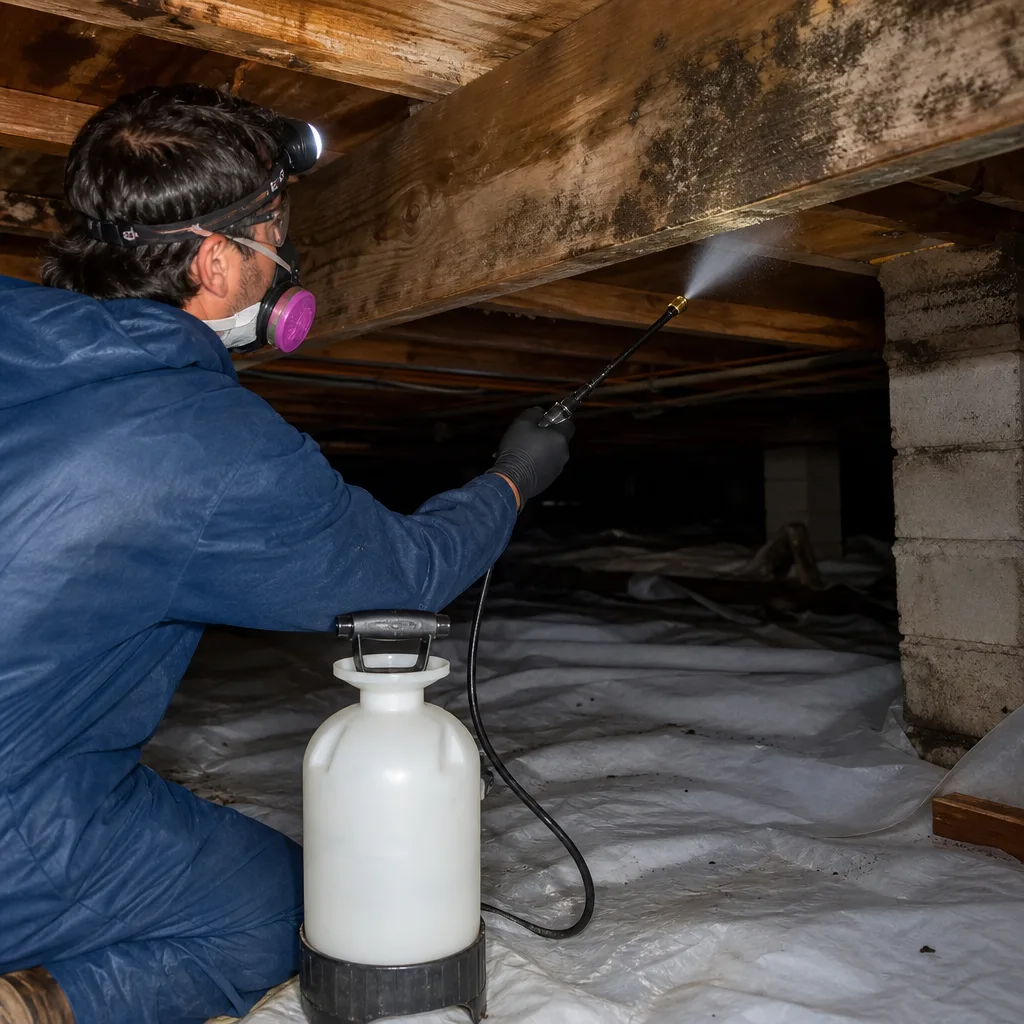
Water damage is the precursor event for the majority of mold, fire, and secondary storm damage in Fort Lauderdale homes. Understanding these progression patterns helps homeowners recognize when a water problem has escalated into a multi-hazard situation requiring specialized response.
Mold colonization timelines are predictable under Fort Lauderdale conditions. At 60% relative humidity and 70°F, common indoor molds including Aspergillus and Penicillium begin germination within 24 to 48 hours on cellulose materials above 17% moisture content. At 80% RH, typical in poorly ventilated Fort Lauderdale bathrooms and closets, this window shortens to 12 to 24 hours. Visible mold growth, defined as patches exceeding 1 square foot, typically appears at 14 to 21 days under these conditions. The musty odor that prompts most calls indicates a colony that has already completed multiple life cycles and released significant spore loads.
We classify mold risk by material and duration. Category 1 water (clean supply line) on drywall for less than 48 hours typically requires drying only, with no antimicrobial treatment if readings return to normal. Category 2 or 3 water, or any duration exceeding 72 hours on porous materials, triggers Mold Remediation in Fort Lauderdale protocols under IICRC S520 standards. The warning sign that demands professional assessment is not visible mold - it is the combination of moisture history (known or suspected) and any health symptom change in occupants: increased allergy response, new respiratory irritation, or sleep disruption.
Fire and smoke damage often follows water damage in Fort Lauderdale homes through two mechanisms. Electrical fires result from compromised wiring in saturated walls - we see this in homes where water migrated through conduit or NM cable runs and corroded connections over months before arcing. The warning sign is not a shock or tripped breaker, but intermittent operation of outlets or switches on circuits that pass through known wet areas. The second mechanism is improper restoration after a water event: fans directed at electrical panels, energized circuits in wet cavities, or premature restoration of power before complete drying. Our Fire & Smoke Damage Restoration in Fort Lauderdale includes electrical assessment as standard when water has contacted panel locations or distribution wiring.
Storm damage compounding occurs when initial water intrusion is inadequately addressed before the next event. A roof leak that is patched but not dried creates saturated decking that fails under subsequent wind loads. A window leak that is caulked but not investigated leaves rotted framing that offers no resistance to storm pressure. In Fort Lauderdale’s hurricane exposure, this progression is particularly dangerous because the building envelope is tested repeatedly. The warning sign is structural: soft spots in roof decking visible from the attic, window frames that no longer seat squarely, or exterior doors that bind in their frames. These indicate that water damage has progressed to structural compromise, and the next storm will exploit it.
Our storm response protocol includes pre-event documentation: photos of roof condition, moisture readings at known vulnerability points, and a written baseline report. After any water intrusion, we provide the drying logs and photo records that establish whether the home was returned to pre-loss condition. This documentation is critical for dispute resolution when insurers question whether subsequent damage is a new event or an unresolved prior loss.
Common Mistakes to Avoid
- Waiting for visible stains before acting. By the time discoloration appears on Fort Lauderdale ceilings, drywall moisture content has typically exceeded 30% and mold colonization is established. The $40 moisture meter investment prevents the $4,000 remediation that follows delay.
- Assuming new construction is immune. Homes built during Fort Lauderdale’s 2020-2023 construction surge show higher rates of initial water damage than 1970s construction, due to compressed schedules and incomplete flashing details. We see this in Riverland Village and Flagler Village developments where stucco was applied over wet WRB or window flashings were omitted.
- Using bleach on mold. Bleach does not penetrate porous materials and leaves sufficient moisture to accelerate regrowth. It also produces chlorinated byproducts that irritate airways. Proper mold remediation requires source removal and controlled drying, not surface treatment.
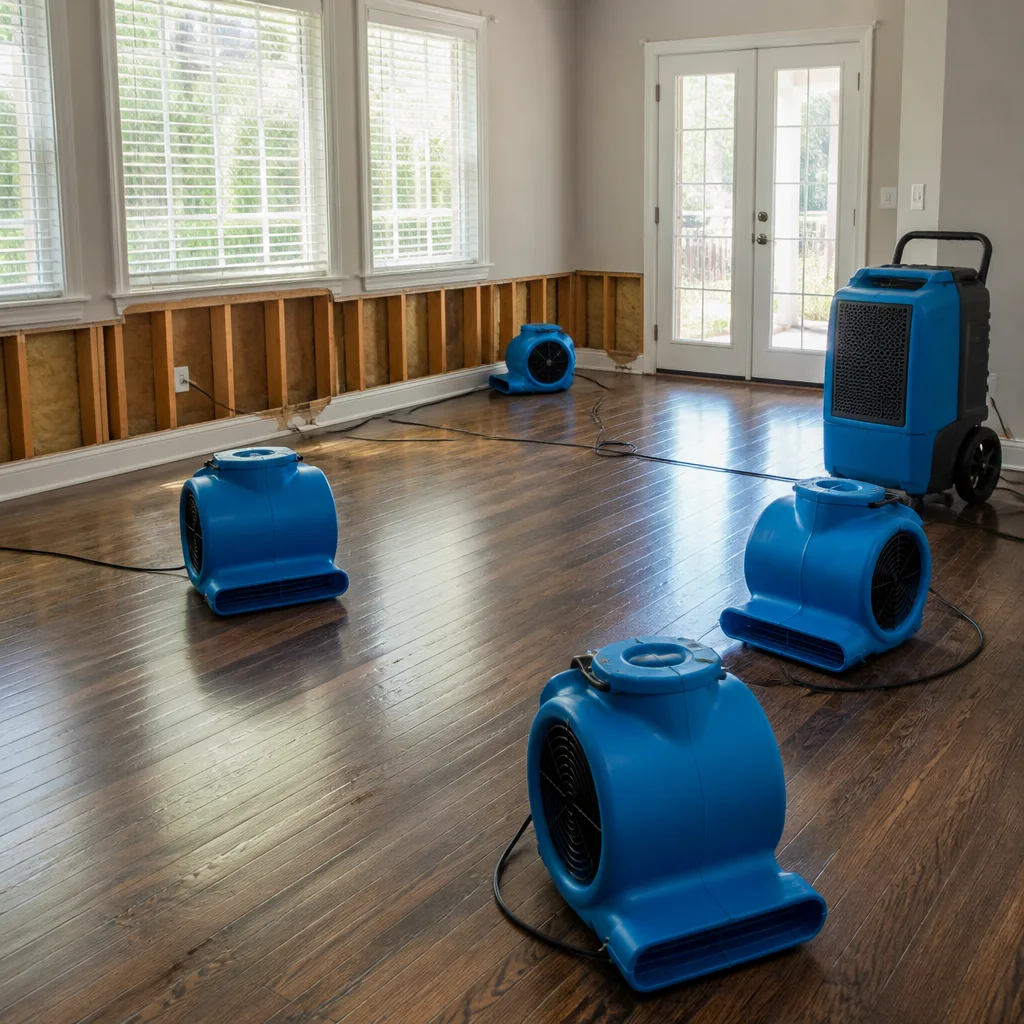
- Running AC to “dry out” a wet cavity. Standard residential AC is not designed for structural drying. It cools air to remove humidity, but cannot generate the airflow volume, temperature elevation, or vapor pressure differential required for rapid drying of wall cavities. Professional drying with Injectidry and B-Air equipment produces 10 to 20 times the air exchange rate.
- Accepting a verbal scope or estimate. Under The Haven Standard, Clause 1, a written price before work begins is non-negotiable. Any restoration contractor who will not commit to written pricing before starting work is practicing scope-creep pricing, where the final invoice bears no resemblance to the initial quote.
- Failing to document for insurance. Photos of meter readings, dated moisture logs, and narrative descriptions of discovery and response transform a disputed claim into a payable one. Our standard deliverable includes this documentation; homeowners who DIY the initial response should maintain equivalent records.
- Ignoring efflorescence as “just salt.” In Fort Lauderdale’s coastal environment, efflorescence on block walls documents a moisture migration path that is actively dissolving and redepositing minerals. The process requires continuous water flow. The wall is wet, and the wetting will eventually reach interior finishes if the source is not addressed.
When to Call a Professional
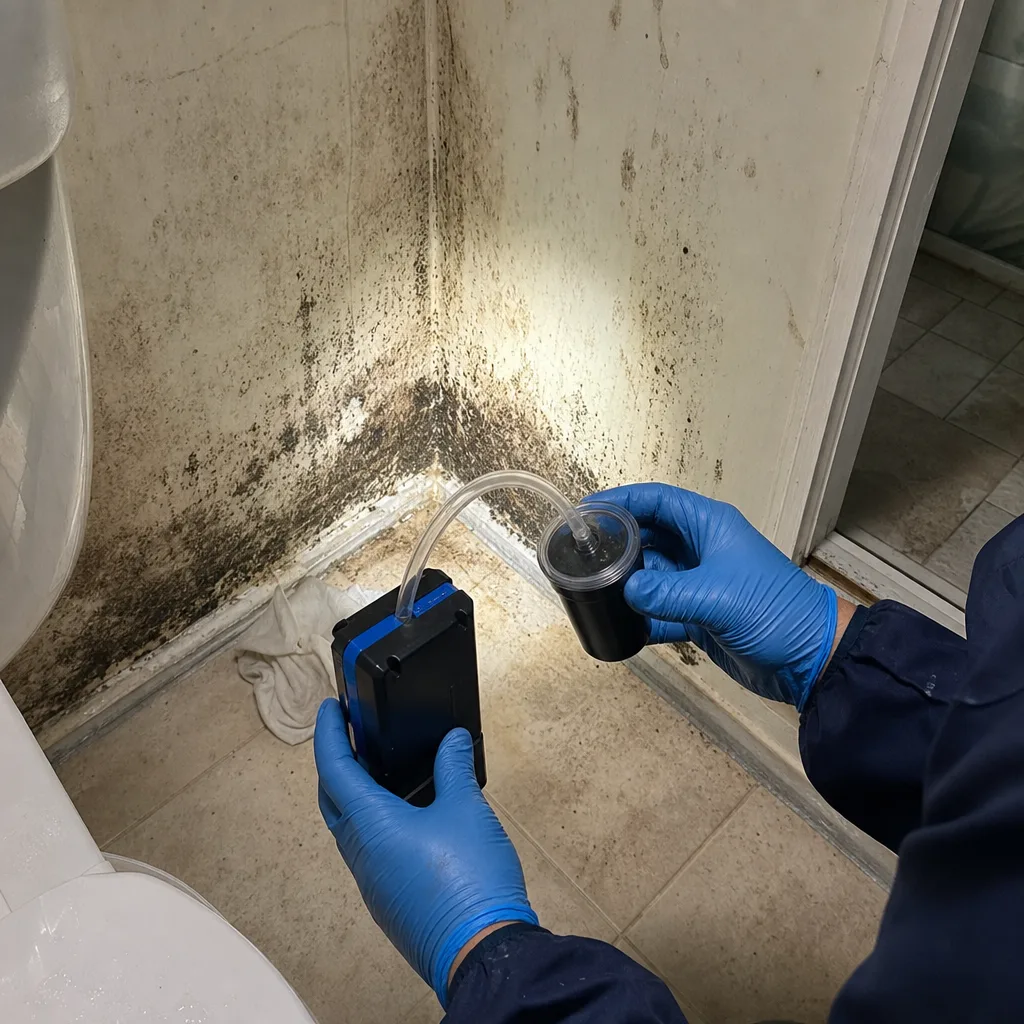
Call for professional assessment when moisture meter readings exceed 17% on drywall or 19% on wood framing and do not decline over a 72-hour monitoring period - or review our DIY vs Professional Damage Restoration: The Fort Lauderdale Homeowner’s Decision Guide to decide your next step. Call immediately for any sewage backup, any water contacting electrical panels or outlets, any mold patch exceeding 1 square foot, or any structural softening in roof decking or wall framing. Call when you cannot identify the moisture source, when the source is in a concealed cavity, or when insurance coverage is involved and documentation will be required.
DryMark Restoration Fort Lauderdale offers free estimates in Fort Lauderdale - call (754) 254-1257. Every estimate includes written pricing before work begins, per Haven Standard, Clause 1. We provide a Free Second Opinion on any competitor’s written estimate at no charge. Our live phone coverage is available 24 hours a day, 7 days a week with no voicemail on emergency lines. Every job is documented with a photo record on every visit and covered by the 365-Day Done Right Promise under The Haven Standard.
Frequently Asked Questions
Professional assessment and written estimate are free at DryMark Restoration Fort Lauderdale. We do not charge for initial moisture mapping, photo documentation, or scope preparation. The written price is delivered before any work begins, with no obligation. Call (754) 254-1257 to schedule.
Coverage depends on the source and duration, not solely on discovery timing. Sudden and accidental damage from supply line failures is typically covered even if hidden for weeks. Gradual damage from maintenance issues, such as deteriorated caulking or long-term roof neglect, may be excluded. Documentation is the determining factor: dated moisture readings, photos of the source, and a professional drying log establish whether the loss meets policy definitions. We coordinate directly with adjusters and provide the documentation package that supports coverage determinations.
Live phone coverage is available 24 hours a day, 7 days a week with no voicemail on emergency lines. Response time depends on current demand and your location within our service area, but our dispatch system routes the nearest available crew. For active water flow, we guide immediate shutoff procedures by phone while en route. Call (754) 254-1257 - a person answers, not a recording.
Visible mold exceeding 1 square foot, or any mold resulting from Category 2 or 3 water, requires professional remediation under IICRC S520 standards. DIY cleaning addresses surface appearance but not hyphal growth within porous materials, and improper disturbance releases spores that colonize new areas. We provide written scope and pricing before any remediation begins, including containment design, air filtration, and post-remediation verification.
We deal with your adjuster directly. Our documentation - daily moisture logs, photo records, material invoices, and written scope - is formatted for claims submission. We attend adjuster meetings on request and provide supplemental documentation when scope disputes arise. This service is standard, not an additional charge. The homeowner’s role is authorization and communication of coverage decisions; we handle the technical documentation.
We deploy professional-grade drying systems from Phoenix, XPOWER, and B-Air, with Injectidry systems for cavity drying. These systems generate the airflow volume, temperature control, and vapor pressure differential required for structural drying per IICRC S500 standards. Residential fans and dehumidifiers cannot achieve these parameters. The equipment choice determines drying time - typically 3 to 5 days with professional systems versus weeks with consumer equipment - and whether moisture readings return to documented normal levels or plateau at levels that predict mold recurrence.
The Bottom Line
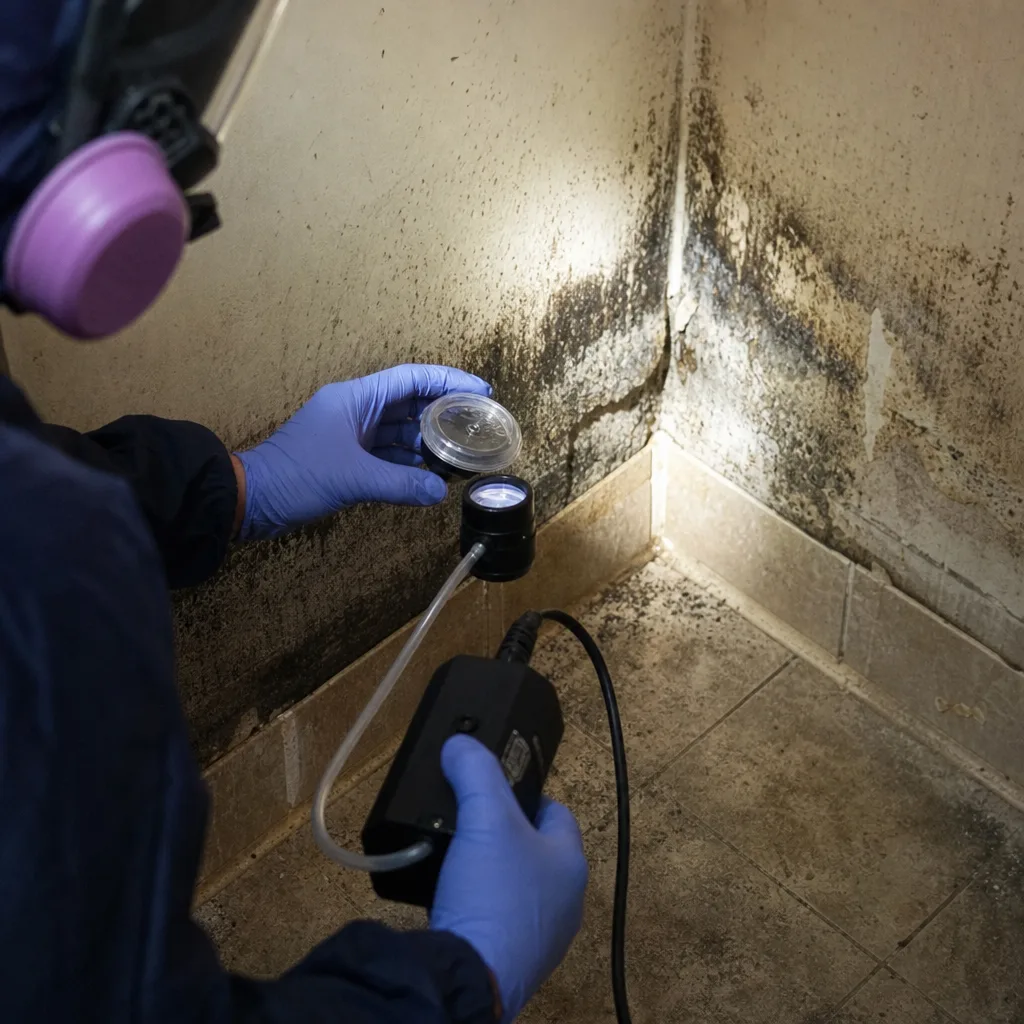
The warning signs that matter most in Fort Lauderdale homes are numbers, not symptoms. A moisture meter reading of 17% on drywall or 19% on wood framing, tracked over 3 to 5 days, tells you whether you’re facing a resolved event or an active problem compounding behind the wall. Efflorescence on block, standing water in AC secondary pans, and condensate flow below 1 gallon per hour are Fort Lauderdale-specific signals that generic advice misses. The room-by-room checklist above gives any homeowner a systematic approach to early detection, and you can find more guides & resources on our blog. The key is documentation: dated readings, photos, and a written record that transforms your observation into evidence an insurer will accept and a contractor can act upon. Waiting for visible damage costs three to five times more than catching the problem at the instrument level. The tools are inexpensive. The method is simple. The savings are measurable.
Written by Alicia Brennan, Owner at DryMark Restoration Fort Lauderdale, serving Fort Lauderdale since 2011.